Meats and seafood
Is Pulled Pork Healthy? Meat, Sauce and Sandwich Portions
Is pulled pork healthy? Compare plain shoulder with LLOYD’S sauced pork and a complete sandwich, including protein, added sugar, sodium and portions.
The short answer
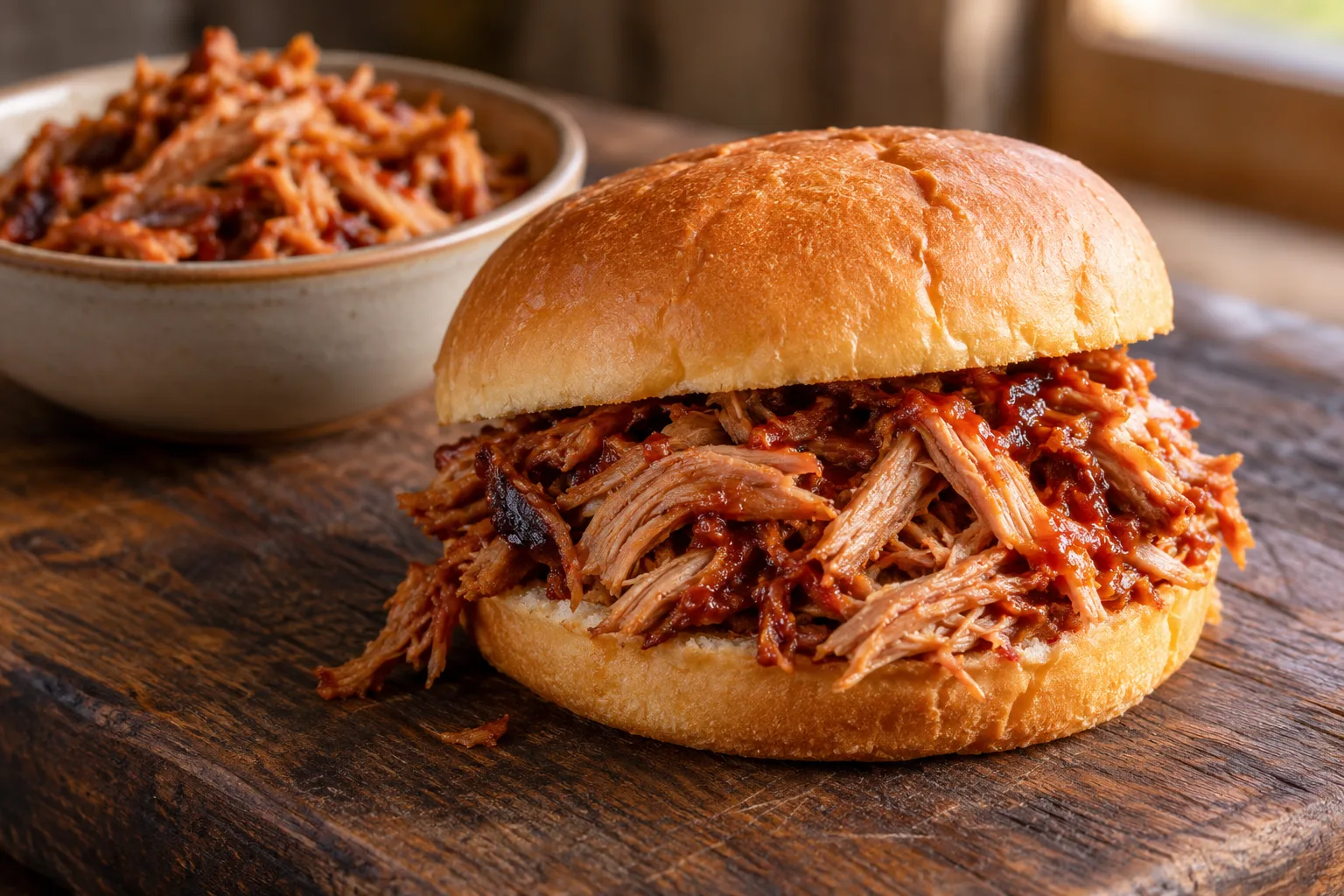
Sometimes Pulled pork can supply useful protein, but plain shoulder and a ready-sauced product are different foods. The inspected LLOYD’S Original BBQ panel lists 200 calories, 14 g protein, 21 g added sugar and 940 mg sodium per 129 g of meat and sauce. Plain cooked shoulder has a different fat and protein profile and far less sodium before seasoning. Count the product, bread and sauce actually eaten.
| Nutrient | LLOYD’S Original BBQ sauced pork: 129 g |
|---|---|
| Calories | 200 kcal |
| Protein | 14 g |
| Saturated fat | 2.5 g |
| Sodium | 940 mg |
| Added sugar | 21 g |
Uses the identified manufacturer nutrition panel; page marketing has conflicting older protein copy. Match your actual tub before using the figures.
Pulled pork can supply useful protein, but plain shoulder and a ready-sauced product are different foods. The inspected LLOYD’S Original BBQ panel lists 200 calories, 14 g protein, 21 g added sugar and 940 mg sodium per 129 g of meat and sauce. Plain cooked shoulder has a different fat and protein profile and far less sodium before seasoning. Count the product, bread and sauce actually eaten.
The 129 g product portion includes sauce. For home cooking, start with cooked edible pork and count seasoning, sauce and bread separately. A lighter-sounding product name does not describe the finished sandwich or the amount of meat inside it.
Begin with cooked shoulder, not raw purchase weight
The comparison uses USDA Boston butt shoulder, lean and fat, braised, FDC 167850, and the corresponding lean-only cooked reference, FDC 168261. Both are cooked foods. Bone, discarded fat and cooking losses make raw purchase weight unsuitable as the amount you actually eat.
| Cooked edible portion, 85 g | Lean and fat | Lean only |
|---|---|---|
| Calories | 227 | 198 |
| Protein | 21.3 g | 22.6 g |
| Total fat | 15.0 g | 11.2 g |
| Saturated fat | 5.6 g | 4.3 g |
| Sodium before added seasonings | 49 mg | 51 mg |
“Lean only” refers to the selected USDA food description after separable fat is excluded. It does not mean that fat-free pork has been created or that all fat within the meat disappears. A home-cooked batch with different trimming and retained cooking juices will differ.
The small sodium figures describe the plain references. They should never be assigned to a smoked, brined, rubbed or sauced restaurant pork serving without its own information. Seasoning can become a larger sodium contributor than the unsalted meat itself.
A generous portion changes every meat nutrient
If you double the lean-and-fat reference from 85 to 170 g, the calculated amount is about 454 calories, 42.6 g protein and 11.2 g saturated fat before sauce. The protein increases, but so do the fat and energy. Calling it a protein-rich meal does not make the latter nutrients disappear.
Portion sizes are not identical across households and restaurants. A sandwich packed with meat may contain far more than a small serving on a menu analysis. If you cook at home, weigh the ready-to-eat meat after removing bone and any fat you discard. If you order out, use the restaurant’s defined portion when available.
At a self-serve meal, put the meat on the plate before adding sauce or bread if you want to recognize its portion. A heaped spoon of shredded meat can contain very different amounts depending on how tightly it is packed or how much sauce is mixed through it. Using a familiar cooked weight once is a better reference than assigning every spoonful the same value.
For a shared batch, identify the cooked edible yield and how much reaches each plate. Dividing a raw roast into an assumed number of portions can overlook discarded bone or unequal servings. You do not need laboratory precision, but the estimate should describe what is eaten rather than what was purchased.
The FDA’s label guide is useful for packaged pulled pork. Check whether the serving already includes sauce, and whether the container holds several servings. Adding a sauce figure to an already sauced product would count it twice.
Sauce is a separate ingredient with its own portion
A dry-rubbed pork serving, a lightly coated one and a sandwich soaked in sweet barbecue sauce can have different sugar and sodium totals. Read the sauce label for the spoonful you use, not only the front-of-bottle claims.
The FDA’s added-sugars guide explains why added sugar is included within total sugar. A sauce can contain added sugar even if its flavor is smoky or spicy. A no-added-sugar sauce can still contain sodium, so that claim answers only one part of the comparison.
Planrity’s BBQ sauce guide compares identified labels and measured amounts. Use the product you have rather than transferring a generic tablespoon value to every sauce. For a shared pot, count sauce entering the finished food and divide by the portion eaten; sauce left in a serving bowl is a different amount from sauce consumed.
If sodium is the main concern, account for the rub, broth and sauce together. The FDA’s sodium guide uses 2,300 mg as a general Daily Value. A “low-sugar” barbecue meal is not necessarily a low-sodium meal, especially when seasoning is spread across several ingredients.
A complete ready-sauced sandwich example
The LLOYD’S Seasoned & Shredded Pork in Original BBQ Sauce panel lists 129 g of the complete sauced product, not 129 g plain pork. This guide uses the nutrition panel’s 14 g protein figure; check the actual tub, because the page also contains a conflicting older 7 g marketing statement.
For bread, Dave’s Killer Bread’s nutrition table lists a Sandwich Rolls Done Right roll at 85 g, 230 calories, 11 g protein, 3 g fiber and 390 mg sodium.
| Exact product combination | Calories | Protein | Fiber | Sodium |
|---|---|---|---|---|
| LLOYD’S sauced pork, 129 g | 200 | 14 g | 0 g | 940 mg |
| Named sandwich roll, 85 g | 230 | 11 g | 3 g | 390 mg |
| Both, before slaw or extra sauce | 430 | 25 g | 3 g | 1,330 mg |
The sandwich’s sodium is about 58% of the FDA’s 2,300 mg Daily Value. The pork product also contributes 21 g added sugar; the bread’s total-sugar figure does not establish its added-sugar amount, so a combined added-sugar total is not invented here.
This is an assembly from two labels, not a taste-tested recipe or restaurant average. The sauce already included in the pork is counted once. Only add another sauce amount if you actually use more.
For a home-cooked pork sandwich, use the cooked edible meat and your recipe’s seasoning, then the actual bun. The USDA white-bread reference, FDC 174924, may be a fallback when no label exists, but it is not a verified description of every hamburger bun.
Slaw, fries, chips and drinks add another part of the meal. Choose the accompaniments you want and count their preparation. Planrity’s brisket guide uses the same cut-plus-accompaniments approach for another barbecue meal.
Red meat and processed meat are different questions
Pork is red meat under the World Health Organization’s definition, which covers mammalian muscle meat. A pale cooked color does not make it poultry or remove it from that category.
Processing is a separate issue. Cooking and shredding fresh pork at home is a different preparation from curing or preserving a commercial meat product. Some smoked, preserved or ready-made products may fit processed-meat definitions; the actual process and ingredients matter. “Pulled pork” by itself does not tell you everything needed to classify the product.
For regular meal planning, consider how often red and processed meats appear across the week. You can alternate pork with poultry, fish or bean-based meals without needing a single ingredient to be the permanent winner. Planrity’s bean guide offers another protein-and-fiber option for a varied rotation.
Cook safely, then aim for the texture you want
The FoodSafety.gov temperature chart gives a minimum of 145°F, or 63°C, plus a three-minute rest for whole pork roasts. Pulled-pork methods often continue cooking for texture; the minimum safety temperature and a tender, shreddable result are separate endpoints.
Use a food thermometer, follow a suitable recipe or appliance instruction and reheat leftovers to 165°F. Keep raw-meat utensils separate from cooked meat. The FDA’s handling guide recommends reserving clean marinade before raw meat touches it and cooling leftovers promptly in shallow containers.
For your next meal, choose the cooked pork amount first, then sauce, bread and sides. That simple sequence lets you enjoy pulled pork while making the relevant protein, saturated-fat and sodium tradeoffs visible.
Frequently asked questions
Is pulled pork lean meat?
Not necessarily. Shoulder is commonly used, and the selected cooked lean-and-fat reference has about 15 g fat per 85 g. The matched lean-only entry still has about 11.2 g fat. Trimming separable fat changes the estimate but does not make the meat fat-free. A different cut, recipe or commercial product needs its own information.
Does pulled pork have a lot of sodium?
Plain cooked shoulder in these references has about 49–51 mg per 85 g, but that excludes rub, brine, broth and sauce. Those additions can change the finished meal substantially. Use a packaged product’s full panel or count the recipe’s salty ingredients. Do not assign the plain-meat sodium figure to an unidentified restaurant sandwich.
Is pulled pork healthier without a bun?
Removing the bun changes the bread contribution, while the meat and sauce remain. In the illustrative 60 g bread example, that means about 160 fewer calories and 294 mg less sodium. Whether that suits your meal depends on appetite and other foods. A smaller bun, a different bread or a plate with sides are also options.
Sources
- WHO: Carcinogenicity of red and processed meat, WHO
- FDA: How to Understand and Use the Nutrition Facts Label, FDA
- FDA: Sodium in Your Diet, FDA
- FDA: Added Sugars on the Nutrition Facts Label, FDA
- FoodSafety.gov: Safe Minimum Internal Temperatures, FoodSafety.gov
- FDA: Handling Food Safely While Eating Outdoors, FDA
- USDA FoodData Central: Pork, fresh, shoulder, (Boston butt), blade (steaks), separable lean and fat, cooked, braised (FDC 167850), USDA FoodData Central
- USDA FoodData Central: Pork, fresh, shoulder, (Boston butt), blade (steaks), separable lean only, cooked, braised (FDC 168261), USDA FoodData Central
- USDA FoodData Central: Bread, white, commercially prepared (includes soft bread crumbs) (FDC 174924), USDA FoodData Central
- Dave’s Killer Bread: Product nutrition comparison table, Dave’s Killer Bread
- Hormel / LLOYD’S: Seasoned & Shredded Pork in Original BBQ Sauce, Hormel / LLOYD’S