Meats and seafood
Is Beef Brisket Healthy? Cuts, Trimming and Seasoning
Compare identified brisket cuts by cooked weight, protein and fat. Learn how trimming, rubs, sauces and portions change the complete meal’s nutrition.
The short answer
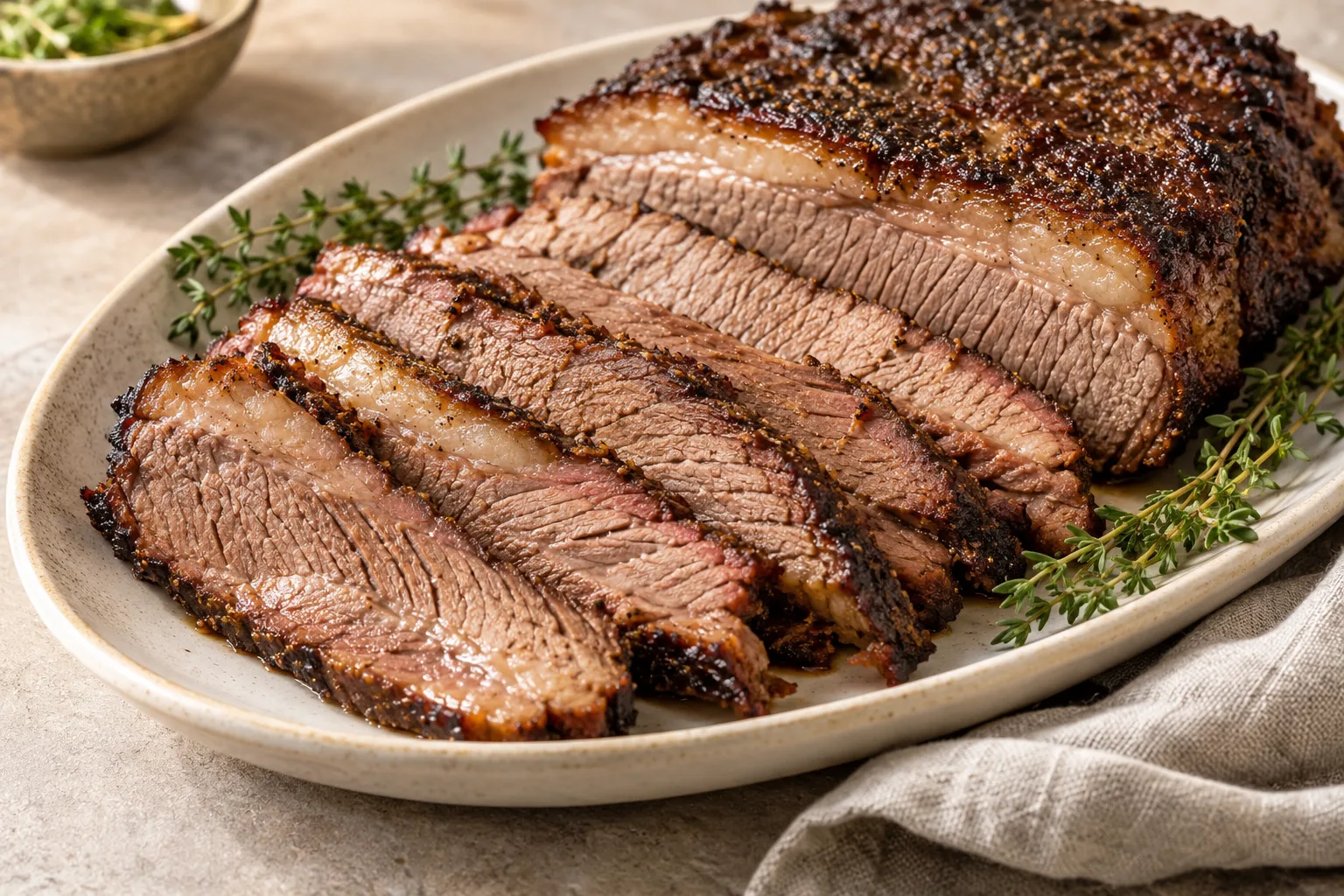
Sometimes Lean, trimmed brisket can supply plenty of protein: the cooked lean-flat reference provides about 168 calories and 28.8 g protein per 3 oz (85 g). Leaving more fat on changes the result—the whole-brisket lean-and-fat reference has 331 calories per 100 g, compared with 198 for the lean flat. Count rubs and sauces separately.
| Nutrient | About 3 oz cooked lean brisket (85 g) | Per 100 g |
|---|---|---|
| Calories | 168 kcal | 198 kcal |
| Protein | 28.8 g | 33.9 g |
| Total fat | 5.0 g | 5.9 g |
| Saturated fat | 1.9 g | 2.2 g |
| Carbohydrate | 0.0 g | 0.0 g |
| Fiber | 0.0 g | 0.0 g |
| Total sugar | 0.0 g | 0.0 g |
| Sodium | 48 mg | 56 mg |
| Calcium | 14 mg | 17 mg |
| Iron | 2.4 mg | 2.9 mg |
| Potassium | 237 mg | 279 mg |
USDA FoodData Central, FDC 169469.
Brisket’s nutrition depends on the cut, how much visible fat you eat, and any seasoning or sauce. Compare a realistic cooked portion of the meat actually served. A single “brisket nutrition” value can hide those differences.
Flat, point and edible fat
Brisket contains muscles with different amounts and distributions of fat. Retail trimming, grade and the portion served affect the finished food. A visibly fatty serving can differ from a trimmed slice even when both came from the same brisket.
USDA descriptions such as “separable lean only” indicate the portion analyzed. They do not mean the entire original cut contained no fat. “Lean and fat” includes a different edible component, and the trimming specification must also be read.
Nutrition for a defined cooked cut
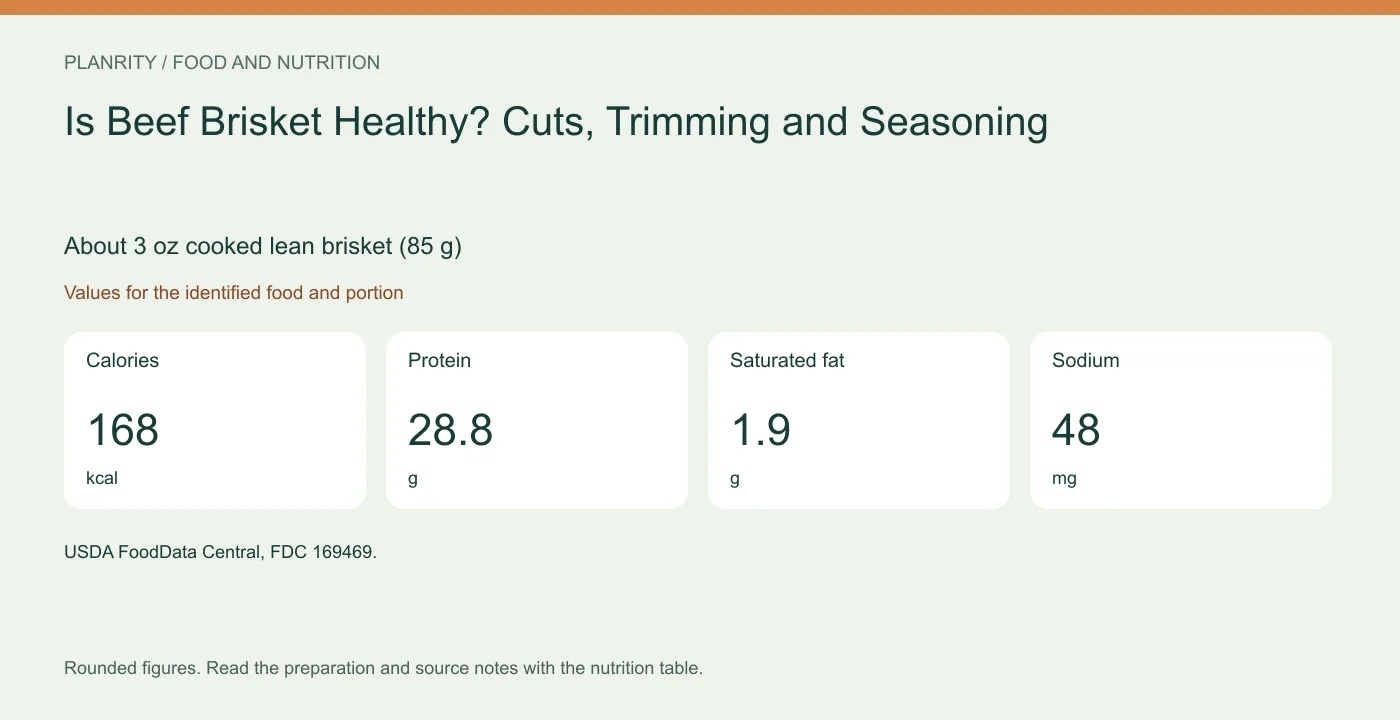
Source: USDA FoodData Central, FDC 169469.
This is select-grade flat-half brisket, separable lean only, trimmed to zero external fat and cooked by braising. It is not a generic nutrition panel for smoked restaurant brisket. The portion excludes bone, sauce and extra fat added at serving.
Compare the descriptions, not just the numbers
All rows below use the same 100-g weight.
| Food | Calories (kcal) | Protein (g) | Fat (g) | Saturated fat (g) | Fiber (g) | Sodium (mg) |
|---|---|---|---|---|---|---|
| Beef, brisket, flat half, separable lean only, trimmed to 0" fat, select, cooked, braised | 198 | 33.9 | 5.9 | 2.2 | 0.0 | 56 |
| Beef, brisket, whole, separable lean and fat, trimmed to 1/8" fat, all grades, cooked, braised | 331 | 25.9 | 24.5 | 9.4 | 0.0 | 64 |
| Beef, round, top round steak, boneless, separable lean only, trimmed to 0" fat, all grades, cooked, grilled | 162 | 30.1 | 3.8 | 1.6 | 0.0 | 75 |
The whole-brisket row includes lean and fat and differs in grade grouping and cut definition. The difference cannot be attributed solely to trimming as though the same piece had been tested before and after trimming. It demonstrates why selecting the appropriate record is essential.
Top round offers another lean cooked beef comparison. Its different cut and cooking method mean it is an alternative food, not a claim that brisket and round are interchangeable in a recipe.
What brisket contributes
Protein: The selected lean portion supplies a substantial amount. A larger serving increases protein, but also increases whatever fat and sodium belong to that preparation.
Iron: Brisket contributes dietary iron, including heme iron. Choose it as part of the full diet; a diagnosed deficiency needs assessment and treatment tailored to its cause. NIH iron fact sheet
A versatile meal ingredient: Slices or shredded meat can be combined with vegetables, beans, potatoes or other starches. A meal does not need a large meat portion to contain a useful protein component, although individual needs vary.
Seasoning can change sodium sharply
The plain meat’s sodium figure does not include an unspecified barbecue rub, injection, brine or bottled sauce. Restaurant brisket can use several of these, and the retained quantity is not obvious from appearance.
For a simple calculation, 1 g table salt contains about 388 mg sodium from the USDA salt record. If that entire amount is added to and eaten with a 100-g cooked portion, add it to the meat’s sodium total. The new food weighs 101 g, so its per-100-g density requires dividing the combined sodium by 101 and multiplying by 100. Salt, table; 173468
This is a measured-addition scenario. A rub applied to a large raw cut is harder to allocate: trimming, drippings and uneven seasoning change the amount eaten in each slice.
Fat and cooking method
Long cooking can tenderize brisket, but tenderness does not reveal total fat. Some fat may render into cooking liquid; some may remain in the slices or be served as part of the dish. Do not claim a fixed calorie reduction from draining or smoking without data for the process.
Trimming visible fat before or after cooking can change what is consumed. Use a record that matches the edible portion rather than assuming the whole-cut label describes the trimmed meat on your plate.
Sauces can contribute sugar and sodium. Read a sauce panel and measure the amount used when those nutrients matter. Count the sugar and salt in a homemade sauce as you would in a bottled one.
Safety temperature and tenderness are different endpoints
USDA lists 145°F plus a three-minute rest as the minimum for whole beef steaks and roasts. Brisket may be cooked hotter or longer for texture, but that tenderness preference is separate from the minimum safety requirement. Ground beef and leftovers have different guidance. USDA safe minimum internal temperatures
Use safe thawing, keep raw juices away from ready-to-eat foods, and check temperature appropriately. A thick cut can cook unevenly, so the thermometer location matters. Chilled leftovers need prompt refrigeration and safe reheating. USDA FSIS: Leftovers and Food Safety
Portion and meal planning
The 3-ounce cooked example is a comparison portion, not a prescribed amount for every person. If you choose a larger portion, use its weight and a matching record. A raw purchase weight cannot be treated as the cooked edible weight without accounting for cooking and trimming.
For a barbecue plate, include the bun, beans, coleslaw, pickles and sauce when assessing the meal. Each may be useful or enjoyable, but each changes the totals. The meat alone cannot represent the entire tray.
People managing saturated fat, sodium or other medically restricted nutrients should use the actual product or recipe information. Unseasoned generic beef may substantially understate a commercial seasoned product’s sodium.
Buying and serving checklist
- Identify flat, point or whole brisket.
- Check lean-only versus lean-and-fat descriptions.
- Match cooked state and edible portion weight.
- Ask about brines, injections, rubs and sauces.
- Treat trimming and draining as process-specific changes.
- Distinguish safety guidance from a tenderness preference.
- Count side dishes and condiments in the meal.
Keep purchase yield separate from serving nutrition
A raw brisket includes weight that may be lost through trimming and cooking. Cost per raw pound therefore does not directly describe cost per edible cooked portion. Record both weights if comparing value. The same distinction prevents a raw package weight from being used to estimate how many cooked portions a batch will provide.
Choose the slice you are comparing
At the same 85-g cooked weight, the lean flat reference supplies about 168 calories and 1.9 g saturated fat. The whole-brisket lean-and-fat reference supplies about 281 calories and 8.0 g saturated fat. The comparison describes the fat actually eaten with the meat; a visible fat cap left on the plate belongs outside that edible portion.
For seasoning, measure additions when you can. One gram of table salt contributes about 388 mg sodium before any sauce. A rub used on a whole raw cut is harder to divide precisely because trimming and drippings change what reaches each plate. If sodium matters closely, a known product label or a controlled home recipe is easier to assess than an unmeasured serving of barbecue with sauce already mixed in.
What to take away
For brisket, trimming and the portion on the plate are the useful decisions. Lean flat-cut meat supplies substantial protein, while a serving with more retained fat has a different calorie and saturated-fat profile. Rubs, injected solutions and sauces change sodium beyond the plain reference. Choose the cut you enjoy, match the nutrition record to the fat you eat, and keep safe handling separate from the longer cooking needed for tenderness.
Related food guides
Frequently asked questions
Is brisket always high in fat?
No single value describes every portion. The lean-only flat-half record is much leaner than the identified whole-brisket lean-and-fat record. Cut, grade, trimming and the edible fat actually served all matter. Use the description that matches your food.
Does smoking remove most of the fat?
Smoking can change moisture and render some fat, but the amount depends on the cut and process. It does not justify a universal reduction percentage. A reliable finished-food estimate needs an appropriate cooked record or measured recipe and yield information.
Why can barbecue brisket have more sodium than the table?
The table describes plain identified meat. Rubs, brines, injections and sauces can add sodium, and their retained amounts vary. Use a restaurant disclosure or measured recipe for a seasoned product instead of assuming the plain meat figure represents it.
Is the minimum safe temperature the same as the tenderness target?
No. USDA’s minimum for whole beef cuts is a safety instruction with a rest period. Brisket may be cooked further for texture. That culinary choice should not be confused with a different safety requirement for ground meat or reheated leftovers.
Sources
- Beef, round, top round steak, boneless, separable lean only, trimmed to 0" fat, all grades, cooked, grilled; 168649, USDA
- Beef, brisket, whole, separable lean and fat, trimmed to 1/8" fat, all grades, cooked, braised; 168665, USDA
- Beef, brisket, flat half, separable lean only, trimmed to 0" fat, select, cooked, braised; 169469, USDA
- Salt, table; 173468, USDA
- USDA safe minimum internal temperatures, USDA
- USDA FSIS: Leftovers and Food Safety, USDA
- NIH iron fact sheet, NIH Office of Dietary Supplements
- How to Understand and Use the Nutrition Facts Label | FDA, FDA
- Carcinogenicity of red and processed meat, World Health Organization