Meats and seafood
Is Ceviche Healthy? Nutrition, Benefits, and Food Safety
Is ceviche healthy? See a USDA-based nutrition breakdown, benefits, mercury and raw-fish risks, plus safer ways to eat fish or shrimp ceviche.
The short answer
Sometimes Ceviche can supply lean protein, but citrus-marinated raw seafood carries foodborne-illness risks. The raw-cod recipe provides 198 calories and 23.4 g protein per 300-g serving. Pregnant people and other higher-risk readers should choose fully cooked seafood.
| Nutrient | Recipe serving (300 g) | Per 100 g |
|---|---|---|
| Calories | 198 kcal | 66 kcal |
| Protein | 23.4 g | 7.8 g |
| Total fat | 6.9 g | 2.3 g |
| Saturated fat | 1.0 g | 0.35 g |
| Carbohydrates | 12.6 g | 4.2 g |
| Fiber | 4.3 g | 1.4 g |
| Sodium | 75 mg | 25 mg |
USDA ingredient records listed in the recipe. Raw-cod recipe; all marinade retained. Cooked seafood is safer.
Is ceviche healthy? Yes, it can be a nutritious, protein-rich meal with relatively few calories, but traditional ceviche contains raw seafood that carries food-safety risks. Lime juice does not make raw fish as safe as cooked fish. Pregnant people, young children, older adults, and those with weakened immune systems should choose fully cooked seafood instead.
Ceviche looks like a light meal: fish or shrimp, lime juice, onion, cilantro, and sometimes avocado. Much of its nutritional appeal is genuine. The question is whether its preparation makes it a sensible choice for everyone.
What Is Ceviche Made Of?
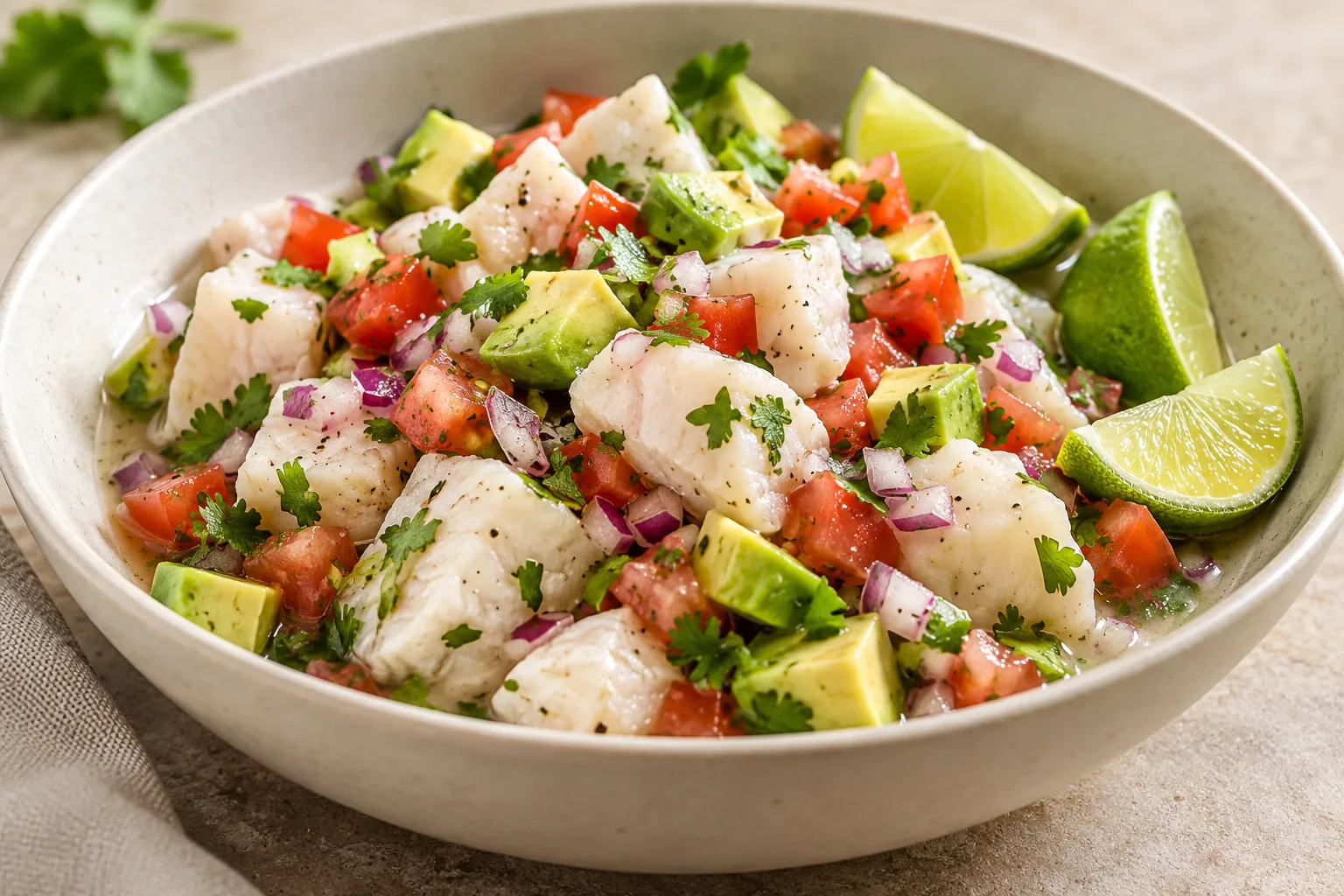
Ceviche is a seafood dish associated especially with Peru and other parts of Latin America. Traditional versions combine raw fish with citrus juice, onion, cilantro, and chili peppers. Some regional variations use shrimp, tomatoes, avocado, or other ingredients.
The seafood is typically marinated rather than heated. Lime or lemon juice changes the structure of proteins in the fish, making the flesh appear firmer and more opaque.
That visible change is often described as cooking the fish. From a food-safety perspective, however, the seafood remains raw.
This distinction is central to understanding ceviche. Its ingredients can be nutritious while its preparation still presents risks.
Ceviche Nutrition Facts: A USDA-Based Calculation
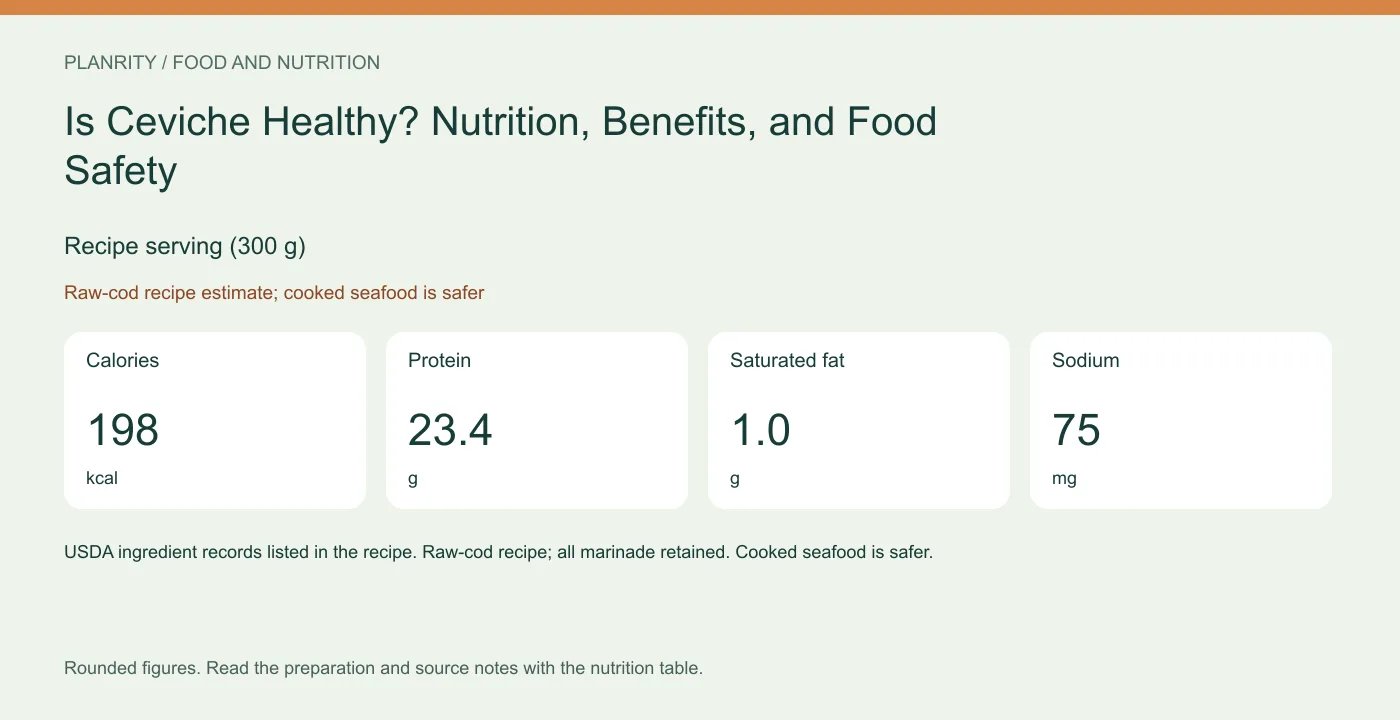
USDA FoodData Central doesn’t provide a single standardized entry covering every ceviche recipe. A more transparent approach is to calculate the nutrients from individual ingredients.
The following example uses Atlantic cod, fresh vegetables, lime juice, and avocado, without added salt or cooking oil.
Sample recipe: Two servings
| Ingredient | Amount | USDA FDC ID |
|---|---|---|
| Atlantic cod, raw | 8.5 oz (240 g) | 171955 |
| Fresh lime juice | 2.8 oz (80 g) | 168156 |
| Raw onion | 2.5 oz (70 g) | 170000 |
| Raw tomato | 4.2 oz (120 g) | 170457 |
| Fresh cilantro | 0.35 oz (10 g) | 169997 |
| Avocado | 2.8 oz (80 g) | 171705 |
The ingredients total 600 g, divided into two approximately 300-g portions.
Calculated from USDA FoodData Central SR Legacy ingredient records listed above. Values assume the entire lime marinade is consumed, with no added salt, oil, or accompaniments. They are recipe estimates, not laboratory-tested nutrition values. This calculation does not imply that raw cod is the safest preparation.
Actual ceviche may contain different seafood, more avocado, added salt, or sauces that change these figures.
What Ceviche Does Well Nutritionally
-
Lean protein: The sample 300-g serving supplies approximately 23.4 g of protein, principally from Atlantic cod. Protein helps maintain body tissues and supports normal muscle function. This makes ceviche more substantial than a vegetable salad without a significant protein source.
-
Moderate calorie content: The calculated serving contains approximately 198 calories before tortilla chips, sweet potato, corn, or other accompaniments. This can be useful when choosing a lighter meal, although calories alone don’t determine whether food is healthy.
-
Vitamin B12 and selenium: USDA lists approximately 0.91 mcg of vitamin B12 and 33.1 mcg of selenium per 100 g of raw Atlantic cod. The 120-g fish portion in each serving therefore contributes about 1.1 mcg of B12 and 40 mcg of selenium. These nutrients support normal nerve function and antioxidant-related processes.
-
Fiber from vegetables and avocado: A serving provides approximately 4.3 g of fiber, mainly from avocado, tomato, onion, and cilantro. The seafood contributes essentially none. Adding vegetables makes the meal nutritionally broader than plain fish with lime juice.
Ceviche also offers considerable flavor without requiring deep-frying or a creamy dressing. Whether that advantage remains depends on how it’s served.
What to Watch for With Ceviche
-
Raw-fish contamination: Raw seafood can contain bacteria and parasites. The FDA specifically identifies ceviche among foods that vulnerable groups should avoid when it contains raw or undercooked seafood.
-
Misleading citrus preparation: Lime juice changes the appearance and texture of fish but doesn’t reliably eliminate foodborne pathogens. Even fish that looks completely opaque after marinating should not be regarded as thoroughly cooked. The CDC notes that marinating freshwater fish in lime juice does not kill the parasite Gnathostoma.
-
Incomplete protection from freezing: Commercially controlled freezing can reduce certain parasite risks. However, the FDA warns that freezing doesn’t kill all harmful germs. Previously frozen fish is not equivalent to cooked fish.
-
Sodium from seasoning: The calculated homemade portion contains only 75 mg sodium without added salt. Restaurant preparations may use salt, seasoned sauces, or other sodium-containing ingredients. There is no dependable universal sodium value for restaurant ceviche.
-
Mercury differences: Ceviche prepared with cod or shrimp differs from versions containing higher-mercury fish. Species identification is important, particularly for pregnant people and children.
-
Seafood allergies: Fish and crustacean shellfish are major allergens recognized by the FDA. Substituting shrimp for fish doesn’t automatically make the dish suitable for someone with seafood allergies.
Is Raw Ceviche Safe to Eat?
This is the most important consideration.
According to the FDA’s seafood safety guidance, cooking seafood thoroughly is the safest way to reduce foodborne illness risks. The agency recommends cooking most seafood to an internal temperature of 145°F (63°C).
A lime marinade does not reach that temperature. It alters proteins through acidity rather than applying heat.
The CDC also explicitly lists ceviche made with raw seafood among riskier food choices. Potential concerns include foodborne bacteria and parasites, even when the fish was purchased fresh.
Freshness matters for quality and safe handling, but it cannot guarantee that raw seafood is free from pathogens.
Does freezing make ceviche safe?
Not completely.
The FDA explains that properly freezing certain fish can kill parasites, making previously frozen fish a consideration for adults who nevertheless choose to eat raw seafood.
However, freezing cannot be relied upon to destroy every harmful microorganism. For parasites, the standards cited by CDC include holding fish at −4°F (−20°C) or below for seven days.
For the lowest foodborne-illness risk, use properly cooked seafood.
A fully cooked shrimp ceviche, cooled and combined with lime, onion, and cilantro, can preserve much of the dish’s flavor without depending on citrus to make raw seafood safe.
Who Should Avoid Traditional Raw Ceviche?
Pregnant people: CDC and FDA guidance recommends avoiding ceviche containing raw fish or shellfish. A fully cooked version using lower-mercury seafood is a safer alternative.
People with weakened immune systems: Individuals undergoing certain cancer treatments, organ-transplant recipients, and others with compromised immune defenses face greater consequences from foodborne infections. They should avoid raw seafood.
Young children and older adults: These groups are more vulnerable to serious foodborne illness. The CDC identifies raw seafood as a riskier choice and recommends properly cooked alternatives.
People with seafood allergies: Ceviche may contain fish, shrimp, or several seafood species together. Ask about every ingredient and possible cross-contact.
Anyone experiencing significant symptoms after eating seafood, particularly fever, persistent vomiting, severe abdominal pain, or bloody diarrhea, should seek medical advice promptly.
Which Fish Is Best for Ceviche?
From a nutritional and mercury perspective, the species matters.
The FDA and EPA classify cod, shrimp, and tilapia among their Best Choices for lower-mercury seafood. Salmon and pollock also fall into this category.
Higher-mercury choices such as swordfish, shark, king mackerel, marlin, and bigeye tuna should be avoided by pregnant people and young children under FDA guidance.
Importantly, lower mercury does not make seafood safe to eat raw during pregnancy.
Seafood variety also matters nutritionally. Cod is a lean protein source, but it doesn’t provide the same fat profile as salmon or other oily fish. Calling all ceviche a rich source of omega-3 fatty acids would therefore be inaccurate.
For regular seafood intake, the FDA’s guidance describes approximately 8–12 oz (227–340 g) of lower-mercury seafood per week during pregnancy, prepared safely and thoroughly cooked.
Homemade Fish Ceviche vs. Cooked Shrimp Ceviche
Replacing raw fish with fully cooked shrimp changes both nutritional values and the food-safety profile.
The following calculations use the same vegetables, avocado, and lime juice from the example recipe, substituting an equal weight of cooked shrimp for raw cod.
| Comparison | Raw cod ceviche | Cooked shrimp ceviche |
|---|---|---|
| Serving weight | 300 g | 300 g |
| Calories | 198 | 219 |
| Protein | 23.4 g | 30.8 g |
| Sodium, no added salt | 75 mg | 144 mg |
| Seafood preparation | Raw, citrus-marinated | Fully cooked |
| Food-safety risk | Higher | Lower |
Calculated using USDA cod record 171955 and cooked shrimp record 175180, with the same remaining ingredients. Values assume no added salt. Actual shrimp sodium varies significantly with processing and added solutions.
The cooked-shrimp version provides somewhat more protein in this example. More importantly, thorough cooking addresses risks that citrus marination does not.
Neither preparation is nutritionally fixed. Avocado, additional salt, sauces, and side dishes alter the finished meal.
How Much Ceviche Should You Eat?
For a meal, approximately 3–4 oz (85–113 g) of seafood alongside vegetables is a practical portion starting point. Individual needs and the rest of the meal determine whether more is appropriate.
There is no official recommended frequency for eating raw ceviche, and consuming a smaller portion doesn’t eliminate raw-seafood hazards.
If you enjoy ceviche regularly, a fully cooked seafood version is the safer routine choice.
Consider accompanying it with beans, corn, sweet potato, or a vegetable salad when you want a more complete meal. Fried chips and heavily salted additions can substantially alter the meal’s nutritional profile.
How to Choose or Prepare a Safer Ceviche
Use this checklist when shopping, ordering, or preparing ceviche:
- Choose cooked seafood when possible. Properly cooked fish or shrimp offers a safer starting point than raw seafood.
- Identify the seafood species. Ask what fish or shellfish the dish contains rather than assuming all white fish has the same mercury and allergen profile.
- Check cold handling. FDA guidance recommends buying refrigerated or properly iced seafood and keeping it at 40°F (4°C) or below before preparation.
- Prevent cross-contamination. Wash hands, knives, boards, and preparation surfaces after handling raw seafood, particularly before preparing ready-to-eat vegetables.
- Watch added salt. Ask about seasoning and sauces when sodium matters to you.
- Keep the finished dish cold. FDA guidance says perishable seafood shouldn’t remain unrefrigerated for more than two hours, or one hour above 90°F (32°C). These are maximum handling limits, not guarantees that raw ceviche is safe.
A restaurant’s reputation or a fish’s fresh appearance cannot completely eliminate the risks of raw seafood.
The Bottom Line
Ceviche can provide lean protein, vegetables, and useful nutrients without requiring many calories. But its nutritional strengths don’t erase the food-safety concerns associated with traditional raw-seafood preparation.
For most readers, the best approach is to consider both nutrition and safety. Choose lower-mercury seafood, pay attention to salt and accompaniments, and favor fully cooked fish or shrimp—especially for anyone at higher risk of foodborne illness.
Related food guides
Frequently asked questions
Is ceviche actually cooked?
Traditional ceviche is not heat-cooked. Citrus juice changes the proteins in raw seafood, producing a firmer texture and opaque appearance. It doesn't reliably destroy harmful bacteria or parasites. Fully cooked fish or shrimp prepared with the same seasonings is a safer alternative.
Can you eat ceviche while pregnant?
Avoid ceviche containing raw or undercooked seafood. The FDA and CDC recommend choosing thoroughly cooked fish or shellfish instead. Cod and shrimp are lower-mercury choices, but they still need appropriate cooking and handling.
Is ceviche healthy for weight loss?
It can fit into a weight-management eating pattern. The sample recipe provides approximately 198 calories and 23.4 g protein per 300-g serving. However, portion size, accompanying foods, and food safety remain important. Low calories do not compensate for the risks of contaminated raw seafood.
Can ceviche cause food poisoning?
Yes. Raw or undercooked seafood can contain harmful bacteria or parasites. Lime juice and refrigeration don't guarantee their elimination. Thoroughly cooking seafood is the safer choice, particularly for people at increased risk of severe foodborne illness.
Is shrimp ceviche healthier than fish ceviche?
Neither is always nutritionally superior. Their protein, calories, and sodium depend on the seafood and recipe. A shrimp ceviche made with properly cooked shrimp has a meaningful food-safety advantage over raw-fish ceviche. Shrimp remains unsuitable for people with crustacean shellfish allergies.
Sources
- Atlantic cod, raw, 171955, USDA
- lime juice, 168156, USDA
- onion, 170000, USDA
- tomato, 170457, USDA
- cilantro, 169997, USDA
- avocado, 171705, USDA
- shrimp, cooked, 175180, USDA
- Selecting and Serving Fresh and Frozen Seafood Safely, FDA
- Safer Food Choices, CDC
- Safer Food Choices for Pregnant Women, CDC
- Safer Food Choices for People With Weakened Immune Systems, CDC
- Advice About Eating Fish, FDA
- Food Allergies: What You Need to Know, FDA
- About Gnathostomiasis, CDC