Meats and seafood
Is Bison Healthier Than Beef? Compare Equivalent Cuts
Compare bison with lean beef using identified cooked cuts and equal weights. Learn how ground blends, added fat and cooking change the nutritional verdict.
The short answer
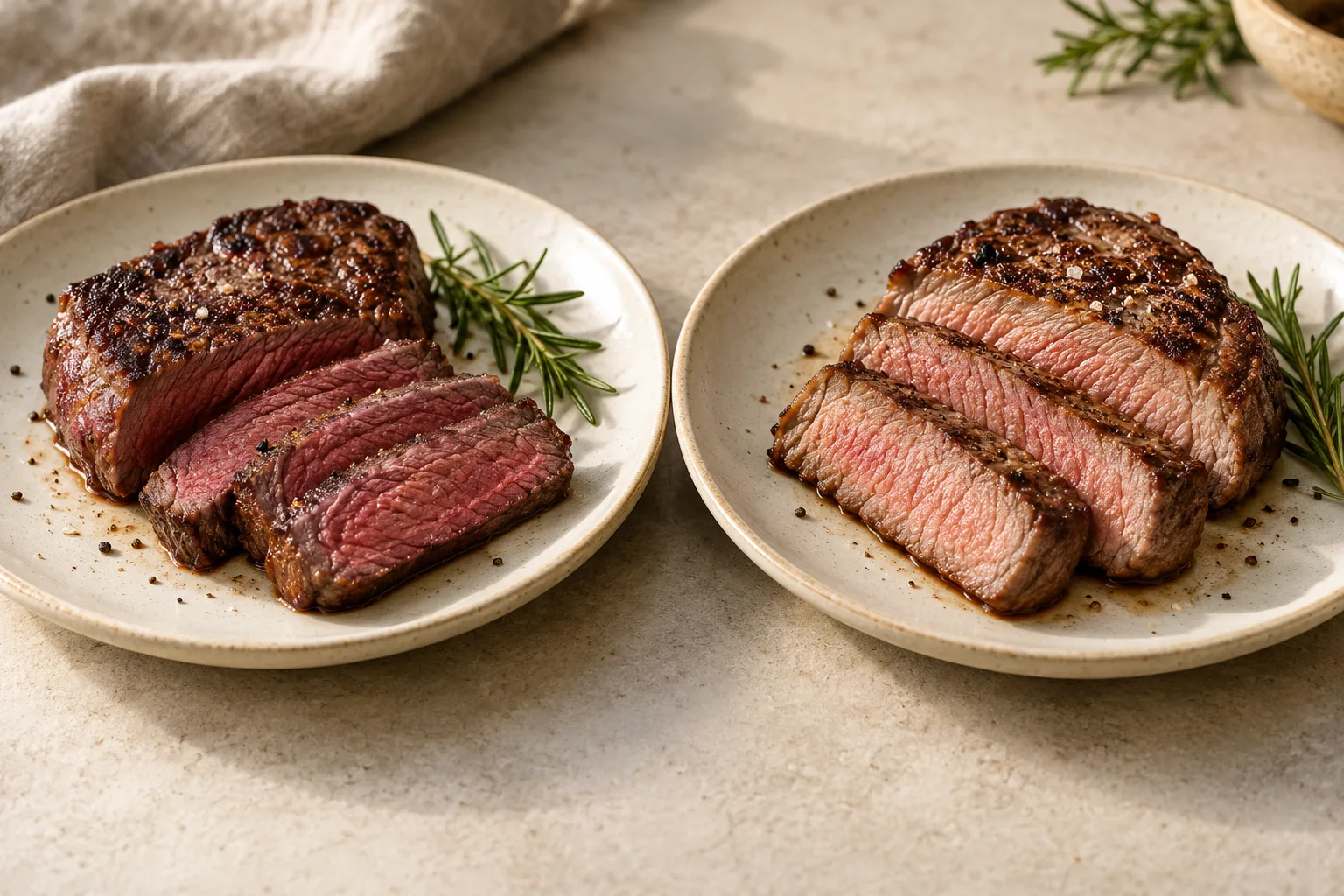
Sometimes Not necessarily. In the USDA cooked top-round comparison, bison has 174 calories per 100 g and lean beef has 162, with about 30 g protein in each. The selected ground-bison reference also has more fat than 95%-lean ground beef. Compare equivalent cuts or declared leanness before paying extra for a health claim.
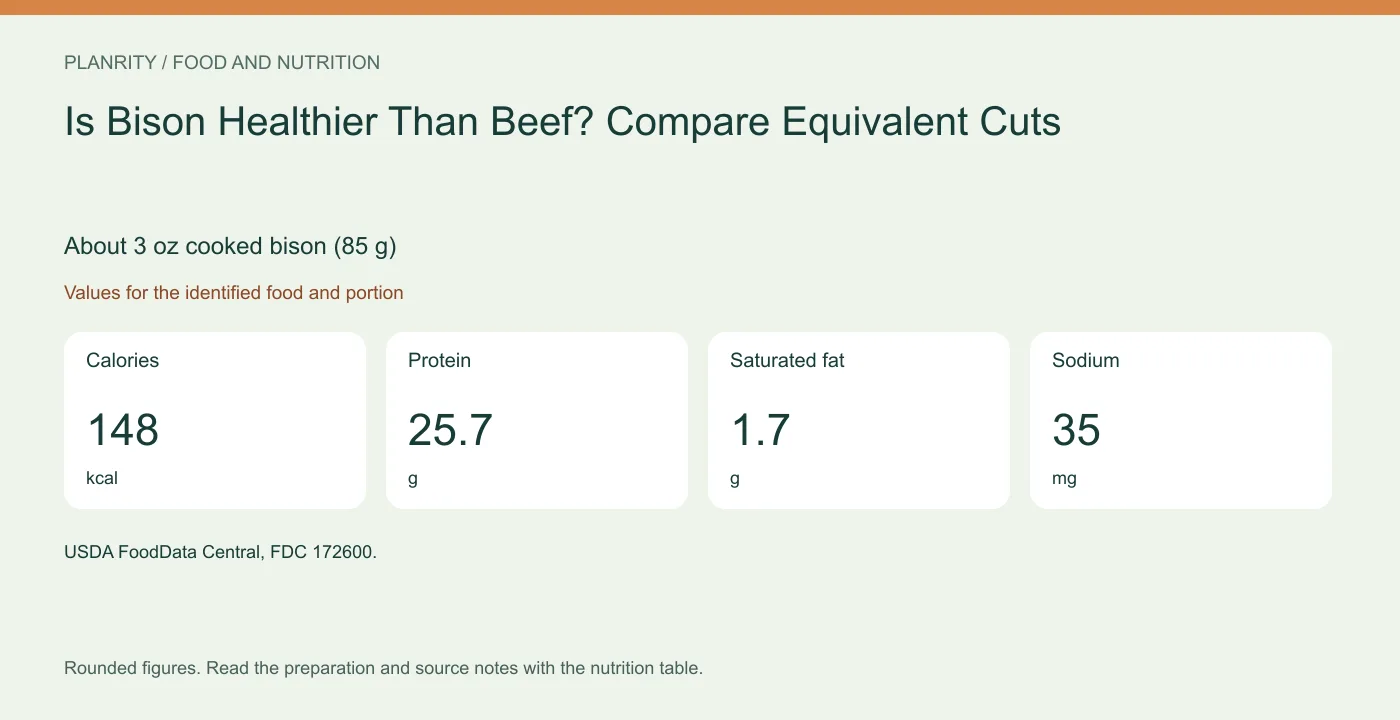
| Nutrient | About 3 oz cooked bison (85 g) | Per 100 g |
|---|---|---|
| Calories | 148 kcal | 174 kcal |
| Protein | 25.7 g | 30.2 g |
| Total fat | 4.2 g | 5.0 g |
| Saturated fat | 1.7 g | 2.0 g |
| Carbohydrate | 0.0 g | 0.0 g |
| Fiber | 0.0 g | 0.0 g |
| Total sugar | 0.0 g | 0.0 g |
| Sodium | 35 mg | 41 mg |
| Calcium | 4 mg | 5 mg |
| Iron | 3.0 mg | 3.5 mg |
| Potassium | 325 mg | 382 mg |
USDA FoodData Central, FDC 172600.
A comparison against high-fat ground beef can exaggerate bison’s advantage. Lean top round and very lean beef mince are legitimate alternatives, so they belong in a fair evaluation alongside bison.
What the meat descriptions mean
“Bison” identifies the animal, not the amount of fat. A steak trimmed to separable lean only differs from a whole piece with visible fat. Ground meat combines tissue from different cuts and can have a different fat percentage.
The same distinction applies to beef. Terms such as “grass-fed” or “natural” do not replace a leanness statement, a cut description or a nutrition panel. Those features may matter to your purchase, but the cut, leanness and preparation remain the useful information for comparing these nutrient values.
Bison top-round nutrition
Source: USDA FoodData Central, FDC 172600.
This reference is a broiled top-round steak, separable lean only. The portion is an example for comparing cooked edible meat. It does not include bone, sauces, bread or oil added at the table.
Compare similar cuts and declared blends
All rows below use the same 100-g weight.
| Food | Calories (kcal) | Protein (g) | Fat (g) | Saturated fat (g) | Fiber (g) | Sodium (mg) |
|---|---|---|---|---|---|---|
| Game meat, bison, top round, separable lean only, 1" steak, cooked, broiled | 174 | 30.2 | 5.0 | 2.0 | 0.0 | 41 |
| Beef, round, top round steak, boneless, separable lean only, trimmed to 0" fat, all grades, cooked, grilled | 162 | 30.1 | 3.8 | 1.6 | 0.0 | 75 |
| Game meat, bison, ground, cooked, pan-broiled | 238 | 23.8 | 15.1 | 6.5 | 0.0 | 73 |
| Beef, ground, 95% lean meat / 5% fat, patty, cooked, pan-broiled | 164 | 25.8 | 5.9 | 2.6 | 0.0 | 71 |
The cooked lean beef top-round reference is lower in total fat and calories than the selected bison top-round reference. Both provide substantial protein. The cooking methods are not identical—broiled versus grilled—so these are close food comparisons, not a controlled experiment isolating animal species.
Ground records are shown separately because a steak’s composition does not predict a burger blend. The ground-bison record does not specify a 95%-lean blend, so that row compares two available products rather than matched leanness.
What bison offers
Protein: The cooked portion supplies a substantial amount. The lean beef example offers a similar protein contribution.
Iron: Red meats can contribute dietary iron. The amount should come from the identified record and be considered within the person’s overall needs. Eating bison is not a substitute for investigating or treating an iron deficiency. NIH iron fact sheet
A different food choice: Taste, availability and preference can make bison useful for variety. Those practical reasons do not require a claim that it prevents disease or is always nutritionally superior.
What can change the meal
Added butter, cheese, bacon or a rich sauce can substantially change a lean steak or burger meal. Compare the meat alone when that is the question, then separately evaluate the assembled meal. A bison burger with many additions is not directly comparable with a plain beef patty.
For ground products, inspect the fat percentage and ingredient list. A seasoned patty may contain salt or binders. If a restaurant cannot provide the blend, describe it as uncertain rather than assigning a precise fat content from a generic record.
Price and availability also matter. Consider the nutrients you need alongside the price difference. Compare the edible amount after trimming and cooking, and consider whether a familiar lean beef cut meets the same purpose.
Cook the actual product safely
Do not lower the cooking temperature solely because a meat is lean. USDA guidance for bison distinguishes whole cuts and ground meat: whole cuts should reach 145°F with a three-minute rest, and ground bison should reach 160°F. A thermometer is more reliable than surface browning. USDA FSIS: Bison from Farm to Table, full official archived publication
The general USDA temperature chart also distinguishes whole domestic-meat cuts, ground meat and poultry. Follow product-specific instructions where relevant, especially for mixtures. USDA safe minimum internal temperatures
Lean meat can become dry if cooking is poorly controlled. Choose a suitable method, monitor temperature and add moisture through a cooking liquid or an appropriate sauce. Do not present undercooking as a nutrition improvement.
Portion and frequency
The illustrated 3-ounce cooked portion is a practical comparison amount, not a universal prescription. Appetite, meal composition and personal requirements can justify a different amount. Doubling the edible portion approximately doubles the nutrients represented by a matching record.
No special weekly bison frequency is established here. A varied eating pattern can include other animal or plant proteins. People with medically restricted protein, iron or fat needs should use individualized guidance rather than a blanket red-meat ranking.
A buying framework
| Comparing steaks | Comparing ground products | Comparing meals |
|---|---|---|
| Identify the cut and trimming | Check declared leanness | Include bread, cheese and sauce |
| Match raw or cooked state | Read any seasoning ingredients | Match total portion size |
| Compare edible weights | Use the current package panel | Account for sides and cooking fats |
This framework avoids several common errors at once: using raw beef against cooked bison, using fatty beef against trimmed bison, or comparing meat-only figures with a complete burger. Each can produce a numerical table that looks persuasive while answering an unfair question.
Shopping and cooking checklist
- Identify the cut or ground blend.
- Match the trimming and cooking state of comparison foods.
- Use current labels for packaged patties.
- Count salt and fat added during preparation.
- Cook to the applicable safe endpoint.
- Compare prices per edible portion.
- Choose based on taste and needs, not an animal-name health halo.
Check whether a comparison answers your decision
A shopper choosing a steak needs a steak comparison, while someone making burgers needs ground-product information. If the available data describe a different product, use them as background rather than substituting them for the missing label. The extra precision of a table cannot repair a mismatch in the food being compared. This applies equally when comparing bison with poultry, venison or plant-based patties.
Read the blend before paying more
For a lean steak dinner, the bison and beef top-round references differ by only 12 calories per 100 g, with similar protein. That small difference may matter less to you than taste, price or availability. For a burger, the selected ground-bison reference is 238 calories per 100 g, while 95%-lean cooked beef is 164; the declared blend is therefore important.
Neither pair means you must choose beef or bison. It shows which information to request before making a health claim about the purchase. Compare the cut, leanness and cooked state, then choose the portion you want. Count cheese, bun, cooking fat and sauces separately if building a burger meal. Keep safe cooking endpoints tied to whole cuts or ground meat, regardless of which species you select.
What to take away
Bison can be an appealing red-meat choice without being nutritionally superior to every beef option. The lean-cut comparison is close, and the ground examples show why declared leanness matters. Compare the products at the same cooked weight, then consider taste, price and availability. Keep the cooking guidance appropriate to whole cuts or ground meat. The cut and label are more useful nutrition information than the price premium.
Related food guides
Frequently asked questions
Is bison always lower in fat than beef?
No. The identified lean beef top-round record has less fat than the identified bison top-round record. Other cuts or blends can produce different results. Compare equivalent products rather than using a fatty beef example to represent all beef.
Is a bison burger the same as a lean bison steak?
No. Grinding and blending create a different product, and a burger can also contain seasonings or added ingredients. Use a ground-product label or record for a burger. A steak record is not an estimate for its nutrition panel.
Should I cook bison less because it is lean?
Leanness does not reduce the safe cooking requirement. Use the applicable guidance for whole cuts or ground bison and measure temperature. Cooking technique and added moisture can help texture without treating an unsafe endpoint as necessary.
Is the extra cost nutritionally necessary?
Not necessarily. Lean beef or another protein may meet similar nutritional needs at a different price. Consider edible portions, convenience and preference. The table supports specific nutrient comparisons rather than a claim that everyone needs to buy bison.
Sources
- Beef, round, top round steak, boneless, separable lean only, trimmed to 0" fat, all grades, cooked, grilled; 168649, USDA
- Beef, ground, 95% lean meat / 5% fat, patty, cooked, pan-broiled; 171792, USDA
- Game meat, bison, top round, separable lean only, 1" steak, cooked, broiled; 172600, USDA
- Game meat, bison, ground, cooked, pan-broiled; 174422, USDA
- NIH iron fact sheet, NIH Office of Dietary Supplements
- USDA safe minimum internal temperatures, USDA
- Carcinogenicity of red and processed meat, World Health Organization
- How to Understand and Use the Nutrition Facts Label | FDA, FDA
- American Heart Association guidance on dietary fats, American Heart Association
- USDA FSIS: Bison from Farm to Table, full official archived publication