Meats and seafood
Is Venison Healthier Than Beef? Cuts, Nutrition and Safety
Compare venison and lean beef by cut, serving size, protein and fat. Learn how ground blends, safe preparation and CWD precautions affect the choice.
The short answer
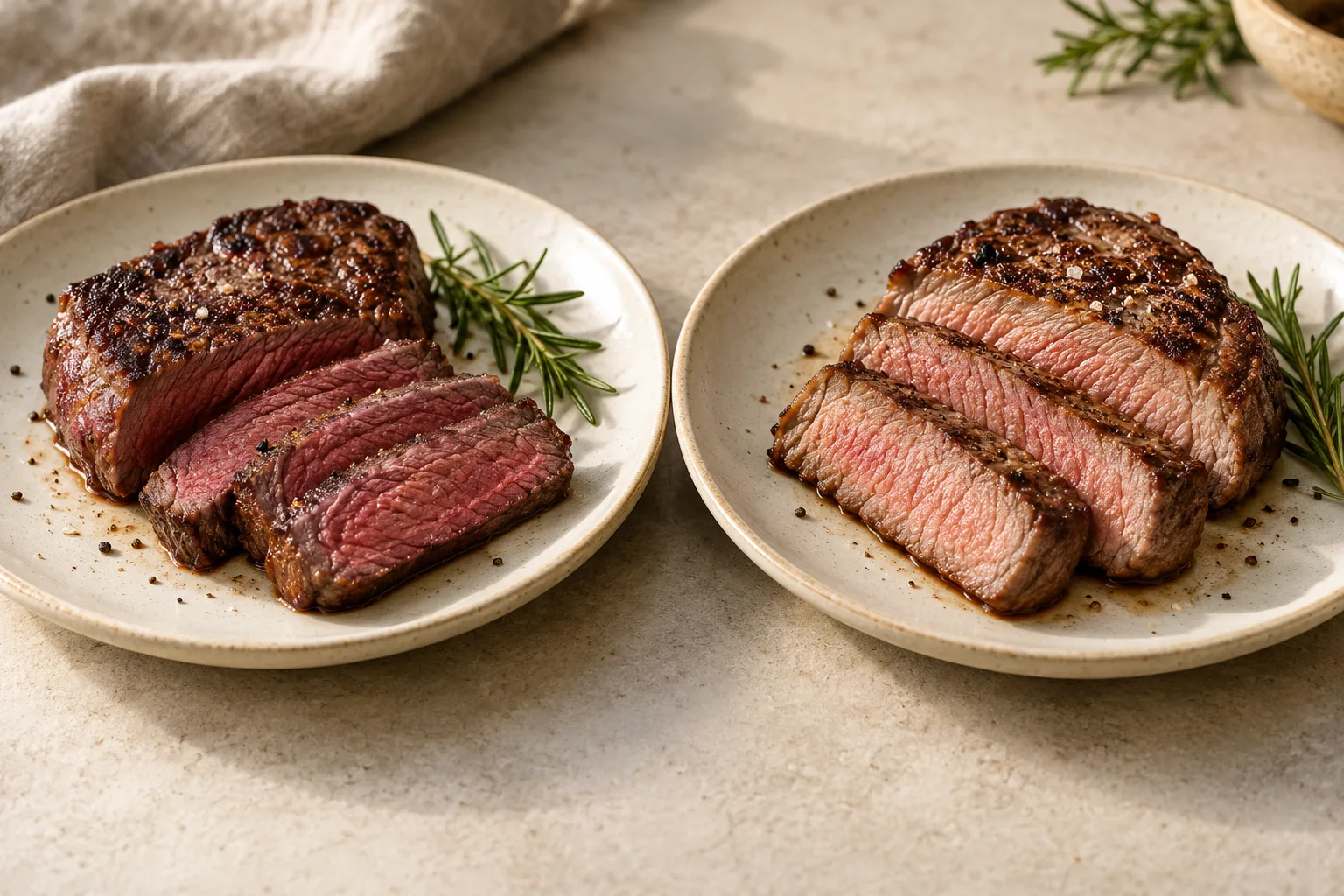
Sometimes Venison loin is a lean choice, but it does not beat every beef cut. The USDA cooked-loin reference has 150 calories and 30.2 g protein per 100 g, compared with 162 calories and 30.1 g protein for lean beef top round. Ground blends can reverse the fat comparison, and wild venison needs careful sourcing and handling.
| Nutrient | About 3 oz cooked meat (85 g) | Per 100 g |
|---|---|---|
| Calories | 128 kcal | 150 kcal |
| Protein | 25.7 g | 30.2 g |
| Total fat | 2.0 g | 2.4 g |
| Saturated fat | 1.1 g | 1.4 g |
| Carbohydrate | 0.0 g | 0.0 g |
| Fiber | 0.0 g | 0.0 g |
| Total sugar | 0.0 g | 0.0 g |
| Sodium | 48 mg | 57 mg |
| Calcium | 5 mg | 6 mg |
| Iron | 3.5 mg | 4.1 mg |
| Potassium | 338 mg | 398 mg |
USDA FoodData Central, FDC 172604.
A deer loin and a fatty beef burger answer different questions. A more useful comparison places lean cooked venison beside lean cooked beef, then examines ground meat separately. That approach also avoids assuming every package of ground venison has the composition of a deer steak.
What counts as venison?
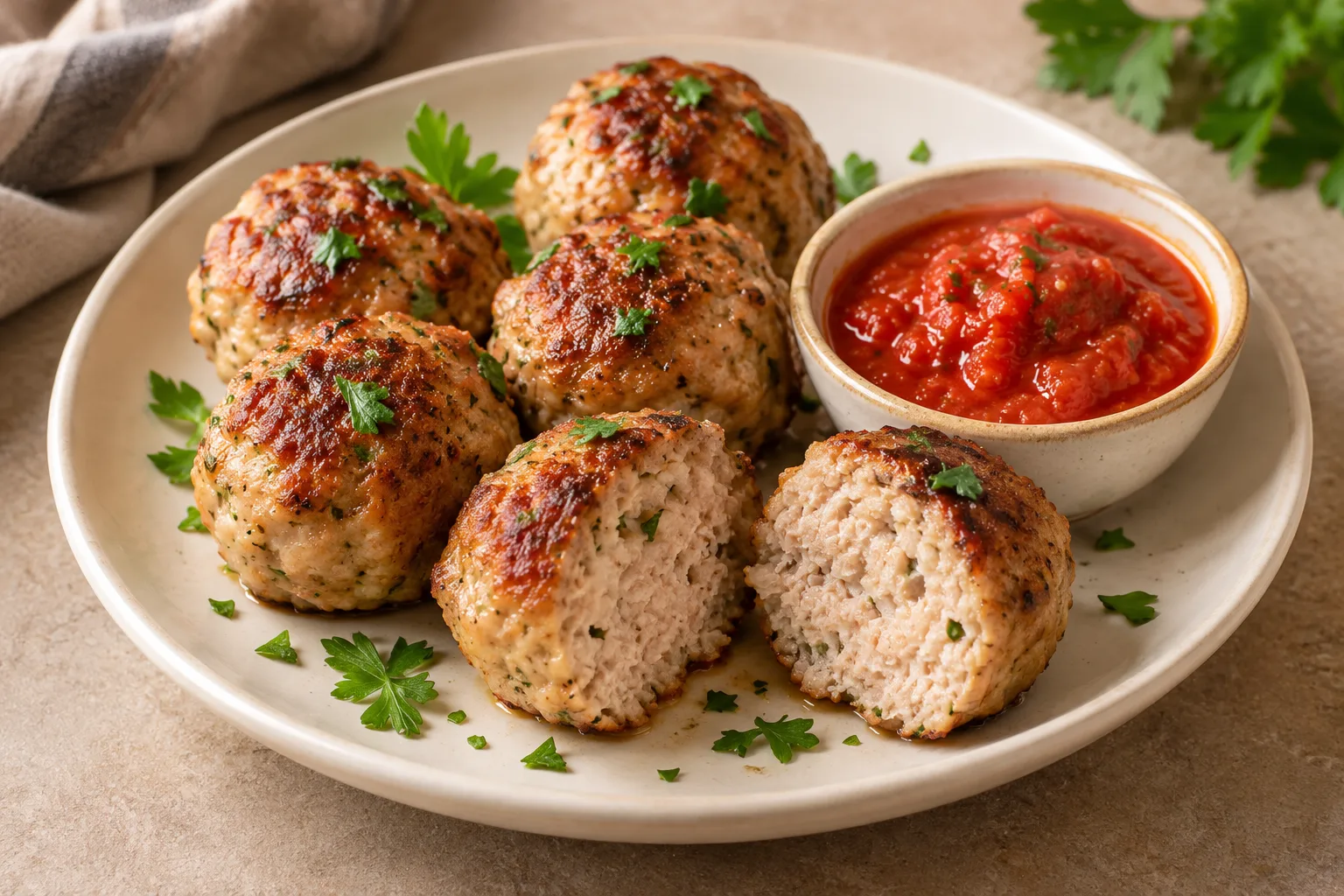
Here, venison means deer meat. It may be hunted or farmed, and the cut, trimming, added fat and preparation all affect its composition. A processor may mix ground deer meat with pork or beef fat. Sausage can also include salt, curing ingredients and other meats. Ask for the blend rather than treating “venison” as a complete nutrition label.
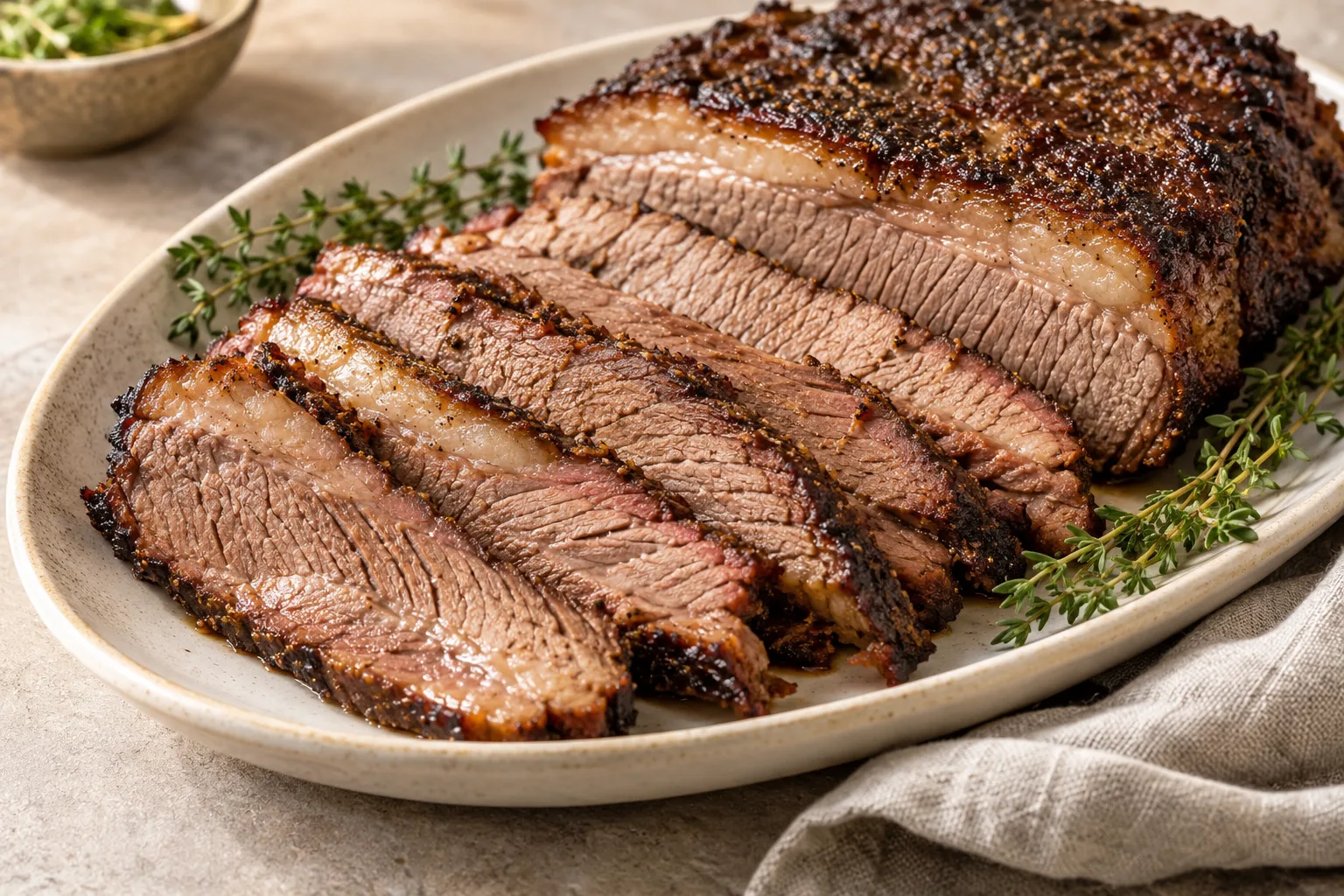
Beef varies just as much. Top round trimmed of visible fat is a substantially different food from a highly marbled steak or a higher-fat burger. The amount of fat actually eaten matters more than the animal’s reputation.
Nutrition for a defined serving
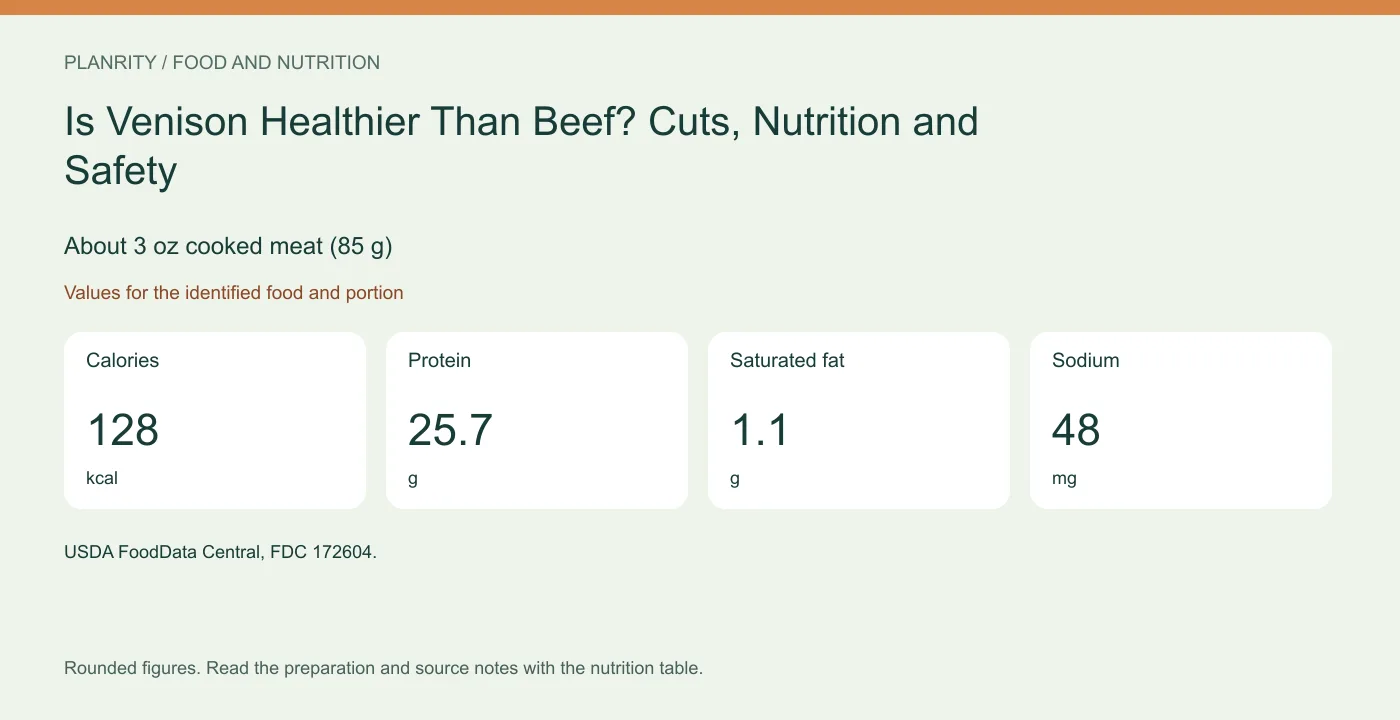
Source: USDA FoodData Central, FDC 172604.
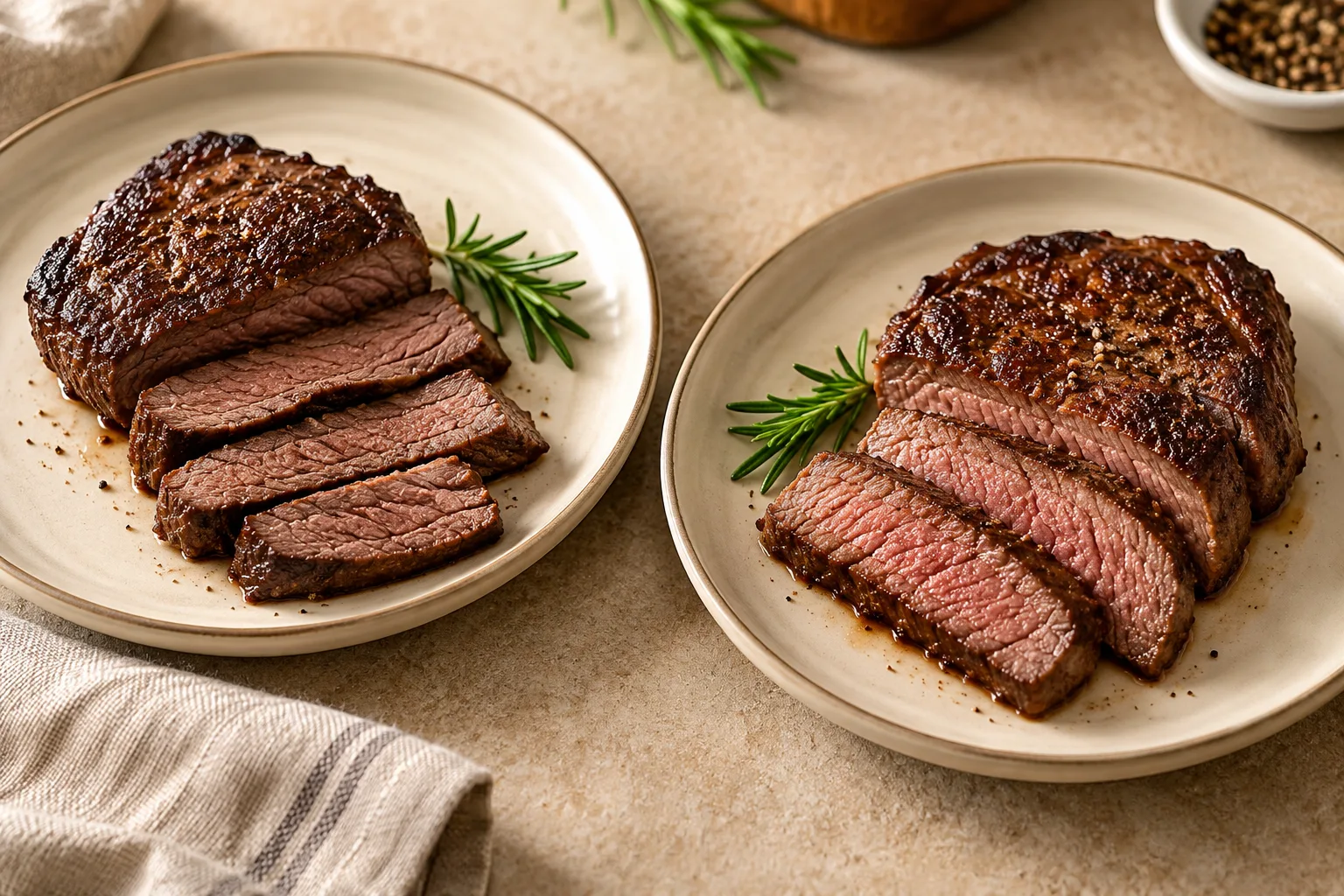
This serving is a practical comparison portion, not an official limit on how much venison anyone should eat. Weigh the edible cooked meat after removing bone. Bread, sauces and cooking fat are additional foods and are not included in the meat record.
A fair comparison changes the verdict
All rows below use the same 100-g weight.
| Food | Calories (kcal) | Protein (g) | Fat (g) | Saturated fat (g) | Fiber (g) | Sodium (mg) |
|---|---|---|---|---|---|---|
| Game meat, deer, loin, separable lean only, 1" steak, cooked, broiled | 150 | 30.2 | 2.4 | 1.4 | 0.0 | 57 |
| Beef, round, top round steak, boneless, separable lean only, trimmed to 0" fat, all grades, cooked, grilled | 162 | 30.1 | 3.8 | 1.6 | 0.0 | 75 |
| Game meat, deer, ground, cooked, pan-broiled | 187 | 26.4 | 8.2 | 4.0 | 0.0 | 78 |
| Beef, ground, 95% lean meat / 5% fat, patty, cooked, pan-broiled | 164 | 25.8 | 5.9 | 2.6 | 0.0 | 71 |
The lean whole-cut comparison is much closer than a comparison against fatty ground beef would suggest. The ground-meat records also show why a universal leanness claim fails: the identified cooked ground venison contains more total and saturated fat than the identified 95%-lean beef patty. These are separate database samples, not a controlled feeding or cooking experiment.
Do not read these rows as proof that all ground deer contains added fat. The records establish that composition varies; a processor’s recipe or a current package label is needed to explain a particular product.
What venison contributes
Protein: The loin supplies substantial protein in a modest portion. That makes it a useful protein component of a meal, although lean beef supplies a similar amount in this lean-cut comparison.
Iron: Venison provides iron, which the body uses in oxygen-carrying proteins. An iron-containing food can contribute to an adequate diet; it is not a treatment for unexplained fatigue or diagnosed anemia. NIH iron fact sheet
A lean whole-cut option: Choosing and trimming a lean cut can help keep the meal’s saturated fat lower. The benefit depends on the comparison and can be reduced by adding substantial butter, bacon or animal fat during preparation.
Safety comes before a preferred degree of doneness
For hunted venison, use the venison-specific guidance below. Ground beef requires 160°F, while the listed whole beef cuts require 145°F plus a three-minute rest. Ground poultry requires 165°F. These categories are not interchangeable. USDA safe minimum internal temperatures
For venison, the Minnesota Department of Agriculture recommends cooking to at least 165°F. This article follows that conservative, venison-specific recommendation for both whole cuts and ground preparations. Whole cuts and ground blends remain different products: grinding distributes contamination through the mixture, and sausages may contain other ingredients. Do not use a medium-rare preference as evidence that either preparation is safe. Proper Handling and Cooking of Venison | Minnesota Department of Agriculture
Measure temperature in the thickest part, away from bone. For a thin patty, insert the probe through the side toward its center. Use moist cooking methods for tougher cuts, and serve lean meat with a sauce or cooking liquid rather than relying on an unsafe low endpoint to preserve tenderness.
What CWD means for hunters
Chronic wasting disease is a prion disease of deer and related animals. CDC reports that human infections have not been demonstrated, while recommending precautions because the possible risk is still being studied. Follow local wildlife-agency testing advice, consider testing animals before eating them, and do not eat meat from an animal that tests positive. Avoid animals found dead or behaving abnormally. CDC guidance on chronic wasting disease
Ordinary grilling or boiling does not remove CWD risk. Research published by CDC detected prion activity in cooked meat from an infected elk. Sourcing and testing decisions therefore remain important even when bacterial cooking guidance is followed. CDC research on cooked elk meat.
Portion and meal decisions
Start with the illustrated cooked portion if it suits your appetite, then build the meal with vegetables and a carbohydrate source such as potatoes, whole grains or beans. A larger portion changes nutrient intake proportionally. Choose the amount for the meal you need.
There is no universal evidence-based rule in this article that venison should be eaten a certain number of times weekly. Variety, personal needs and any clinician-directed restrictions matter. People who must restrict iron, protein or other nutrients should use individualized advice.
Pregnant people, older adults and people with weakened immunity should be especially cautious about undercooked meat and uncertain handling. A freezer package labeled “wild” or “organic” is not a food-safety guarantee. Keep raw meat and its juices away from ready-to-eat food.
Before buying or cooking
- Identify the animal, cut and whether it was hunted or farmed.
- Ask whether ground meat contains added pork, beef or fat.
- Check hunting-area CWD testing advice before consuming a harvested animal.
- Keep meat refrigerated during thawing and marinating.
- Use a thermometer and the venison-specific guidance above.
- Choose braising liquid and seasonings deliberately; count added fats separately.
- Compare prices per edible portion after trimming and cooking.
Choosing the meat for a burger
For a steak dinner, compare the lean loin with a lean beef cut rather than a fatty rib steak. The two lean references have nearly the same protein, so taste and availability may decide the purchase. For burgers, ask how the venison was ground and whether pork or beef fat was mixed in. The bag’s species name alone leaves that important question unanswered.
If the meat came from a hunter, find out where the animal was taken and whether testing is recommended locally. Keep the animal’s identity with the meat through processing. That information helps with a decision a supermarket nutrition panel cannot answer. Add potatoes, beans or vegetables according to the meal you want, rather than increasing the meat portion just because the venison cut is lean.
What to take away
Choose venison if you enjoy it and can source and handle it safely, rather than assuming the species guarantees a better burger. The lean-loin comparison is close, while ground blends can contain very different amounts of fat. Ask about added fat, compare the cut you will actually eat, and use the safe cooking endpoint for that form of meat. For wild game, local disease and testing guidance belongs in the decision too.
Related food guides
Frequently asked questions
Is ground venison always leaner than ground beef?
No. The blend and the beef leanness level determine the comparison. Added fat can change ground venison substantially, and the USDA records shown here do not put ground venison ahead of 95%-lean beef on fat. Ask the processor for the formulation or use the package label.
Does cooking eliminate CWD risk?
Normal cooking temperatures used to control bacteria do not reliably eliminate CWD prions. Do not eat meat from an animal that tests positive. Follow local wildlife testing recommendations and keep individual animals identifiable during processing.
Is venison a treatment for low iron?
Venison contains iron, but low iron requires appropriate assessment. The cause may involve intake, absorption or blood loss. A clinician can advise whether dietary changes, supplementation or further testing are needed; eating venison alone does not address every cause of deficiency.
Why can cooked meat values differ from raw values?
Cooking changes moisture and may remove fat in drippings. A smaller cooked weight can contain more protein per 100 grams even though cooking did not create protein. Compare raw with raw or cooked with cooked, and identify the cut and trimming.
Sources
- Beef, round, top round steak, boneless, separable lean only, trimmed to 0" fat, all grades, cooked, grilled; 168649, USDA
- Beef, ground, 95% lean meat / 5% fat, patty, cooked, pan-broiled; 171792, USDA
- Game meat, deer, ground, cooked, pan-broiled; 172603, USDA
- Game meat, deer, loin, separable lean only, 1" steak, cooked, broiled; 172604, USDA
- Proper Handling and Cooking of Venison | Minnesota Department of Agriculture, Minnesota Department of Agriculture
- USDA safe minimum internal temperatures, USDA
- CDC guidance on chronic wasting disease, CDC
- NIH iron fact sheet, NIH Office of Dietary Supplements
- Carcinogenicity of red and processed meat, World Health Organization
- CDC research on cooked elk meat, CDC Emerging Infectious Diseases