Meats and seafood
Is Turkey Healthy? Breast, Thigh, Ground and Deli
Compare turkey breast, thigh, ground and deli products by cooked weight. Understand protein, sodium, fat, processing and safe poultry preparation.
The short answer
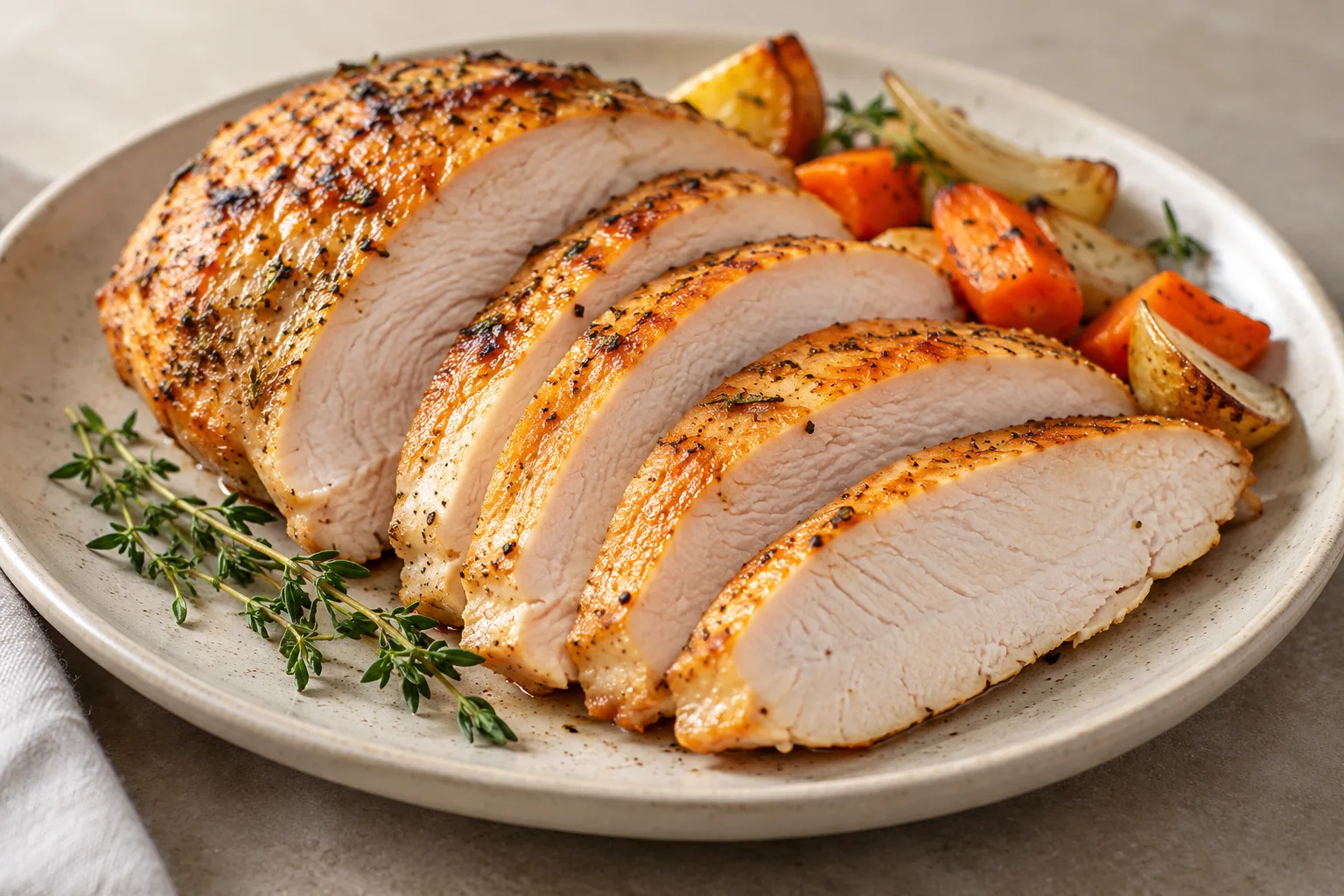
Yes Plain roasted turkey breast is a lean protein option: 3 oz (85 g) of the reference supplies about 125 calories and 25.6 g protein. Deli turkey is a different choice—the selected packaged-breast record has 898 mg sodium per 100 g, compared with 99 mg for plain roasted breast. Read the label for the form you buy.
| Nutrient | About 3 oz cooked breast (85 g) | Per 100 g |
|---|---|---|
| Calories | 125 kcal | 147 kcal |
| Protein | 25.6 g | 30.1 g |
| Total fat | 1.8 g | 2.1 g |
| Saturated fat | 0.5 g | 0.6 g |
| Carbohydrate | 0.0 g | 0.0 g |
| Fiber | 0.0 g | 0.0 g |
| Total sugar | 0.0 g | 0.0 g |
| Sodium | 84 mg | 99 mg |
| Calcium | 8 mg | 9 mg |
| Iron | 0.6 mg | 0.7 mg |
| Potassium | 212 mg | 249 mg |
USDA FoodData Central, FDC 171496.
Skinless roasted breast can be a lean choice without being declared the healthiest meat for everyone. A ground blend or seasoned deli product needs its own nutrition information rather than inheriting the breast’s reputation.
Four preparations worth separating
Breast and thigh differ in composition. Removing skin changes the edible portion, and a label that says “with added solution” can signal additional ingredients that matter for sodium. Read the product description rather than assuming every whole turkey is unseasoned.
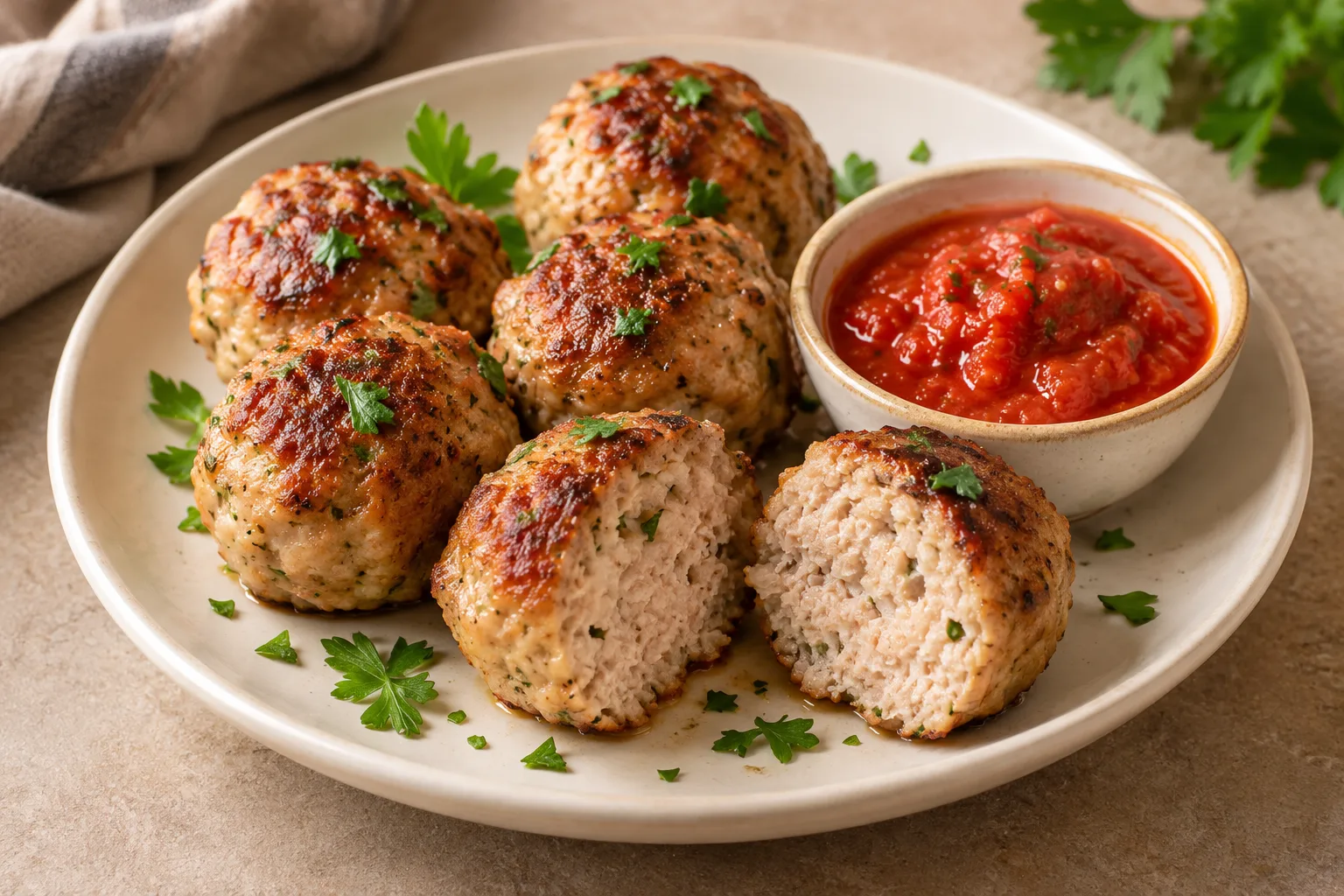
Ground turkey may include different proportions of meat, skin and fat. A 93%-lean product is not identical to a fat-free blend or an 85%-lean version. Compare the declared leanness of ground turkey and beef.
Deli turkey is a prepared product with its own water, salt and other ingredients. Its texture and convenience do not make it nutritionally identical to plain roasted breast, even when both are labeled turkey.
Roasted breast nutrition
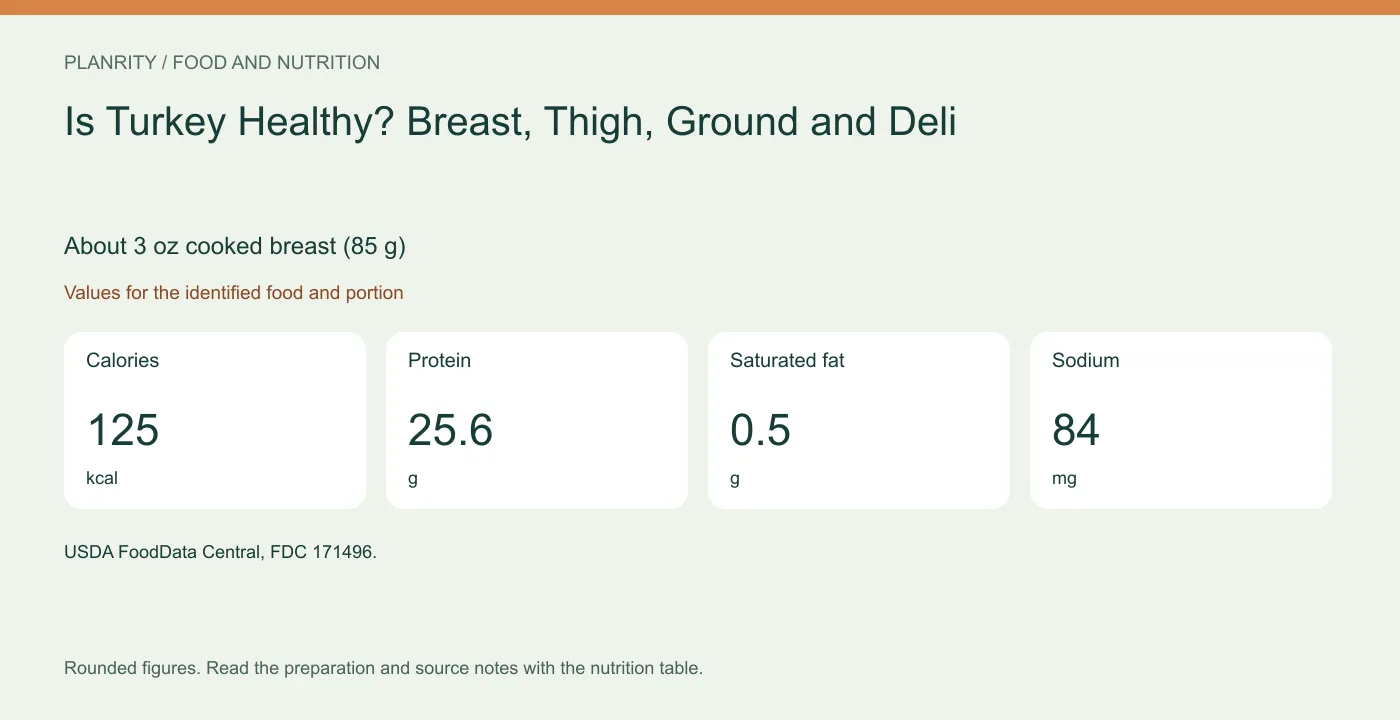
Source: USDA FoodData Central, FDC 171496.
The record describes meat-only roasted breast from a whole turkey. It excludes skin, gravy and bread. For a raw or brined product, use a record or label that matches that preparation.
Compare the actual preparation
All rows below use the same 100-g weight.
| Food | Calories (kcal) | Protein (g) | Fat (g) | Saturated fat (g) | Fiber (g) | Sodium (mg) |
|---|---|---|---|---|---|---|
| Turkey, whole, breast, meat only, cooked, roasted | 147 | 30.1 | 2.1 | 0.6 | 0.0 | 99 |
| Turkey, thigh, from whole bird, meat only, roasted | 165 | 27.7 | 6.0 | 1.8 | 0.0 | 104 |
| Turkey, ground, 93% lean, 7% fat, pan-broiled crumbles | 213 | 27.1 | 11.6 | 3.0 | 0.0 | 90 |
| Turkey breast, sliced, prepackaged | 106 | 14.8 | 3.8 | 0.9 | 0.0 | 898 |
The deli record contains more sodium per equal weight than the plain roasted-breast record, while its protein density is lower. That illustrates the importance of formulation. Brands differ, so check the current deli package.
The cooked 93%-lean ground record also has more fat than the breast record. A lean percentage refers to the product as defined, while cooking can change moisture and retained fat. Do not treat raw and cooked percentages as identical measurements.
What turkey contributes
Protein: The identified cooked preparations all contribute protein in different amounts. A moderate edible portion can serve as one meal component.
Vitamin B12 and selenium: The plain roasted-breast record supplies about 0.33 mcg vitamin B12 and 26 mcg selenium per 85-g portion, in addition to its protein. These amounts describe the stated cooked breast; deli slices and ground blends need their own records. USDA turkey-breast nutrient record
Flexible use: Roasted meat, ground turkey and leftovers can be used in different dishes. Convenience and taste can guide selection once the nutritional and safety details are clear.
Deli meat and processing
Curing, salting, smoking and other preservation processes can make a product part of the processed-meat category. Not every food becomes equivalent simply because it has been sliced or cooked. Read the actual ingredients and process description.
WHO/IARC classifies processed meat as carcinogenic to humans based on sufficient evidence. The category describes the strength of evidence, not equal risk from every exposure or proof that an individual meal causes disease. The assessment also distinguishes unprocessed red meat. Carcinogenicity of red and processed meat
“No nitrates or nitrites added” is not a general guarantee of lower sodium or absence of processed-meat considerations. A product may use other ingredients or preservation methods. Evaluate the full product rather than one front-of-pack phrase.
The turkey-and-sleep claim
Turkey contains tryptophan, but post-meal sleepiness has more context than one ingredient.
Meal size, alcohol, sleep and other circumstances can also influence how someone feels after eating. This article does not claim a specific mechanism or use turkey’s amino-acid content as a reason to promote or avoid it. A nutrition verdict should rest on the actual preparation and meal.
Cooking safety applies to every poultry cut
USDA lists 165°F for poultry, including whole birds, parts and ground poultry. Do not use the lower endpoint for ground beef when cooking turkey mince. Check temperature with a food thermometer rather than relying only on color. USDA safe minimum internal temperatures
For a whole bird, different areas can heat differently. Follow the applicable USDA instructions for the bird and any stuffing. A breast-only table does not describe the safety procedure for an entire stuffed turkey.
Raw poultry juices should be kept away from ready-to-eat foods. Use clean utensils after cooking, refrigerate leftovers promptly and reheat leftovers safely. A cold deli product also needs the handling and any higher-risk-audience advice relevant to that product. USDA FSIS: Leftovers and Food Safety
Portion and meal choices
The illustrated 3-ounce cooked amount is a reference portion, not a universal limit. A larger meal may contain a different amount according to appetite and needs. Use the cooked edible weight and a matching record for calculations.
Gravy, skin, bread, cheese and cooking fats change a turkey meal. A sandwich built with salty deli slices and cheese differs from plain roasted turkey with vegetables. Neither can be represented accurately by the breast table alone.
People with sodium or other medical restrictions should use actual product data and individualized targets. If a package contains an added solution, read its panel rather than assuming a plain-meat sodium amount.
Shopping and cooking checklist
- Identify the cut, skin and cooking state.
- Check for added solution or brining.
- Read the lean percentage of ground turkey.
- Compare deli labels by equal weight.
- Count gravy, bread and other additions.
- Cook every poultry preparation to the applicable safe endpoint.
- Store and reheat leftovers appropriately.
Plan calculations around edible leftovers
After a roast meal, weigh the meat you actually retain rather than dividing the original bird’s purchase weight among future servings. Bones, skin, drippings and discarded portions change yield. If leftovers include gravy or stuffing, calculate them as additional foods. This gives a clearer estimate for a sandwich or soup than assuming every leftover portion has the composition of plain breast.
Match the turkey to the purpose
For a sandwich, 50 g of the selected deli turkey allocates about 449 mg sodium, while 50 g of the plain roasted breast allocates about 50 mg. Bread, cheese and condiments add more. That is a useful reason to compare labels or choose leftover plain roast turkey when you want less sodium; it does not describe every deli brand.
For dinner, choose breast or thigh for the flavor and texture you enjoy. Count skin if you eat it and use the cooked edible weight when comparing the table’s records. For ground turkey, read the declared lean percentage before assuming it has less fat than beef. Those choices keep the product you buy connected to the nutrition and safe cooking guidance you use.
A food-safety precaution for higher-risk readers
During pregnancy or with weakened immunity, CDC advises heating deli meats and fermented or dry sausages to 165°F or until steaming hot before eating. That precaution also applies to a product sold ready to eat. CDC pregnancy food-safety guidance and CDC guidance for weakened immunity.
What to take away
Turkey is a useful protein choice when you distinguish plain cooked cuts, ground blends and deli products. Breast can be lean, thigh offers a different texture, and packaged slices may supply far more sodium. Match the nutrition to the form you buy and count skin, sauce or sandwich ingredients separately. Cook poultry to 165°F and handle leftovers safely. The word turkey on a package is a starting point, not the full answer.
Related food guides
Frequently asked questions
Is ground turkey always leaner than ground beef?
No. The blend and declared leanness determine the comparison. A higher-fat turkey blend can differ substantially from breast or fat-free mince. Compare equivalent raw or cooked products at equal weights rather than using the animal name as the answer.
Is deli turkey the same as roasted turkey breast?
No. Deli products can include water, salt and other ingredients, and their protein density may differ. Use the exact package panel. The plain roasted-breast record is not an estimate for the nutrition of an unspecified sandwich meat.
Does a no-nitrites claim guarantee a healthier product?
No. That claim does not establish a lower sodium amount or describe every preservation method used. Read the complete ingredients, nutrition and product description. A single front-of-pack claim cannot replace comparison of the actual serving and preparation.
What temperature does ground turkey need?
USDA’s poultry endpoint is 165°F, including ground poultry. Do not substitute the lower endpoint used for ground beef. Use a thermometer in the center and check appropriately sized portions rather than relying only on color or surface browning.
Sources
- Turkey, whole, breast, meat only, cooked, roasted; 171496, USDA
- Turkey, thigh, from whole bird, meat only, roasted; 171532, USDA
- Turkey, ground, 93% lean, 7% fat, pan-broiled crumbles; 172851, USDA
- Turkey breast, sliced, prepackaged; 172941, USDA
- USDA safe minimum internal temperatures, USDA
- USDA FSIS: Leftovers and Food Safety, USDA
- Carcinogenicity of red and processed meat, World Health Organization
- How to Understand and Use the Nutrition Facts Label | FDA, FDA
- Sodium in Your Diet | FDA, FDA
- CDC: Safer Food Choices for Pregnant Women, CDC
- CDC: Safer Food Choices for People With Weakened Immune Systems, CDC