Meats and seafood
Is Fish Healthy? Nutrition, Mercury and Safer Choices
Compare fish nutrition by species and preparation. Learn the FDA/EPA mercury categories, pregnancy portions, tuna distinctions and safe seafood handling.
The short answer
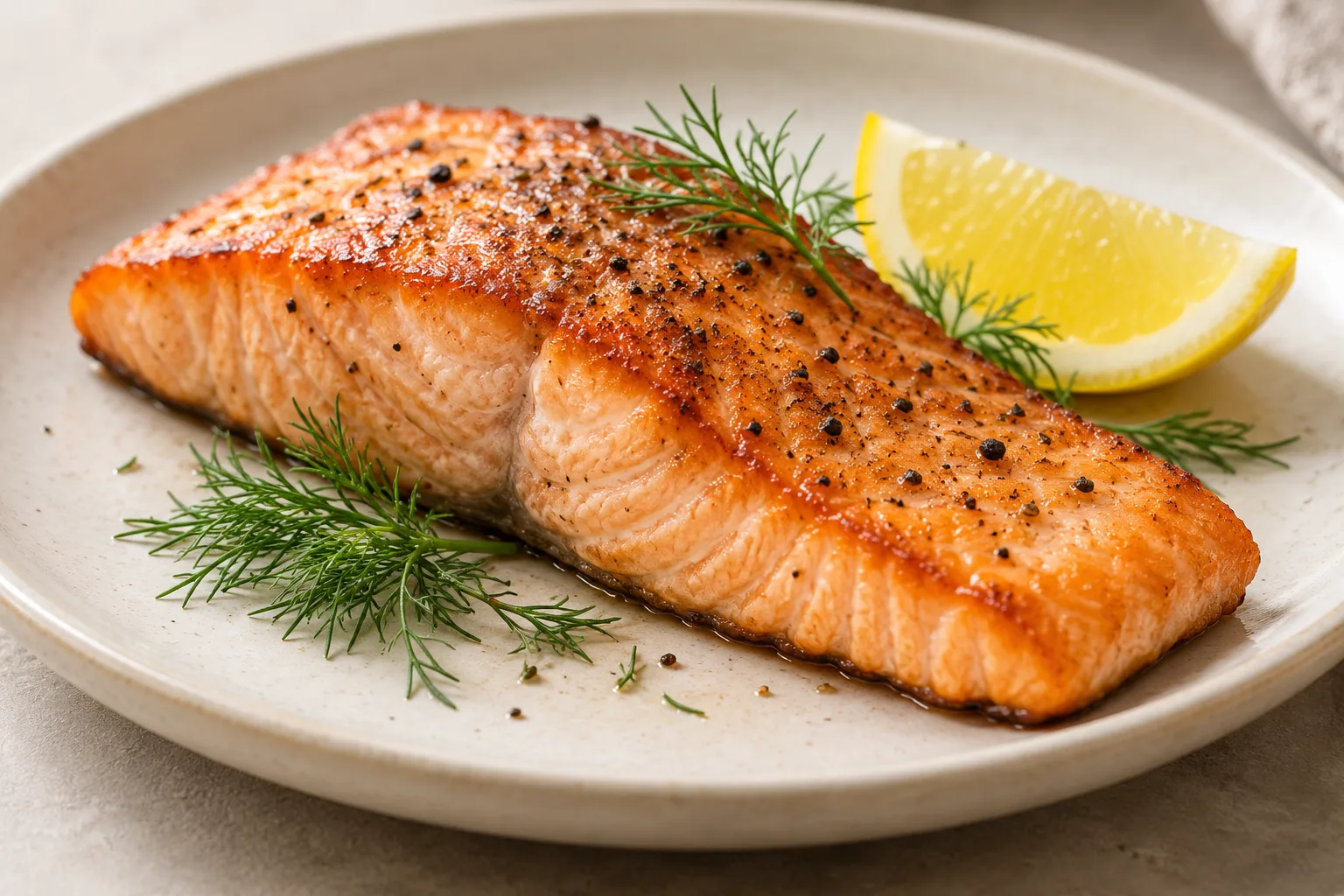
Yes A 3-oz (85-g) portion of the cooked Atlantic salmon reference provides about 175 calories and 18.8 g protein. Choose the species as well as the cooking method: mercury guidance distinguishes canned light tuna from albacore and bigeye tuna, and raw fish needs different safety precautions from thoroughly cooked fish.
| Nutrient | About 3 oz cooked salmon (85 g) | Per 100 g |
|---|---|---|
| Calories | 175 kcal | 206 kcal |
| Protein | 18.8 g | 22.1 g |
| Total fat | 10.5 g | 12.3 g |
| Saturated fat | 2.0 g | 2.4 g |
| Carbohydrate | 0.0 g | 0.0 g |
| Fiber | 0.0 g | 0.0 g |
| Total sugar | 0.0 g | 0.0 g |
| Sodium | 52 mg | 61 mg |
| Calcium | 13 mg | 15 mg |
| Iron | 0.3 mg | 0.3 mg |
| Potassium | 326 mg | 384 mg |
USDA FoodData Central, FDC 175168.
Salmon, cod and canned tuna differ in fat content, nutrient composition and convenience. A breaded fish sandwich is a different meal from a plain fillet. Start with a named species and preparation, then consider how often it fits alongside other protein foods.
What changes the nutrition?
Fish may be fresh, frozen, canned, smoked, salted or prepared in a restaurant. Fresh and frozen describe storage, not a guarantee of a particular nutrient profile. The species and any added ingredients remain important.
For canned fish, identify whether the record or label describes drained solids or the entire contents, and whether it is packed in water or oil. For cooked fish, distinguish a plain fillet from breading, batter and sauce. Comparing equal edible weights makes differences easier to interpret.
A defined salmon serving
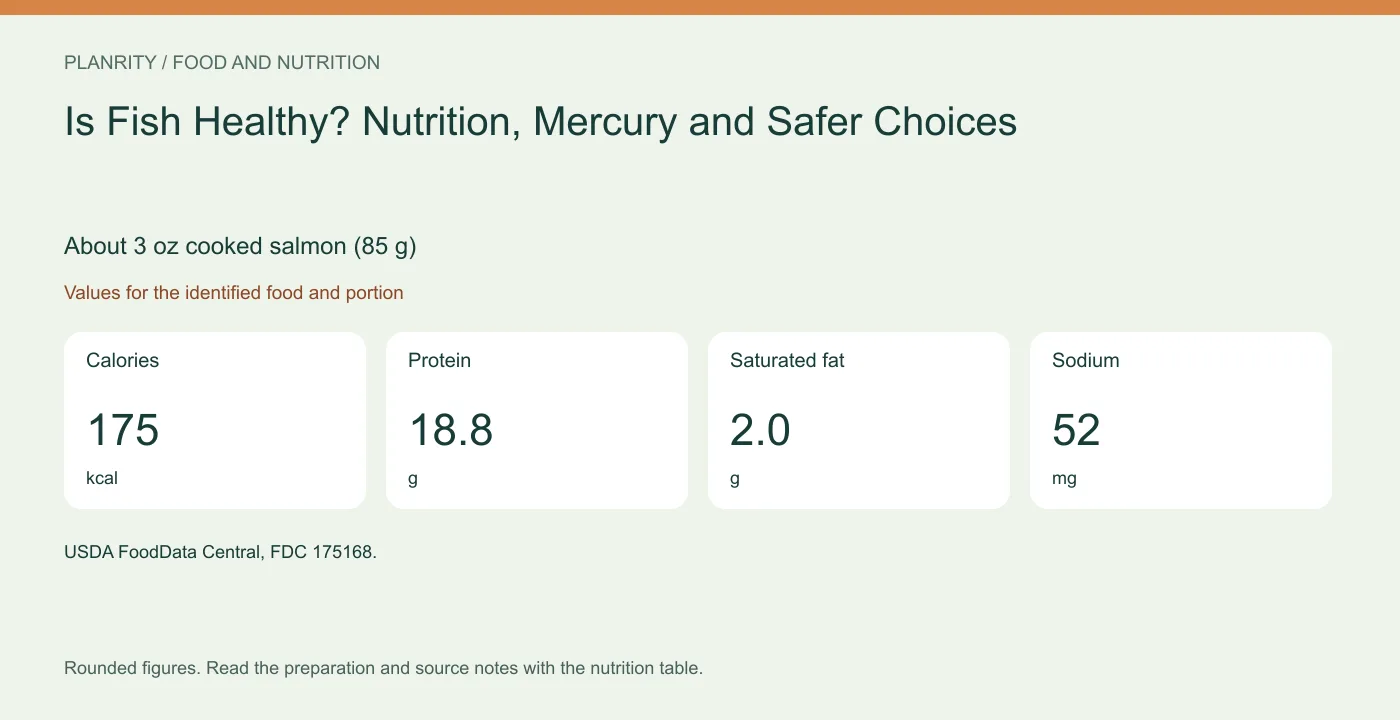
Source: USDA FoodData Central, FDC 175168.
This is farmed Atlantic salmon cooked with dry heat. It does not describe wild salmon, raw fish or smoked salmon. The 3-ounce cooked portion illustrates meal nutrition; the FDA/EPA adult mercury-advice serving uses a different, uncooked weight, discussed below.
Species comparison
All rows below use the same 100-g weight.
| Food | Calories (kcal) | Protein (g) | Fat (g) | Saturated fat (g) | Fiber (g) | Sodium (mg) |
|---|---|---|---|---|---|---|
| Fish, salmon, Atlantic, farmed, cooked, dry heat | 206 | 22.1 | 12.3 | 2.4 | 0.0 | 61 |
| Fish, cod, Atlantic, cooked, dry heat | 105 | 22.8 | 0.9 | 0.2 | 0.0 | 78 |
| Fish, tuna, light, canned in water, drained solids (Includes foods for USDA’s Food Distribution Program) | 86 | 19.4 | 1.0 | 0.2 | 0.0 | 247 |
| Fish, tuna, white, canned in water, drained solids | 128 | 23.6 | 3.0 | 0.8 | 0.0 | 377 |
Salmon supplies more fat than the cod reference, including a different fatty-acid profile. Some fish provide more long-chain omega-3 fats, while lean species provide protein with less total fat. Canned products can supply useful protein in a convenient form while also adding sodium. Choose according to the nutrient or practical feature that matters to you.
Do not infer mercury content from this nutrition table. A food can have attractive macronutrients and still fall into a less suitable mercury category for a particular audience. Use the FDA/EPA species chart for that separate question.
What fish contributes
Protein: All four examples provide protein, although the amount per 100 grams varies. A fish meal can be built around a moderate edible portion rather than an unusually large fillet.
Omega-3 fats in selected species: EPA and DHA occur in seafood, with fatty fish such as salmon among the relevant sources. NIH distinguishes marine EPA and DHA from plant-derived ALA. Eating fish is not a promise of a specific change in cholesterol or disease risk. NIH omega-3 fatty acids fact sheet
Variety and convenience: Frozen portions and canned fish can make seafood practical. They can also reduce the need to use fresh fish immediately. Match the storage method to your cooking plans and read added-sodium information where relevant.
Use the mercury categories accurately
For people who might become pregnant, are pregnant or breastfeeding, and children, FDA/EPA groups fish into Best Choices, Good Choices, and Choices to Avoid. These are mercury categories for the advice’s specified audience, not overall rankings of taste, sustainability or every nutrient. Advice about Eating Fish | FDA
| Named tuna type | FDA/EPA category |
|---|---|
| Canned light tuna, including skipjack | Best Choices |
| Albacore or white tuna | Good Choices |
| Yellowfin tuna | Good Choices |
| Bigeye tuna | Choices to Avoid |
Check which tuna you are buying: canned light and albacore fall in different FDA/EPA mercury categories. Species names matter. If a package or menu uses an unfamiliar name, consult the chart and ask the seller for identification. Questions & Answers from the FDA/EPA Advice about Eating Fish for Those Who Might Become or Are Pregnant or Breastfeeding and Children Ages 1 to 11 Years | FDA
The adult advice is two to three servings weekly from Best Choices, or one serving from Good Choices. An adult serving in this advice is 4 ounces before cooking. Children’s portions are smaller and depend on age. Follow the age-specific chart rather than giving a child the adult portion. Choose the portion guidance for the person eating the fish, including smaller portions for children. Advice about Eating Fish | FDA
For locally caught fish, check local advisories. Species alone may not establish suitability because water-specific contamination matters. If the fish is absent from the chart, seek species-specific advice rather than guessing its mercury level.
Raw fish and cooking are separate safety questions
FDA advises higher-risk groups to avoid raw or undercooked seafood. These include pregnant people, young children, older adults and people with weakened immunity. A low-mercury species can still be unsafe when served raw to someone in these groups. Selecting and Serving Fresh and Frozen Seafood Safely | FDA
Most seafood should reach an internal temperature of 145°F. Keep raw seafood separate from ready-to-eat foods, use clean utensils, and thaw using safe methods. Previously frozen fish is not sterile; freezing does not kill all harmful germs. Selecting and Serving Fresh and Frozen Seafood Safely | FDA
The safest purchase is not determined by a label such as “sushi-grade” alone. For raw preparations, the relevant controls include species, parasite management, handling and storage, and they do not remove every risk. Cooked seafood offers a different set of decisions.
Make the whole meal work
A plain fish fillet with vegetables and rice offers a different balance from fried fish with fries and a salty sauce. Neither the word “grilled” nor “baked” reveals how much butter, oil or seasoning was added. Ask about the actual preparation when ordering.
For a canned-fish meal, compare labels at equal drained weights. A lower-sodium version may suit someone managing sodium, while oil-packed fish can still fit if its oil is counted in the meal. Do not assume draining removes a fixed percentage of calories or sodium without product-specific evidence.
Buying and preparation checklist
- Identify the species and cooking state before comparing numbers.
- Apply the mercury advice intended for your age and life stage.
- Separate canned light tuna from albacore and bigeye.
- Check drained serving weight and sodium on canned products.
- Choose a preparation you can handle and cook safely.
- Add vegetables and a suitable starch rather than relying on fish alone.
- Follow local advisories for recreationally caught fish.
Make the species identifiable
For a simple dinner, choose between the salmon and cod references according to the meal you want. At the same 85-g cooked weight, cod supplies about 89 calories and 19.4 g protein; salmon supplies about 175 calories and 18.8 g protein. The protein is similar, while energy and fat differ. Adding butter, breading or an oil-rich sauce changes the preparation again.
For a canned-tuna lunch, read both the species description and the sodium amount. Compare drained weights if you are using drained fish. Then count mayonnaise, bread or crackers separately. During pregnancy, while breastfeeding or when serving children, use the FDA/EPA species guidance alongside the portion advice; a leaner fish is not a substitute for checking its mercury category.
What to take away
Fish is a useful protein food, but the best purchase is an identifiable species prepared in a way that suits your needs. Use salmon, cod and tuna labels to compare the nutrients that matter to you, and follow the appropriate mercury guidance during pregnancy or for children. Thorough cooking and safe storage address risks that a low-calorie label cannot. If canned fish is convenient, compare sodium and the actual drained portion.
Related food guides
Frequently asked questions
Is canned light tuna a high-mercury choice?
FDA/EPA places canned light tuna, including skipjack, in Best Choices. Albacore or white tuna is in Good Choices, and bigeye tuna is in Choices to Avoid. These distinctions matter for the populations covered by the fish advice.
Is salmon better than cod?
They serve different nutritional purposes. The identified salmon record contains more fat and calories, while the cod record is leaner. Salmon can be useful when choosing a fatty fish; cod can be useful when you prefer a lean protein. Preparation and mercury advice also matter.
Should pregnant people avoid all fish?
No. FDA/EPA encourages appropriate amounts of lower-mercury fish during pregnancy. Choose from the applicable categories and avoid raw or undercooked preparations. The chart addresses species selection and serving amounts; food-safety handling remains a separate requirement.
Is frozen fish less nutritious than fresh fish?
Frozen is a storage description, not a nutritional ranking. Compare the species, added ingredients and edible serving. A plain frozen fillet and a heavily breaded frozen product are different foods. Follow thawing and cooking instructions for the actual product.
Sources
- Fish, cod, Atlantic, cooked, dry heat; 171956, USDA
- Fish, tuna, light, canned in water, drained solids (Includes foods for USDA's Food Distribution Program); 173709, USDA
- Fish, tuna, white, canned in water, drained solids; 175158, USDA
- Fish, salmon, Atlantic, farmed, cooked, dry heat; 175168, USDA
- Advice about Eating Fish | FDA, FDA
- Questions & Answers from the FDA/EPA Advice about Eating Fish for Those Who Might Become or Are Pregnant or Breastfeeding and Children Ages 1 to 11 Years | FDA, FDA
- Selecting and Serving Fresh and Frozen Seafood Safely | FDA, FDA
- NIH omega-3 fatty acids fact sheet, NIH Office of Dietary Supplements
- How to Understand and Use the Nutrition Facts Label | FDA, FDA