Sauces and condiments
Is Pesto Healthy? Nutrition, Benefits, and Drawbacks
Compare pesto by serving and equal weight, see a calculated basil recipe, and learn how sodium, allergens and safe homemade storage affect your choice.
The short answer
Yes Is pesto healthy? Yes, for most people, pesto can be part of a healthy diet if portions are moderate and the ingredients suit their nutritional needs. A 2-tablespoon (32-g) USDA reference portion supplies 134 calories and 193 mg sodium.
| Nutrient | 2 tbsp (32 g) | Per 100 g |
|---|---|---|
| Calories | 134 kcal | 418 kcal |
| Total fat | 12.0 g | 37.6 g |
| Saturated fat | 2.3 g | 7.07 g |
| Monounsaturated fat | 7.1 g | 22.16 g |
| Polyunsaturated fat | 2.1 g | 6.55 g |
| Protein | 3.1 g | 9.83 g |
| Carbohydrates | 3.2 g | 10.09 g |
| Fiber | 0.6 g | 1.8 g |
| Sodium | 193 mg | 603 mg |
| Calcium | 98 mg | 306 mg |
| Vitamin E | 2.3 mg | 7.27 mg |
| Vitamin K | 48.4 mcg | 151.1 mcg |
USDA FDC 171579, refrigerated pesto. The 32-g portion is calculated from per-100-g values.
Choosing between a supermarket jar and homemade sauce starts with the ingredients and portion. Two pestos that look nearly identical can have different nutrition labels. Here’s what the numbers tell us.
What Is Pesto Made Of?
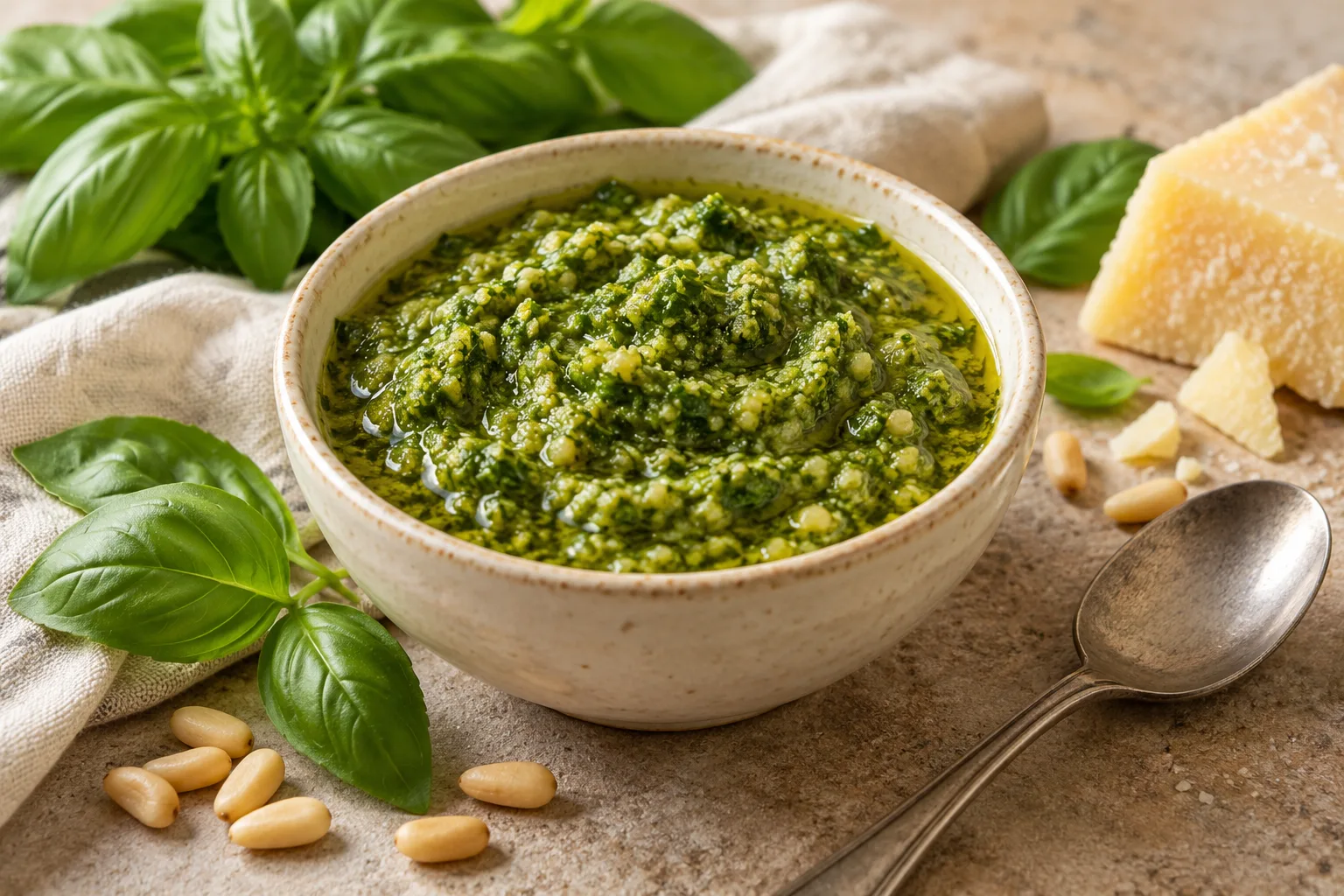
Traditional Italian basil pesto combines fresh basil, olive oil, pine nuts, garlic, hard cheese, and salt. The ingredients are crushed or blended into a thick sauce, usually served with pasta but also used on vegetables, fish, and sandwiches.
Olive oil and nuts supply much of the fat, while Parmesan contributes protein, calcium, sodium, and saturated fat. Basil adds flavor and vitamin K.
Commercial versions aren’t necessarily identical to traditional recipes. Some replace pine nuts with cashews or sunflower seeds, use soybean or sunflower oil, or include additional preservatives. This makes the actual ingredient list more informative than the word pesto on the label.
Pesto Nutrition Facts
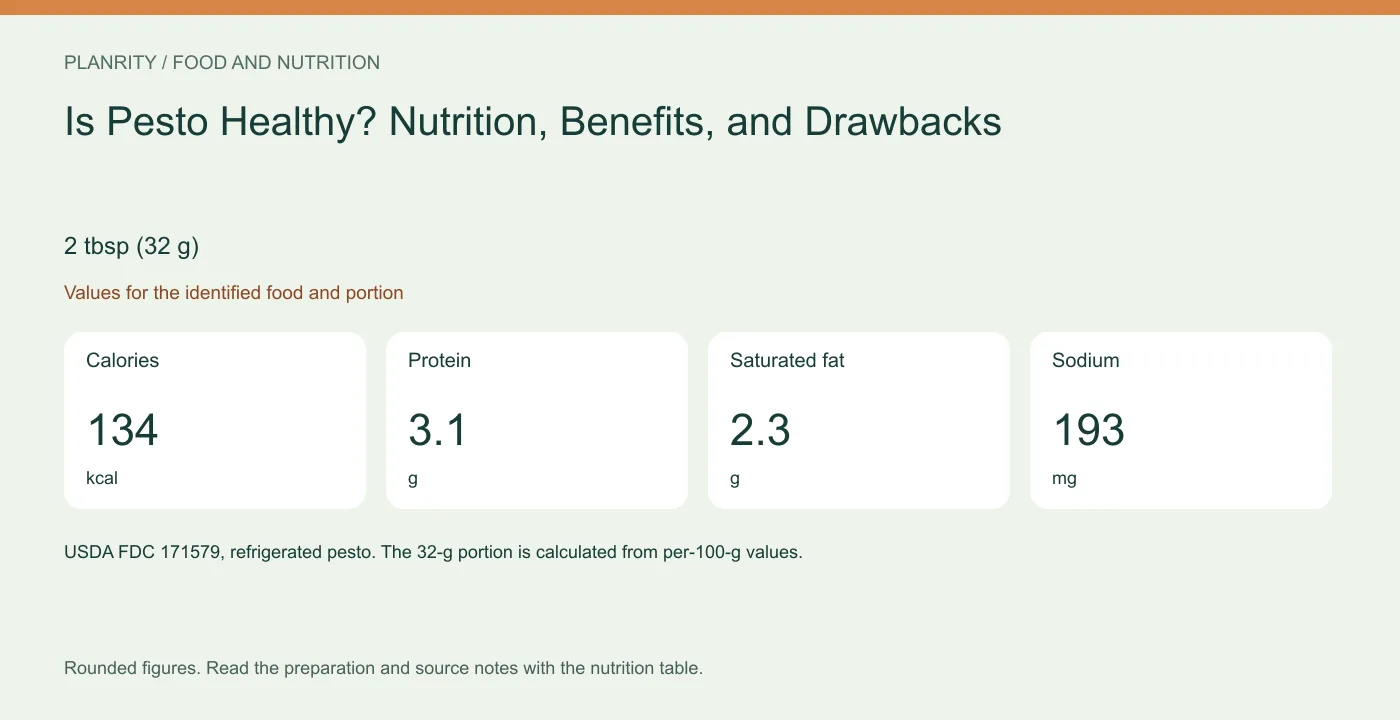
USDA FoodData Central lists refrigerated, ready-to-serve pesto under FDC ID 171579.
Source: USDA FoodData Central, FDC 171579. Values for 32 g were calculated from the database’s per-100-g figures. Two tablespoons is an approximate measure; actual weight depends on consistency.
These figures describe a reference food, not every pesto sold in stores. Still, the nutritional pattern is clear: pesto supplies mostly fat, with smaller amounts of protein, carbohydrates, and fiber.
What Pesto Does Well
-
Unsaturated fats: A 32-g portion contains approximately 7.1 g of monounsaturated and 2.1 g of polyunsaturated fat. The American Heart Association recommends replacing saturated fats with unsaturated alternatives as part of a heart-healthy eating pattern. Pesto can help with that substitution when used instead of a more saturated-fat-rich sauce.
-
Vitamin E: The reference serving contains approximately 2.3 mg, about 15% of the FDA’s 15-mg Daily Value. Vitamin E contributes to the body’s antioxidant defenses. Pesto is one potential source, alongside nuts, seeds, and vegetable oils.
-
Vitamin K: At approximately 48.4 mcg per 32 g, pesto provides about 40% of the FDA’s 120-mcg Daily Value. Vitamin K is necessary for normal blood clotting and contributes to bone-related processes. People using warfarin need to pay particular attention to consistent intake.
-
Calcium and protein: Cheese helps provide approximately 98 mg of calcium and 3.1 g of protein per 32-g serving. These are useful contributions, although pesto shouldn’t be relied upon as a primary source of either nutrient.
The greatest benefit may be how pesto fits into a meal. A small amount can make beans, grilled vegetables, or whole-grain pasta more enjoyable without requiring a heavy cream-based sauce.
What to Watch for With Pesto
-
Calorie concentration: Oil and nuts make pesto energy-dense. A generously coated bowl of pasta can contain substantially more sauce than expected. Measuring the portion helps distinguish the calories in the sauce from those in the entire meal.
-
Sodium: USDA’s refrigerated reference contains 193 mg per 32 g, compared with approximately 319 mg in its shelf-stable reference (FDC 171580). Both are database examples, not universal averages. A salty sauce combined with Parmesan and other salty ingredients can increase the meal’s sodium content considerably.
-
Saturated fat: The refrigerated reference provides around 2.3 g per 32 g, approximately 11% of the FDA’s 20-g Daily Value. This becomes more relevant when pesto accompanies meals already rich in cheese, butter, or fatty meats.
-
Limited fiber: Despite containing basil, pesto provides only about 0.6 g of fiber per 32 g. Whole grains, lentils, beans, and vegetables remain much better choices for increasing dietary fiber.
-
Allergens: Traditional pesto contains milk and pine nuts; alternatives may contain tree nuts or soy. Pine nuts themselves can trigger allergic reactions. Ingredient substitutions are especially important for people managing food allergies.
How Much Pesto Should You Eat?
For a typical meal, 1–2 tablespoons (approximately 16–32 g) is a practical starting point, not a medically prescribed limit.
Start with a measured amount and adjust according to the food you’re preparing. With pasta, a little reserved unsalted cooking water helps distribute the sauce evenly. This works particularly well with pasta shapes that hold sauce in their ridges or folds.
Pesto doesn’t need to be reserved for an occasional treat. Whether it fits into everyday meals depends on total calorie intake, sodium, saturated fat, and the other foods eaten throughout the day.
A simple combination is whole-grain pasta with white beans, roasted zucchini, and pesto. It provides more fiber and protein than pasta with sauce alone, without requiring a larger quantity of pesto.
Who Should Be Careful With Pesto?
People with high blood pressure: Compare sodium between products, especially when meals also contain salty cheeses or processed meats. The FDA Daily Value for sodium is less than 2,300 mg.
People with nut or milk allergies: Read the complete label every time. A pesto without pine nuts may still contain other nuts, dairy, or ingredients affected by cross-contact.
People taking warfarin: Basil contributes vitamin K, which can affect warfarin’s action. MedlinePlus recommends maintaining consistent vitamin K consumption from week to week and discussing significant dietary changes with a healthcare professional.
Pregnant people: Pesto can be an appropriate food during pregnancy when prepared and stored safely. Check cheese ingredients, favor pasteurized dairy, and avoid improperly handled refrigerated products. CDC guidance identifies hard cheeses made with pasteurized milk as safer options.
People on restricted diets: Individual requirements for sodium, energy, fat, potassium, or phosphorus may make certain products more suitable than others.
How Different Pesto Products Compare
The USDA’s generic records show differences between refrigerated and shelf-stable pesto, but actual brands provide a more useful shopping comparison.
Two Real Grocery-Store Pestos
| Nutrition | Barilla Rustic Basil Pesto | Classico Traditional Basil Pesto |
|---|---|---|
| Label serving | 60 g | 62 g |
| Calories per label serving | 190 | 231 |
| Fat per label serving | 19 g | 22.6 g |
| Saturated fat per label serving | 3 g | 4.2 g |
| Sodium per label serving | 600 mg | 637 mg |
| Calculated calories per 32 g | 101 | 119 |
| Calculated sodium per 32 g | 320 mg | 329 mg |
Sources: USDA FoodData Central Branded Foods record 2598837 (Barilla, last modified June 2023) and USDA SR Legacy record 171582 (Classico, published April 2019). The 32-g figures are proportional calculations, rounded. Classico’s ingredient list comes from the manufacturer’s product page. Formulations change, so check the current label on the jar.
Classico has more calories in this comparison and slightly more sodium once the two are adjusted to the same weight (329 mg versus 320 mg). The gap in sodium is small, and neither result establishes that one is healthier for everyone.
Classico lists basil, soybean oil, garlic, Parmesan, and olive oil among its ingredients. Someone choosing pesto specifically for olive oil should therefore read the ingredient list rather than relying on the traditional recipe.
Formulations can change, so the container’s current label takes priority.
What About Homemade Pesto?
Homemade pesto allows meaningful adjustments, but removing salt doesn’t make the calories disappear.
Consider an illustrative batch containing:
- Fresh basil: 50 g
- Olive oil: 60 g
- Pine nuts: 25 g
- Parmesan: 25 g
- Raw garlic: 6 g
- Added salt: none
Using USDA ingredient records, this 166-g theoretical batch provides approximately 817 calories and 298 mg of sodium in total. A 32-g portion works out to approximately 158 calories and 58 mg of sodium.
These are calculated estimates, not laboratory-tested recipe results. Ingredient brands, moisture, substitutions, and additional salt will change the totals.
The example demonstrates something useful: reducing added salt can make homemade pesto considerably lower in sodium while leaving it calorie-dense because of the oil and nuts.
Is Pesto Healthier Than Tomato Sauce?
Pesto and marinara serve different nutritional purposes, so declaring either universally healthier would be misleading.
USDA’s ready-to-serve marinara record (FDC 171192) lists the following:
| Nutrient | Pesto, 2 tbsp (32 g) | Marinara, 1/2 cup (132 g) |
|---|---|---|
| Calories | 134 | 66 |
| Total fat | 12.0 g | 2.1 g |
| Saturated fat | 2.3 g | 0.3 g |
| Fiber | 0.6 g | 2.4 g |
| Sodium | 193 mg | 577 mg |
Sources: USDA FDC 171579 and 171192. These are different customary portions, not equal-weight servings.
The comparison reveals the practical trade-off. A half cup of marinara has fewer calories and more fiber than a smaller portion of pesto, but the reference marinara also contributes considerably more sodium.
Pesto supplies more unsaturated fat. Marinara provides more sauce volume with less energy and contains tomato-derived nutrients, including lycopene.
For calorie management, marinara may be easier to use generously. For someone emphasizing unsaturated fats, pesto can be useful. Sodium-conscious readers should compare specific products rather than assuming tomato sauce is always lower in salt.
Checklist for Buying or Making Pesto
- Compare equal weights: Product labels may use different serving sizes. Normalize the numbers before deciding which is better.
- Inspect sodium: Compare milligrams per serving, especially if the finished meal contains cheese or cured meats.
- Read the oil ingredients: Olive oil, sunflower oil, and soybean oil all contribute fat, but formulations differ.
- Review saturated fat: Cheese proportions can change the nutritional balance.
- Check allergens: Look for milk, nuts, soy, and any relevant precautionary statements.
- Measure the sauce: Use enough for flavor rather than assuming the manufacturer’s serving automatically matches your meal.
- Store it correctly: Fresh homemade pesto requires particular care, while commercial products should follow their packaging instructions.
How Long Can Homemade Pesto Be Stored?
The National Center for Home Food Preservation recommends keeping fresh homemade pesto refrigerated for no more than three days. For longer storage, freeze it in suitable freezer containers.
The safety concern is botulism. Fresh garlic and herbs are low-acid ingredients; combined with oil, they can create conditions favorable to Clostridium botulinum if improperly stored. The National Center does not recommend home canning pesto.
Freeze small portions soon after preparation rather than leaving a large batch in the refrigerator for extended periods.
Commercially processed pesto may have different storage instructions because manufacturers use controlled production methods. Follow the product label, including directions after opening.
The Bottom Line
Pesto can be a healthy sauce when its ingredients and portions fit your needs. It supplies unsaturated fats and useful micronutrients, but the calorie and sodium content deserves attention.
Choose based on the product’s actual nutrition label, use an appropriate portion, and build the rest of the meal around foods that provide fiber, protein, and dietary variety.
Related food guides
Frequently asked questions
Is pesto healthy for weight loss?
It can be. Pesto is calorie-dense, but a measured portion can fit within an eating pattern designed for weight management. The total meal matters more than whether its sauce contains oil or nuts. Pair pesto with vegetables and a protein source rather than relying on sauce-heavy pasta alone.
Is pesto good for cholesterol?
Its unsaturated fats can fit into a cholesterol-conscious diet. The American Heart Association supports replacing saturated fats with unsaturated fats to help lower LDL cholesterol. That doesn't mean simply adding pesto will lower cholesterol, and pesto shouldn't replace prescribed treatment.
Can you eat pesto every day?
Many people can include modest amounts regularly. Daily use isn't inherently harmful, but attention to portion size, sodium, saturated fat, and dietary variety remains important. Anyone taking warfarin should keep vitamin K intake consistent.
Is homemade pesto healthier than store-bought?
Homemade pesto offers more control over oil, cheese, nuts, and salt. The calculated homemade example above contains less sodium than the two commercial products when compared at 32 g, but more calories. The recipe determines the result; homemade isn't automatically healthier.
Does pesto contain dairy or nuts?
Traditional basil pesto generally contains cheese and pine nuts. Some supermarket versions also use cashews, walnuts, or soy ingredients. Dairy-free and nut-free recipes exist, but individuals with allergies should verify every ingredient and consider cross-contact.
Sources
- Sauce, pesto, refrigerated, FDC 171579, USDA
- Sauce, pesto, shelf-stable, FDC 171580, USDA
- Sauce, pasta, spaghetti/marinara, ready-to-serve, FDC 171192, USDA
- Sauce, pesto, Classico basil pesto, FDC 171582, USDA
- Barilla Rustic Basil with Italian Basil Pesto Sauce, FDC 2598837, USDA
- basil 172232, USDA
- olive oil 171413, USDA
- pine nuts 170591, USDA
- Parmesan 170848, USDA
- garlic 169230, USDA
- Fats in Foods, American Heart Association
- 2026 Dietary Guidance to Improve Cardiovascular Health, American Heart Association
- Daily Value on Nutrition Facts Labels, FDA
- Food Allergies: What You Need to Know, FDA
- Warfarin Drug Information, MedlinePlus / National Library of Medicine
- Safer Food Choices for Pregnant Women, CDC
- Freezing Pesto, National Center for Home Food Preservation
- Pesto Canning Safety, National Center for Home Food Preservation
- Classico Traditional Basil Pesto (ingredient list only)