Sauces and condiments
Is Cane Sugar Healthy? Added Sugar, Portions and Labels
Understand cane sugar, raw sugar and added-sugar labels. Compare defined portions, calculate teaspoons carefully, and separate marketing from nutrition.
The short answer
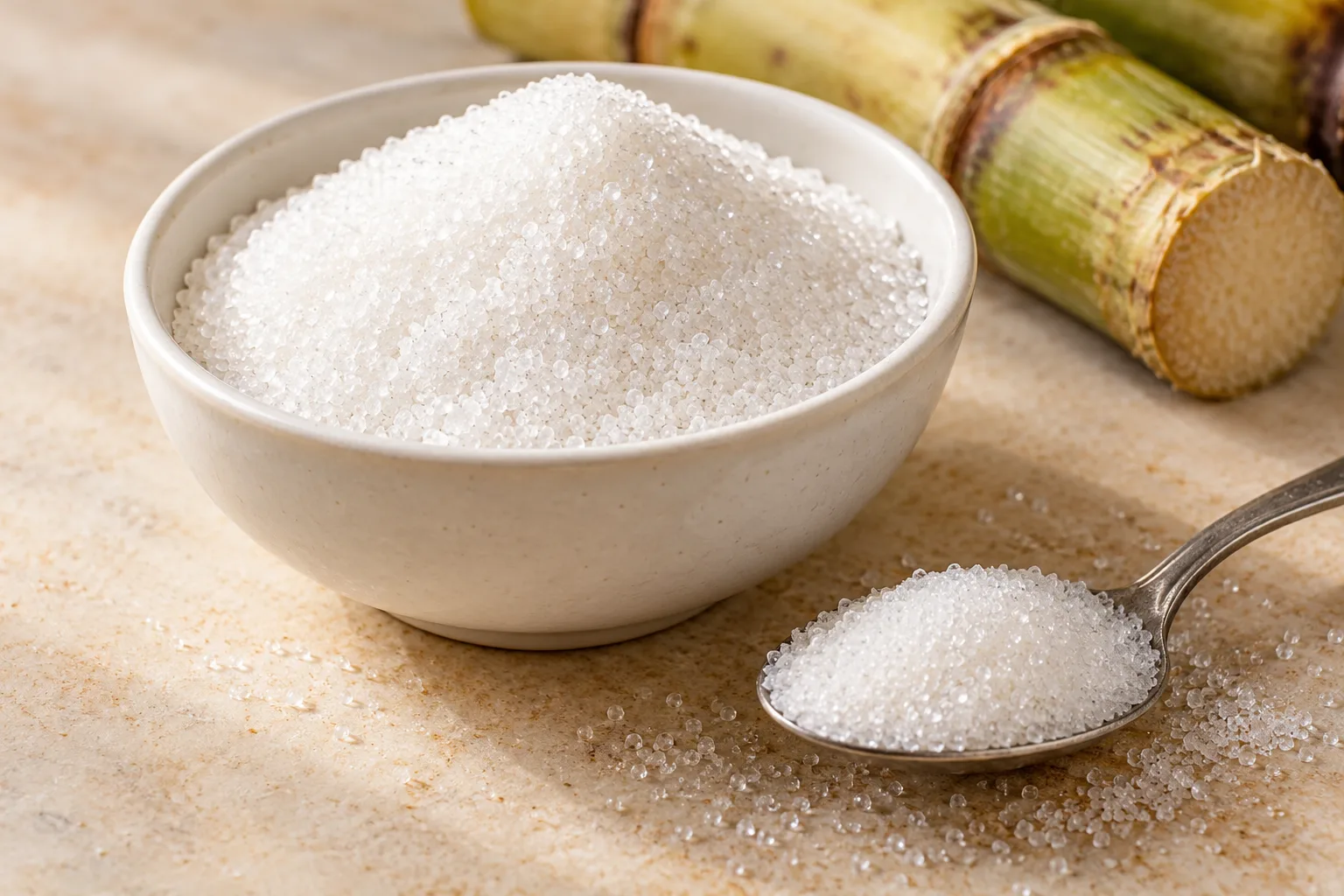
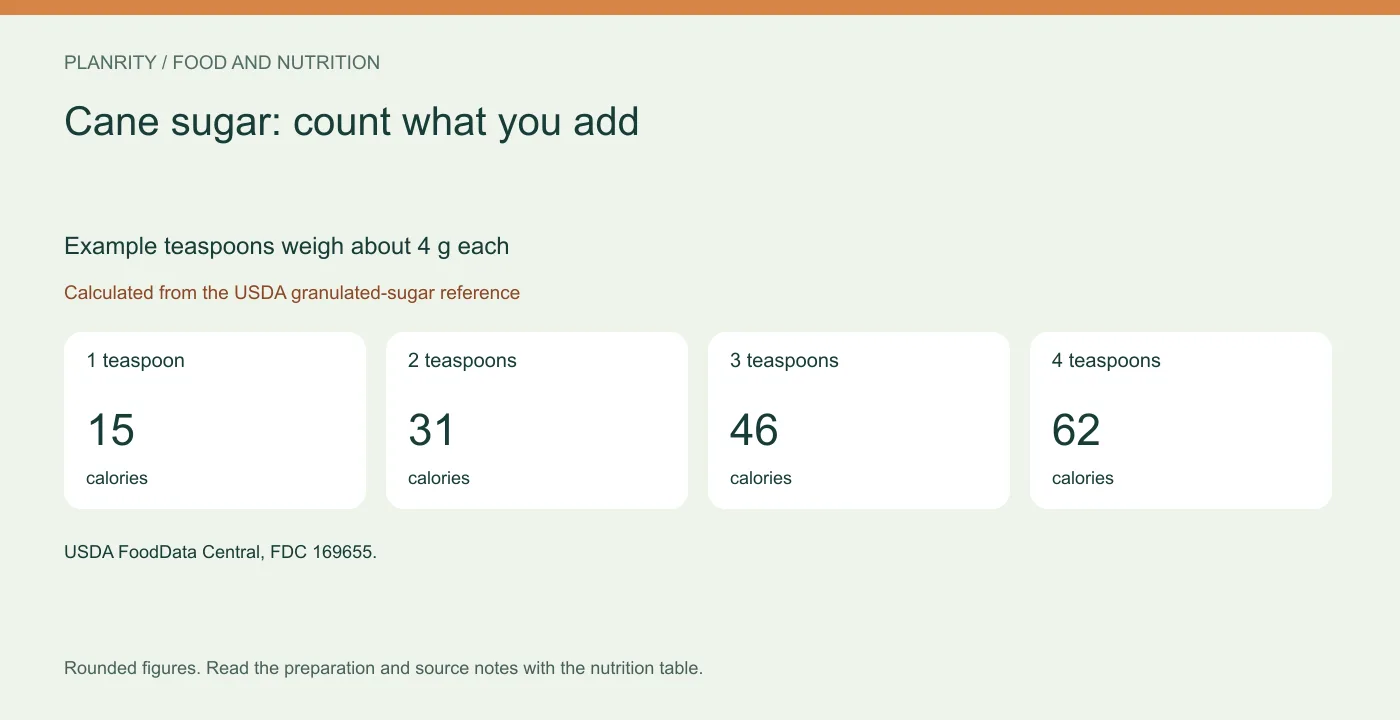
No Cane sugar is an added sweetener, not a healthier exception to sugar guidance. A level teaspoon weighing about 4 g supplies roughly 15 calories in the USDA granulated-sugar reference. Raw, brown or organic wording does not remove those sugars; the useful decision is how much you add to drinks, recipes and snacks.
| Nutrient | Approximately 1 tsp; 4-g example (4 g) | Per 100 g |
|---|---|---|
| Calories | 15 kcal | 387 kcal |
| Protein | 0.0 g | 0.0 g |
| Total fat | 0.0 g | 0.0 g |
| Saturated fat | 0.0 g | 0.0 g |
| Carbohydrate | 4.0 g | 100.0 g |
| Fiber | 0.0 g | 0.0 g |
| Total sugar | 4.0 g | 99.8 g |
| Sodium | 0 mg | 1 mg |
| Calcium | 0 mg | 1 mg |
| Iron | 0.0 mg | 0.1 mg |
| Potassium | 0 mg | 2 mg |
USDA FoodData Central, FDC 169655.
You can use sugar in an eating pattern without treating it as either a health food or a toxin. The useful questions are how much is added, what food it is part of, and how it fits your needs.
What cane sugar means
Cane sugar comes from sugarcane. Refined white cane sugar is predominantly sucrose. Sugar beets are another source of the same sucrose.
Raw, turbinado, demerara and brown sugars differ in processing, crystal properties and molasses content. Those features affect flavor and baking behavior. They do not justify presenting small sweetener portions as meaningful mineral supplements without a verified nutrient calculation.
Organic describes production standards rather than a removal of sugar’s nutritional contribution. “Unrefined” is also not a reason to omit a sweetener from an added-sugar calculation.
Nutrition for a defined amount
Source: USDA FoodData Central, FDC 169655.
The 4-g portion is an approximate teaspoon illustration. Crystal size, packing and the utensil affect volume-to-weight conversion. Weigh sugar when a precise calculation matters rather than treating every teaspoon of every sugar as exactly the same mass.
The USDA record reports the sugar in the ingredient. When you add granulated sugar to a recipe or drink, it counts as added sugar in that food. Sugar already present naturally in whole fruit or plain milk belongs to a different labeling category.
Equal-weight comparisons need interpretation
All rows below use the same 100-g weight.
| Food | Calories (kcal) | Protein (g) | Fat (g) | Saturated fat (g) | Fiber (g) | Sodium (mg) |
|---|---|---|---|---|---|---|
| Sugars, granulated | 387 | 0.0 | 0.0 | 0.0 | 0.0 | 1 |
| Syrups, maple | 260 | 0.0 | 0.1 | 0.0 | 0.0 | 12 |
| Strawberries, raw | 32 | 0.7 | 0.3 | 0.0 | 2.0 | 1 |
Maple syrup contains water and other components, so equal gram amounts differ from granulated sugar. Strawberries are a whole fruit containing water, fiber and other nutrients; they are included to illustrate a different food matrix, not as an equal sweetness replacement in every recipe.
Syrup and granulated sugar have different weights per tablespoon. Compare grams when evaluating nutrient density, then consider the amount that works in the actual recipe. A sweeter product may be used in a different quantity.
Total sugar and added sugar are different questions
FDA’s added-sugar category includes sugars added during processing or preparation and sugars from syrups and honey used as sweeteners. Sugar naturally present in whole fruit or plain milk is classified separately from added sugar. Added Sugars on the Nutrition Facts Label | FDA
| Ingredient use | How to interpret it |
|---|---|
| Sugar stirred into coffee | Added sweetener in the drink |
| Honey added to yogurt | Added sugar from the honey |
| Sugar naturally present in unsweetened fruit | Naturally occurring sugar in that food |
| Sweetened fruit sauce | Check the ingredients and added-sugar declaration |
“No refined sugar” can still describe a food sweetened with honey, maple syrup or another sugar-containing ingredient. Read the recipe or label rather than assuming that phrase means no added sugar.
Understand the labeling reference
FDA uses a 50-g Daily Value for added sugars on a 2,000-calorie reference diet. It is a general labeling benchmark, not an instruction to consume that amount and not an individualized target for every age or situation. Added Sugars on the Nutrition Facts Label | FDA
On a label, percent Daily Value helps compare a serving with that reference. If you eat two label servings, the nutrient amount doubles. A small declared serving can make a product look modest even when your usual portion is larger. How to Understand and Use the Nutrition Facts Label | FDA
For example, 4 g sugar added to a drink is a measured 4-g addition. If the drink already contains another sweetener, count both. Use the package’s gram weight for a closer estimate than a household spoon provides.
Where small choices can be useful
Sweetness can be adjusted gradually in foods you prepare. A smaller spoonful in a familiar drink, an unsweetened base with a measured topping, or a recipe with less added sweetener may suit your taste. These are practical options, not promises of weight loss or disease prevention.
In baking, sugar also affects texture, moisture and browning. Replacing it with fruit puree or a liquid syrup changes more than sweetness and may require a tested recipe. Use a recipe designed for the replacement, since an equal spoonful may not behave the same way.
Compare the complete food as well as the sweetener. A yogurt containing added sugar can still provide protein and other nutrients; an unsweetened product can have a different fat profile. One label field should not erase the rest of the food’s composition.
Who needs individualized advice?
Someone managing diabetes or another condition may need to consider total carbohydrate, portion and medication alongside added sugar. Use your individual carbohydrate guidance for cane sugar as for other added sugars. Follow individualized dietary advice rather than substituting a “natural sugar” product on the assumption that it is exempt.
For children or anyone with specific dietary requirements, use guidance appropriate to the person. The adult reference panel is not a personalized allowance. Avoid inventing a universal teaspoon limit for every reader.
Shopping and cooking checklist
- Read the complete ingredient list for all sweeteners.
- Separate total sugar from added sugar.
- Compare serving weights as well as percent Daily Value.
- Weigh a sweetener when precision matters.
- Treat honey and syrups as sweeteners when they are added.
- Use tested recipes for major baking substitutions.
- Evaluate the complete food and your individual requirements.
Compare recipes at the amount actually used
A syrup can contain more water than crystalline sugar, so replacing equal gram weights may change sweetness and texture as well as nutrients. If a tested recipe uses a smaller amount of one sweetener, compare those actual recipe amounts and explain the difference. Do not use an equal-weight table to imply that every sweetener is interchangeable in baking. The recipe’s yield and portion count still determine what each person consumes. Record sweetened fillings and toppings separately so that a reduced-sugar batter does not conceal additional sweetener elsewhere in the finished food. A beverage serving and a baking ingredient also have different purposes, so compare the use that matches your actual decision.
Keep the substitution honest
For a drink you sweeten yourself, the useful comparison is the amount added each time. Two 4-g teaspoons allocate about 31 calories from this sugar reference; three allocate about 46. If you drink several sweetened cups, include each one. A smaller amount of the same sugar makes a clearer change than swapping to an equal gram amount of a differently colored cane sugar.
For recipes, distinguish the total batch from the amount you eat. Sugar spread across many portions is a different allocation from the whole ingredient amount in one serving. Replacing some sweetness with whole fruit also changes water, fiber, texture and portion size, so it is a recipe change rather than an equal-sugar exchange. Choose the flavor and function you need while keeping the actual added amount visible.
What to take away
Treat cane sugar as added sugar, whether its package says raw, organic, natural or white. Choose a sweetener for its flavor and role in a recipe without assuming the name gives it a special health benefit. Measure the amount you actually use and count other added sweeteners too. Whole fruit is a different food, with water, fiber and volume that a spoonful of sugar does not supply.
Related food guides
Frequently asked questions
Is raw cane sugar healthier than white sugar?
Its flavor, color and crystal properties can differ, but those differences do not tell you a meaningful health advantage in normal sweetener portions. Do not treat trace minerals as a reason to consume sugar as a nutrient source. Count the actual amount added.
Does honey count as added sugar?
When honey is used to sweeten a food or drink, it contributes added sugar. Its natural origin does not remove that contribution. The same principle applies to maple syrup used as a topping or recipe sweetener.
Is the 50-gram Daily Value a personal allowance?
It is a general labeling reference for a 2,000-calorie diet. It is not a requirement to eat that much or an individualized target. Age, energy needs and medical circumstances can require different guidance.
Are all teaspoons of sugar exactly four grams?
No. Four grams is an approximate illustration. Crystal size and how the spoon is filled affect mass. Use a scale or a reliable product-specific conversion when precise recipe or nutrition calculations are needed.