Breads and grains
Is Congee Healthy? Rice Porridge and Protein Additions
Compare plain congee with a calculated chicken version. Understand water, serving weight, protein, toppings and safe handling of cooked rice porridge.
The short answer
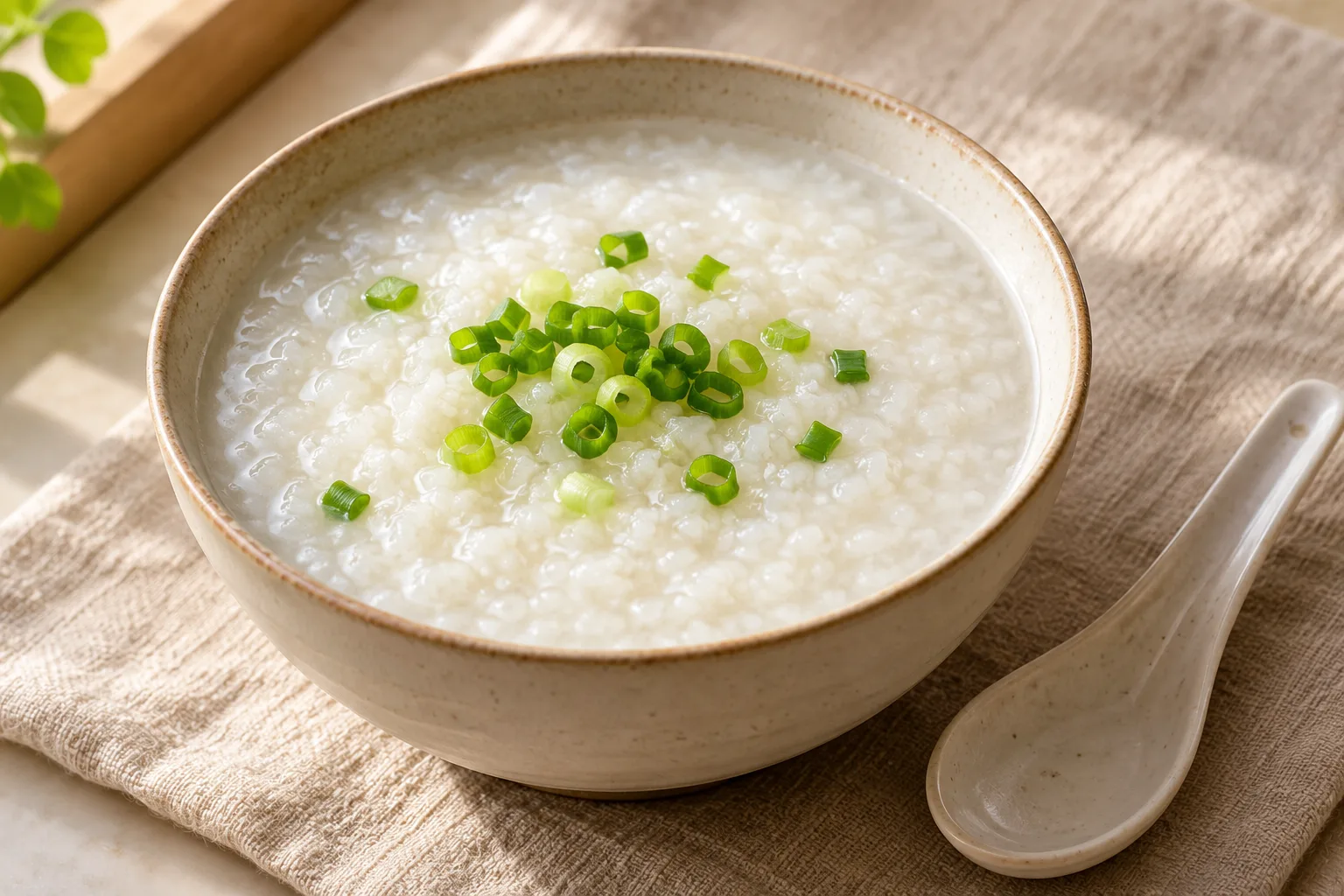
Sometimes Congee can be a useful meal base, but plain rice porridge supplies little protein. The 300-g home example here contains about 130 calories and 2.7 g protein. Adding 60 g cooked chicken to that portion brings it to about 229 calories and 21.3 g protein, before toppings or extra seasoning.
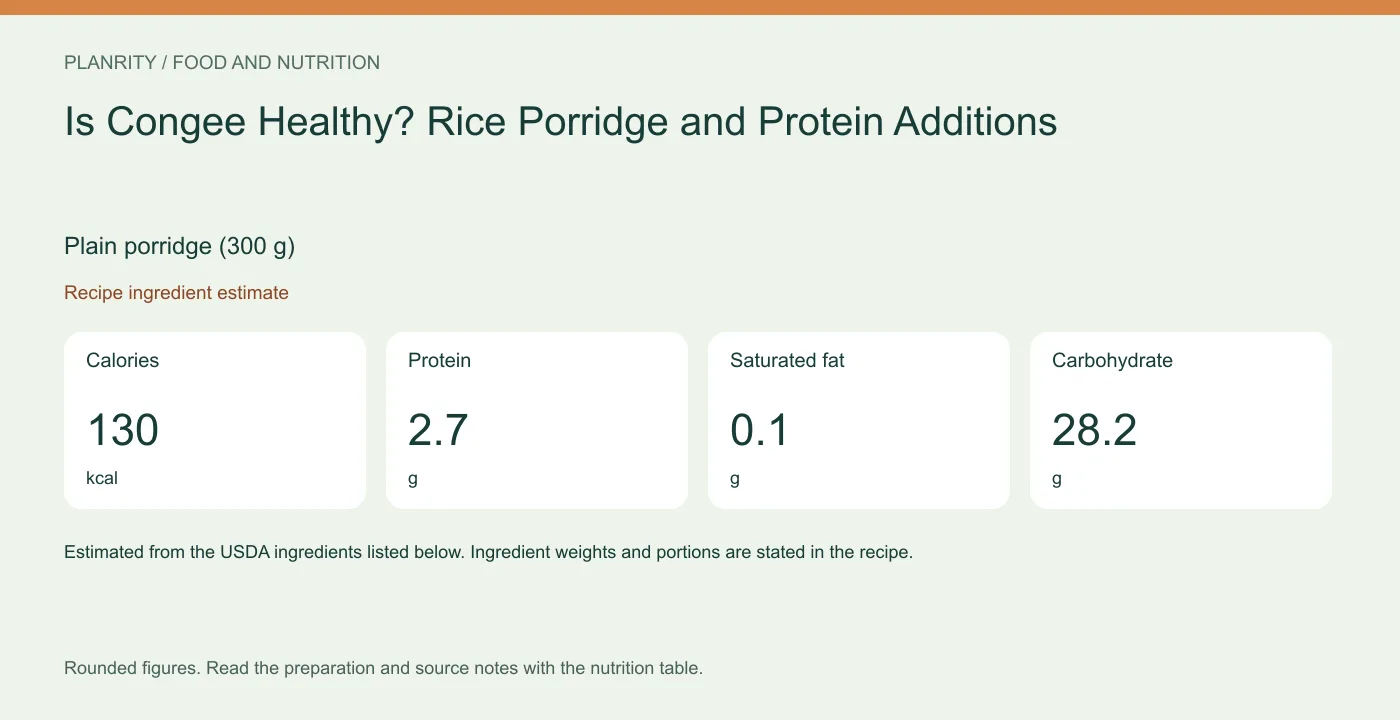
| Nutrient | Plain porridge (300 g) | Per 100 g |
|---|---|---|
| Calories | 130 kcal | 43 kcal |
| Protein | 2.7 g | 0.9 g |
| Total fat | 0.3 g | 0.1 g |
| Saturated fat | 0.1 g | 0.0 g |
| Carbohydrate | 28.2 g | 9.4 g |
| Fiber | 0.4 g | 0.1 g |
| Total sugar | 0.1 g | 0.0 g |
Estimated from the USDA ingredients listed below. Ingredient weights and portions are stated in the recipe.
A thin bowl can look low in calories per 100 grams largely because it contains more water. To make it a fuller meal, consider the protein and other foods served with it.
What congee is
Congee is rice porridge prepared in many regional styles, with different grains, liquid amounts and additions. It may be plain, savory or sweet, and can include chicken, fish, egg, beans, vegetables or other ingredients.
Broth, preserved vegetables, sauces and salted protein change sodium. Sweeteners and toppings change the carbohydrate and sugar profile. Identify the recipe and bowl weight before estimating its nutrients.
Ingredients for Plain rice porridge assembly
| Ingredient record | Grams |
|---|---|
| Rice, white, long-grain, regular, enriched, cooked; 168878 | 300 |
| Plain water recipe input | 600 |
Start with the listed 300 g cooked rice and 600 g water in a saucepan. Gently simmer, stirring as needed, until the rice reaches a texture you enjoy. Add water to bring the finished plain porridge to 900 g, then divide it into three 300-g bowls. Keeping that final batch weight gives the portions used in the nutrition estimate. For the chicken version, fold 60 g of safely cooked chicken into each bowl. Add broth, salt or toppings separately so that their contributions stay clear.
Use cooked rice that was cooled and refrigerated safely. If you start with dry rice instead, the water absorbed and the amount of cooked rice in each bowl will differ. Weigh the cooked rice before using this particular recipe’s figures.
Nutrition and water content
The 300-g bowl is a recipe convention. A much larger or smaller bowl, or a thicker preparation, changes the amount of rice consumed. The amount of rice in a cup changes with the porridge’s thickness.
Ingredients for Rice porridge assembly with chicken
| Ingredient record | Grams |
|---|---|
| Rice, white, long-grain, regular, enriched, cooked; 168878 | 300 |
| Plain water recipe input | 600 |
| Chicken, broilers or fryers, breast, meat only, cooked, roasted; 171477 | 180 |
| Nutrient | One calculated portion (360 g) | Per 100 g |
|---|---|---|
| Calories (kcal) | 229 | 64 |
| Protein (g) | 21.3 | 5.9 |
| Total fat (g) | 2.4 | 0.7 |
| Saturated fat (g) | 0.7 | 0.2 |
| Carbohydrate (g) | 28.2 | 7.8 |
| Fiber (g) | 0.4 | 0.1 |
| Total sugar (g) | 0.1 | 0.0 |
This version adds 180 g cooked chicken across three bowls, or 60 g chicken per bowl. Each serving contains the same rice share as the plain version, with the chicken added on top.
The model uses plain cooked chicken, not deli meat or a salty restaurant topping. Other proteins can work, but their nutrition and safety requirements differ. If cooking raw chicken into porridge, check that the chicken reaches 165°F before serving the bowl. USDA safe minimum internal temperatures
Compare prepared references and calculated bowls
All rows below use the same 100-g weight.
| Food | Calories (kcal) | Protein (g) | Fat (g) | Saturated fat (g) | Fiber (g) |
|---|---|---|---|---|---|
| Plain rice porridge assembly | 43 | 0.9 | 0.1 | 0.0 | 0.1 |
| Rice porridge assembly with chicken | 64 | 5.9 | 0.7 | 0.2 | 0.1 |
| Congee | 39 | 0.8 | 0.1 | 0.0 | 0.1 |
| Congee, with meat, poultry, and/or seafood | 58 | 4.3 | 1.3 | 0.4 | 0.1 |
The FNDDS entries represent separate survey-food preparations. Their ingredient proportions are not identical to the calculated bowls. Use them as identified reference foods rather than claiming that every congee with meat has the same composition.
A per-100-g table helps show concentration, while the full bowl calculation shows intake. Both matter. More water can lower density without adding protein, fiber or other missing meal components.
What congee can offer
A flexible starch base: Rice can provide energy in a soft format that some people enjoy. For a medical texture restriction, follow the prescribed consistency.
Adjustable meal composition: A defined protein and vegetable addition can make the bowl more substantial. Count them rather than assuming garnish amounts provide a full serving.
Control over seasoning: A home preparation allows you to choose plain water or a specific broth and sauce amount. Homemade food still needs measured salt and topping information if sodium is important.
What to watch for
Plain rice porridge may provide relatively little protein or fiber for the amount of food you need. Choose a bowl substantial enough for your appetite and meal.
Preserved vegetables, salted eggs, seasoned meats, broth and soy sauce can contribute sodium. A bland-tasting base does not make the finished bowl low sodium. Compare the toppings and liquid as well as the rice.
Sweet versions can contain added sugar. Count fruit, milk, syrup and sugar according to what each adds to the bowl. Use the actual ingredients and amounts.
Medical and dietary considerations
Congee is sometimes described as easy to digest or suitable for illness. Tolerance varies, and a soft texture is not a diagnosis-specific treatment. People with swallowing restrictions need the texture and fluid consistency prescribed for them, which may differ from ordinary congee.
Someone managing blood glucose needs to consider the rice amount and complete meal rather than assuming dilution with water removes carbohydrate. Water changes concentration, but the carbohydrate in the rice remains in the batch.
If you need a restricted sodium or protein intake, select toppings using individualized advice. A chicken addition useful for one reader may not suit another’s requirements.
Rice handling and storage
Use rice with a safe storage history. Promptly refrigerate leftover porridge in shallow containers, and reheat leftovers to 165°F. USDA advises using refrigerated leftovers within three to four days when properly handled. USDA FSIS: Leftovers and Food Safety USDA safe minimum internal temperatures
Do not assume a long simmer or a second reheating makes improperly stored rice safe. Food-safety management begins with cooling and storage, not just the last cooking step.
Preparation checklist
- Identify whether rice is weighed raw or cooked.
- Record liquid and final bowl weight.
- Count broth and salty toppings.
- Add a defined protein portion if appropriate.
- Include vegetables or other foods according to the meal’s needs.
- Use safe rice handling and reheating.
- Avoid medical promises based on soft texture alone.
Adjust texture without losing track of portions
Start with the amount of rice in the bowl, not the bowl’s volume. The plain example divides 300 g cooked rice and enough water for a 900-g batch into three portions. Each share contains 100 g cooked rice. Adding more water makes the porridge thinner, but it leaves that rice allocation unchanged as long as you divide the same batch into thirds.
For the chicken version, add 60 g cooked chicken to each plain share. The portion becomes 360 g and supplies about 21.3 g protein instead of 2.7. Then choose toppings for flavor and texture, counting salted eggs, preserved vegetables, soy sauce or other additions separately. If you need a prescribed swallowing texture, use the guidance for that condition rather than assuming any smooth-looking porridge will meet it.
What to take away
Use congee as a base and decide what will make it a meal. Plain rice and water provide a gentle texture but little protein; a measured cooked protein changes that balance. Thinning with water increases bowl size without adding more rice. Count toppings and seasonings, keep cooked rice handled safely, and choose a portion that suits the rest of breakfast or dinner. The porridge’s thickness alone is not a nutrition score.
Related food guides
Frequently asked questions
Does adding water remove carbohydrate from rice?
No. It lowers the concentration per gram of the porridge but does not remove the carbohydrate in the rice. The amount you consume depends on how much of the batch you eat. Compare full bowl totals as well as density.
Is plain congee a complete meal?
It may need additional foods according to your requirements. Plain rice porridge differs from a bowl with a defined protein and vegetables. A watery bowl can still supply too little protein, fiber or total food for the meal you need.
Is congee a treatment for digestive illness?
Congee is a food, not a treatment for a digestive condition. Some people enjoy or tolerate a soft food during illness, but needs and tolerance vary. Medical, swallowing or texture restrictions require individualized guidance rather than a generic claim about porridge.
Why is the chicken bowl heavier?
The example adds 60 grams cooked chicken to each plain 300-gram portion. The resulting portion is 360 grams. Keeping that difference visible prevents two differently sized bowls from being compared as though they contain the same amount of food.
Sources
- Rice, white, long-grain, regular, enriched, cooked; 168878, USDA
- Chicken, broilers or fryers, breast, meat only, cooked, roasted; 171477, USDA
- Congee; 2708418, USDA
- Congee, with meat, poultry, and/or seafood; 2708981, USDA
- USDA safe minimum internal temperatures, USDA
- USDA FSIS: Leftovers and Food Safety, USDA
- How to Understand and Use the Nutrition Facts Label | FDA, FDA
- Sodium in Your Diet | FDA, FDA
- Selecting and Serving Produce Safely | FDA, FDA