Cuisines and takeaway
Is Chinese Food Healthy? Compare Dishes and Portions
Assess specific Chinese dishes by preparation, portions, sodium and ingredients. Compare identified USDA foods and build a meal that suits your needs.
The short answer
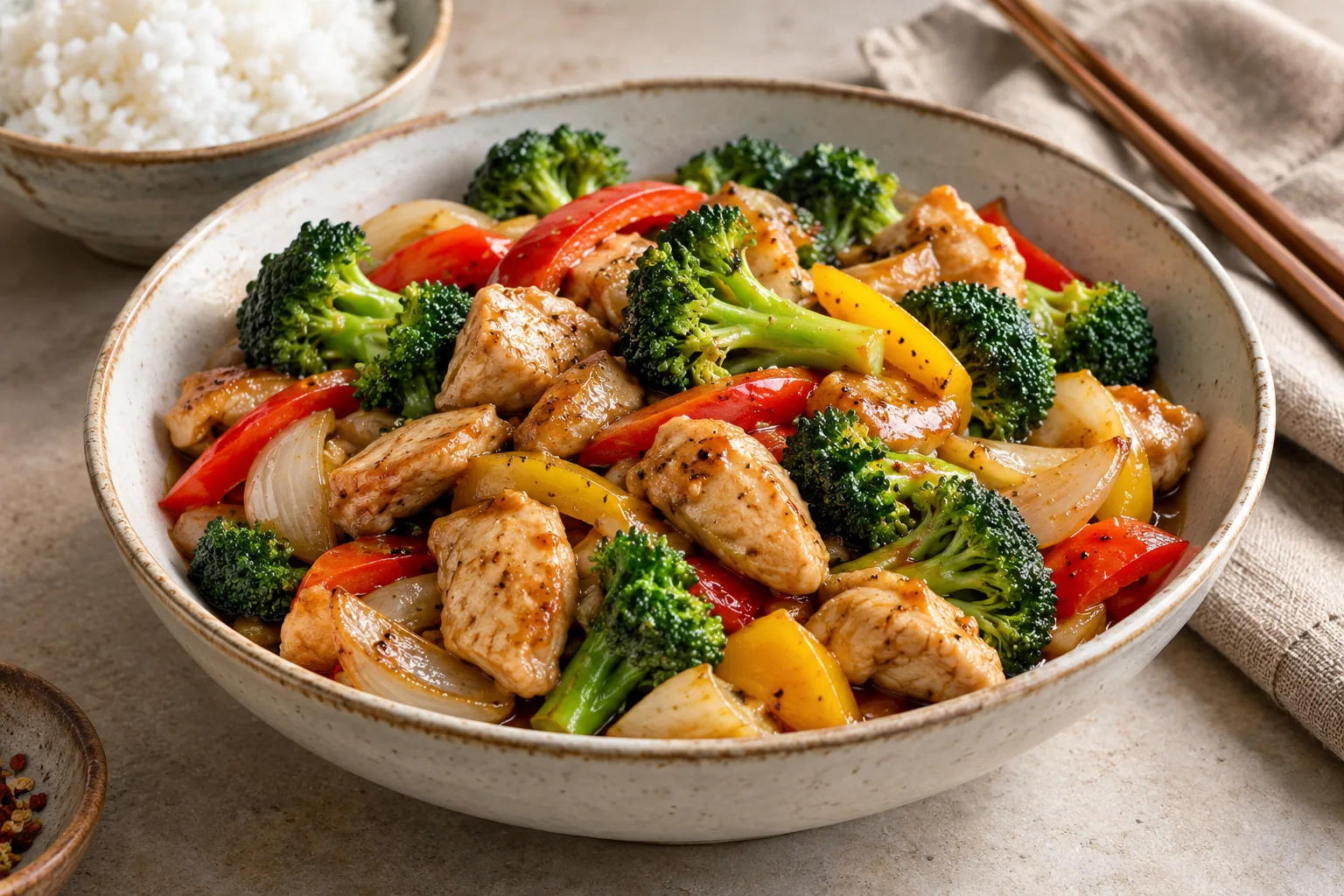
Sometimes The dish makes a substantial difference. USDA restaurant references list kung pao chicken at 129 calories per 100 g and General Tso’s at 295. Sodium remains important: a 200-g portion of the chicken-and-vegetable reference contains 826 mg, about 36% of the FDA’s 2,300-mg Daily Value, before rice or sides.
| Nutrient | Illustrative chicken-and-vegetable portion (200 g) | Per 100 g |
|---|---|---|
| Calories | 190 kcal | 95 kcal |
| Protein | 16.4 g | 8.2 g |
| Total fat | 9.1 g | 4.6 g |
| Saturated fat | 1.5 g | 0.8 g |
| Carbohydrate | 10.8 g | 5.4 g |
| Fiber | 1.8 g | 0.9 g |
| Total sugar | 5.9 g | 2.9 g |
| Sodium | 826 mg | 413 mg |
| Calcium | 40 mg | 20 mg |
| Iron | 1.1 mg | 0.6 mg |
| Potassium | 370 mg | 185 mg |
USDA FoodData Central, FDC 167678.
A steamed fish dish, a vegetable-and-tofu preparation, a bowl of congee and a breaded sweet chicken dish have different roles. Regional cooking and household traditions also vary. The examples below describe selected US restaurant-style foods in USDA data, not all Chinese food or all restaurants.
Define the dish before judging it
Start by identifying the main protein, vegetables, starch, cooking method and sauce. Names alone may not reveal whether meat is battered, how much oil is used or how salty the seasoning is. Ask about those features when they matter to you.
A vegetable dish may contain meat broth or oyster sauce. A chicken dish may include peanuts. A clear-looking sauce can still contribute sodium. These are ingredient questions, and useful answers come from a recipe, label or restaurant disclosure rather than assumptions about appearance.
Nutrition for an identified example
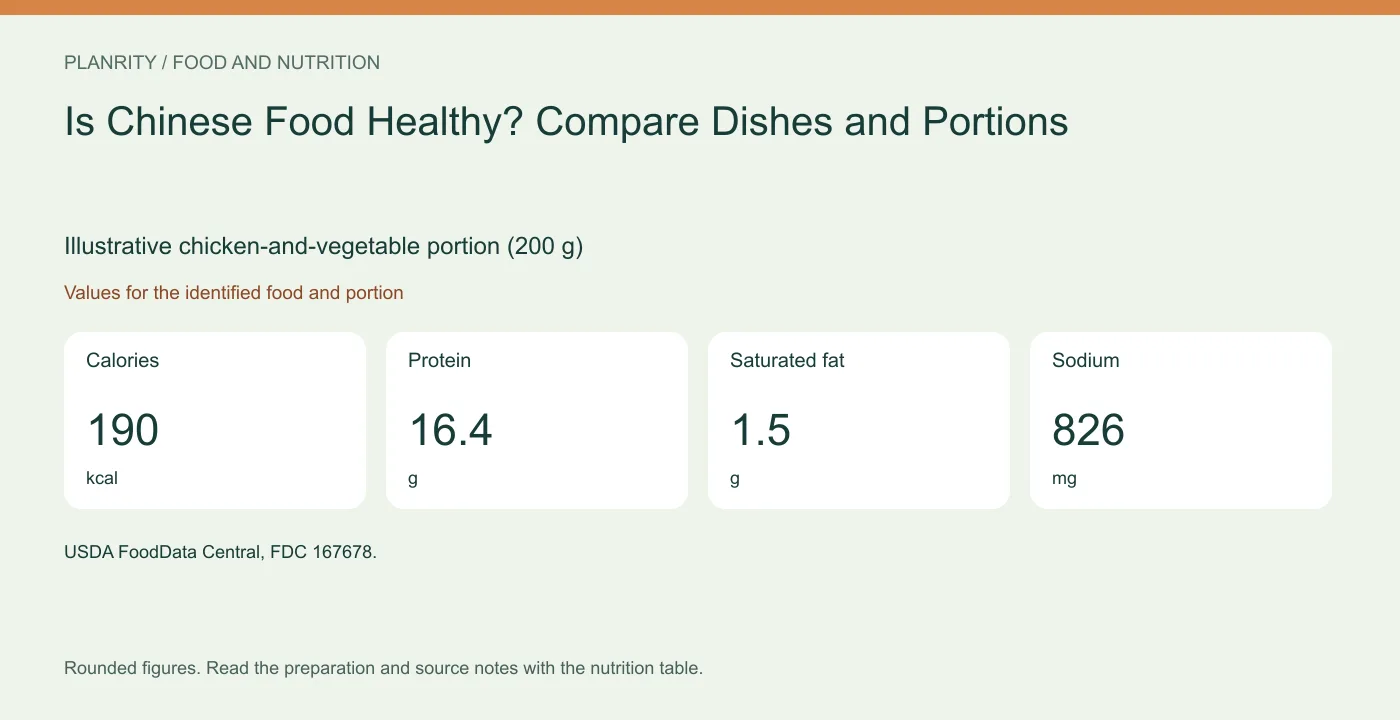
Source: USDA FoodData Central, FDC 167678.
The 200-g portion is an illustration, not a typical portion measured across restaurants. A large takeout container may contain several such amounts. Rice and other side dishes are not included in this chicken-and-vegetable record.
Compare preparations at equal weight
All rows below use the same 100-g weight.
| Food | Calories (kcal) | Protein (g) | Fat (g) | Saturated fat (g) | Fiber (g) | Sodium (mg) |
|---|---|---|---|---|---|---|
| Restaurant, Chinese, chicken and vegetables | 95 | 8.2 | 4.6 | 0.8 | 0.9 | 413 |
| Restaurant, Chinese, kung pao chicken | 129 | 9.8 | 7.0 | 1.4 | 1.5 | 402 |
| Restaurant, Chinese, general tso’s chicken | 295 | 12.9 | 16.4 | 2.8 | 0.9 | 435 |
| Restaurant, Chinese, fried rice, without meat | 174 | 4.0 | 3.0 | 0.5 | 1.1 | 387 |
These records show a larger energy-density difference between the breaded sweet chicken example and the chicken-and-vegetable example than between some of their sodium values. The lighter chicken-and-vegetable example still contributes substantial sodium. Conversely, more calories do not erase the protein in a food; they change the trade-off.
The entries are reference foods from the 2018 SR Legacy release, not current nutrition disclosures for a named restaurant. Recipes have not been experimentally matched. Use them to understand preparation differences, then use actual restaurant information where available.
What a balanced order can offer
Protein choices: Tofu, fish, eggs, chicken, meat and beans can provide the meal’s protein. Select a preparation you enjoy and can eat safely rather than assuming one ingredient is required.
Vegetable variety: Bok choy, cabbage, broccoli, mushrooms and other vegetables can add texture and variety. Their presence does not reveal the amount served, so look for an actual vegetable component rather than a garnish.
Flexible meal structure: Shared dishes can allow a combination of vegetables, protein and rice. The nutritional result depends on what you serve yourself, not the number of containers on the table.
Sodium, oil and sweet sauces
Sauces, broths, preserved vegetables and seasoned proteins can contribute sodium. Asking for sauce separately may help control the amount used, but it does not remove salt already in a marinade or broth. If you require a strict sodium limit, restaurant estimates may be insufficient; disclosed nutrition or a controlled home recipe provides more certainty.
Frying often adds oil, but “steamed” does not guarantee a low-sodium food or a complete meal. Likewise, a stir-fry can be prepared with different amounts of oil. A cooking-method label is one piece of information, not a final score.
Sweet sauces can contribute sugars, but total sugar and added sugar are different measurements. The table’s generic records do not tell you how much added sugar a particular restaurant uses. Added Sugars on the Nutrition Facts Label | FDA
Rice and portion decisions
Rice can be part of the meal. Brown rice can contribute more fiber than a comparable cooked white-rice portion, while white rice may be preferred for taste or texture. Choosing a reasonable amount and including other food groups is more useful than treating all refined grains as forbidden.
| Practical situation | A useful action | Also check |
|---|---|---|
| A large takeout entrée | Serve the portion you want onto a plate | Include the rice and sides you actually eat |
| Sodium is a priority | Ask for the restaurant’s nutrition figures | Salt can already be in the meat, broth or marinade |
| You want more vegetables | Add a substantial vegetable dish | Its sauce and cooking oil still count |
| Several foods are shared | Choose your share of the protein, rice and vegetables | Include refills and shared dipping sauces |
The goal is a satisfying meal rather than the smallest possible plate. Appetite, activity and personal requirements differ. A universal instruction to eat only half an entrée would be an arbitrary rule without knowing the entrée or person.
Allergies and special considerations
Wheat, soy, peanuts, sesame, egg and shellfish may occur in different dishes. Ask about ingredients and cross-contact when an allergy matters. Reduced-sodium soy sauce can still contain soy and wheat. Check those ingredients separately from its sodium claim.
For pregnancy or weakened immunity, avoid undercooked animal foods and choose safely prepared meals. For medically restricted diets, ask whether the kitchen can reliably meet the restriction. If it cannot provide sufficient detail, a dish with documented ingredients is easier to evaluate.
Ordering checklist
- Name the dish and ask how its protein is prepared.
- Include an actual vegetable component when possible.
- Decide whether rice is a side or already part of the entrée.
- Ask about sauces, marinades and broth when sodium matters.
- Check allergens beyond the main ingredient.
- Use current restaurant nutrition when available.
- Chill leftovers promptly and reheat them safely. USDA FSIS: Leftovers and Food Safety
Ask questions that a kitchen can answer
A useful request is specific: ask whether a dish is battered, whether its sauce can be served separately, or which allergens are included. A broad request to make an order healthy is harder to interpret. When a restaurant cannot provide nutrient figures, use the available ingredient details and acknowledge that the numerical result remains uncertain. This allows a reasonable meal choice without turning an estimate into a measured fact.
Order around the dishes being shared
If your priority is a lighter chicken dish, the kung pao reference has 166 fewer calories per 100 g than General Tso’s. At 200 g, that is a 332-calorie difference in these specific foods. It is a meaningful reason to compare the preparation, even though the two dishes are not identical recipes with only one cooking step changed.
For sodium, the choice is less dramatic: 200 g of the chicken-and-vegetable, kung pao and General Tso’s references supplies about 826, 804 and 870 mg respectively. Asking for a smaller sauce portion may help, but salt can already be in the dish. When sharing takeout, decide what portion you will eat and what rice, vegetables or other dishes belong with it. Sharing a container only changes intake if your portion changes.
What to take away
Choose the dishes, not a verdict on the cuisine. In these references, the biggest calorie difference is between the chicken preparations, while all three chicken dishes still contain substantial sodium. A protein dish, vegetables and a rice portion you want can make a practical meal. When sodium is restricted, seek the restaurant’s actual figures or a controlled home recipe. Pale sauce, a vegetable name or the word steamed is not enough information by itself.
Related food guides
Frequently asked questions
What is a healthy Chinese takeout order?
There is no single order for everyone. A meal with a defined protein, vegetables and a suitable rice or noodle portion can work well. Ask about preparation and sauces, and use restaurant nutrition if sodium or another nutrient needs close management.
Is steamed food always healthier?
Steaming avoids adding frying oil during that cooking step, but the food may still contain a salty filling, sauce or marinade. Assess the whole dish. A steamed item can fit your meal without being nutritionally superior in every respect.
Should I avoid white rice?
White rice can fit a balanced meal. The portion, other ingredients and your needs matter. Brown rice generally supplies more fiber in the identified cooked records, but a fiber-containing vegetable or bean component can also contribute to the overall meal.
Does sauce on the side make a dish low sodium?
It lets you choose how much of that sauce to use, but does not reveal the sodium already present in broth, seasoning or marinated ingredients. For a strict restriction, rely on disclosed figures or a documented recipe rather than this request alone.
Sources
- Restaurant, Chinese, fried rice, without meat; 167668, USDA
- Restaurant, Chinese, general tso's chicken; 167675, USDA
- Restaurant, Chinese, kung pao chicken; 167676, USDA
- Restaurant, Chinese, chicken and vegetables; 167678, USDA
- How to Understand and Use the Nutrition Facts Label | FDA, FDA
- Sodium in Your Diet | FDA, FDA
- Added Sugars on the Nutrition Facts Label | FDA, FDA
- USDA FSIS: Leftovers and Food Safety, USDA
- USDA safe minimum internal temperatures, USDA