Cuisines and takeaway
Are Dumplings Healthy? Fillings, Portions and Cooking
Compare identified steamed and fried dumplings, check piece weights and sauces, and learn how filling, portions and safe cooking shape a balanced meal.
The short answer
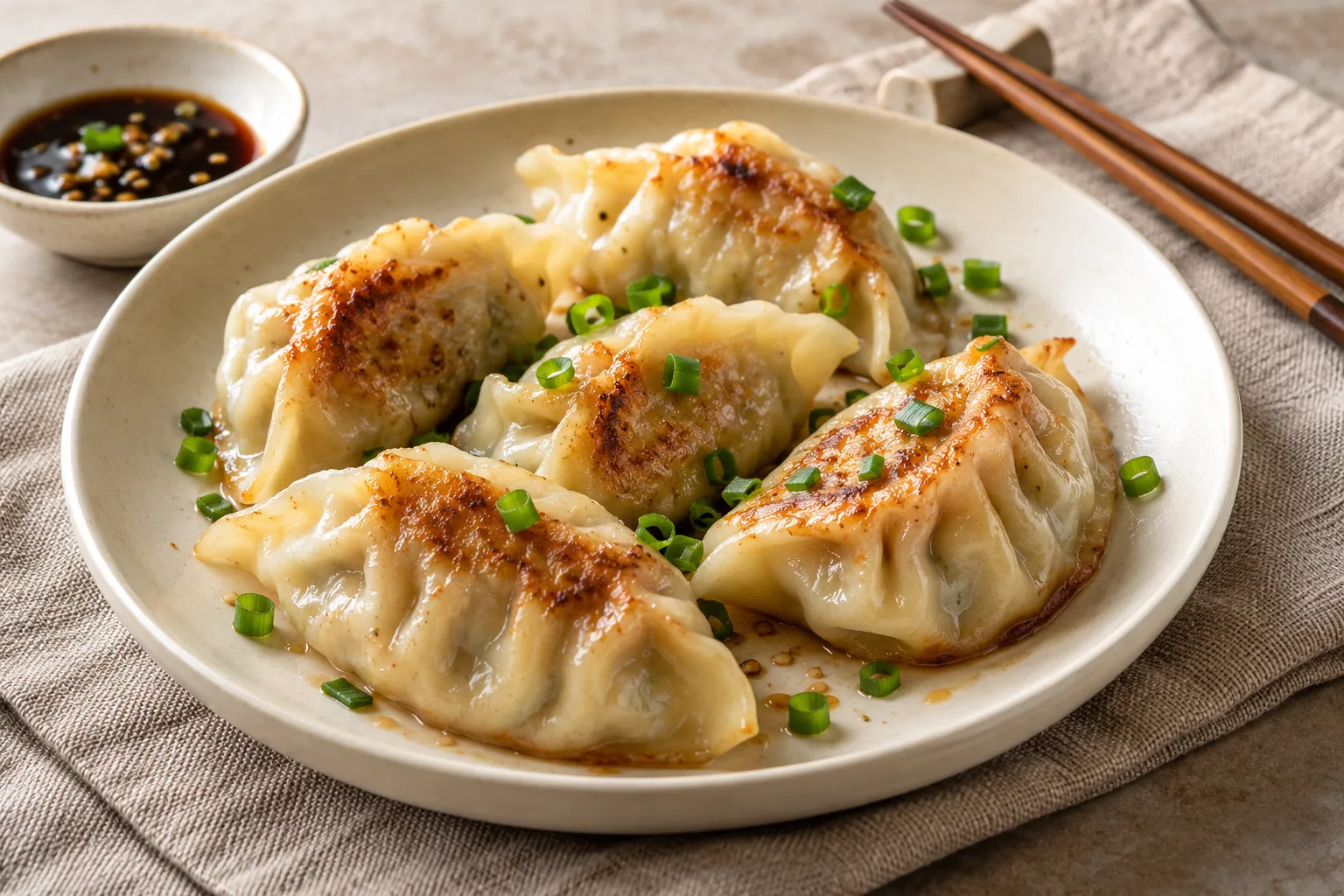
Sometimes Dumplings can fit a meal, especially when you account for the dip and sides. Four reference-size steamed dumplings (100 g) provide 113 calories and 368 mg sodium in USDA data. For comparison, three Ling Ling chicken potstickers allocate about 373 mg sodium before cooking additions; one tablespoon of their sauce adds another 610 mg.
| Nutrient | Four reference-size 25-g dumplings (100 g) | Per 100 g |
|---|---|---|
| Calories | 113 kcal | 113 kcal |
| Protein | 6.9 g | 6.9 g |
| Total fat | 4.6 g | 4.6 g |
| Saturated fat | 1.4 g | 1.4 g |
| Carbohydrate | 11.1 g | 11.1 g |
| Fiber | 1.2 g | 1.2 g |
| Total sugar | 2.3 g | 2.3 g |
| Sodium | 368 mg | 368 mg |
| Calcium | 23 mg | 23 mg |
| Iron | 0.6 mg | 0.6 mg |
| Potassium | 237 mg | 237 mg |
USDA FoodData Central, FDC 2708708.
The word covers many foods, from filled wheat wrappers to potato dumplings and other preparations. This article focuses on the wonton, pot-sticker and similar filled-dumpling references identified in the tables.
The wrapper is only one component
A dumpling combines a wrapper and filling, with proportions that vary. A vegetable filling may include oil, starch or tofu. A meat filling may use a lean cut or a fatty blend. “Chicken” and “vegetable” are therefore incomplete descriptions for predicting fat or protein.
Steamed, boiled and pan-fried are also different methods. Pan-frying can range from a light coating of oil to a larger retained amount. Deep-frying introduces another preparation. How much frying changes a serving depends on the recipe, the oil retained and the finished weight.
Nutrition and piece weights
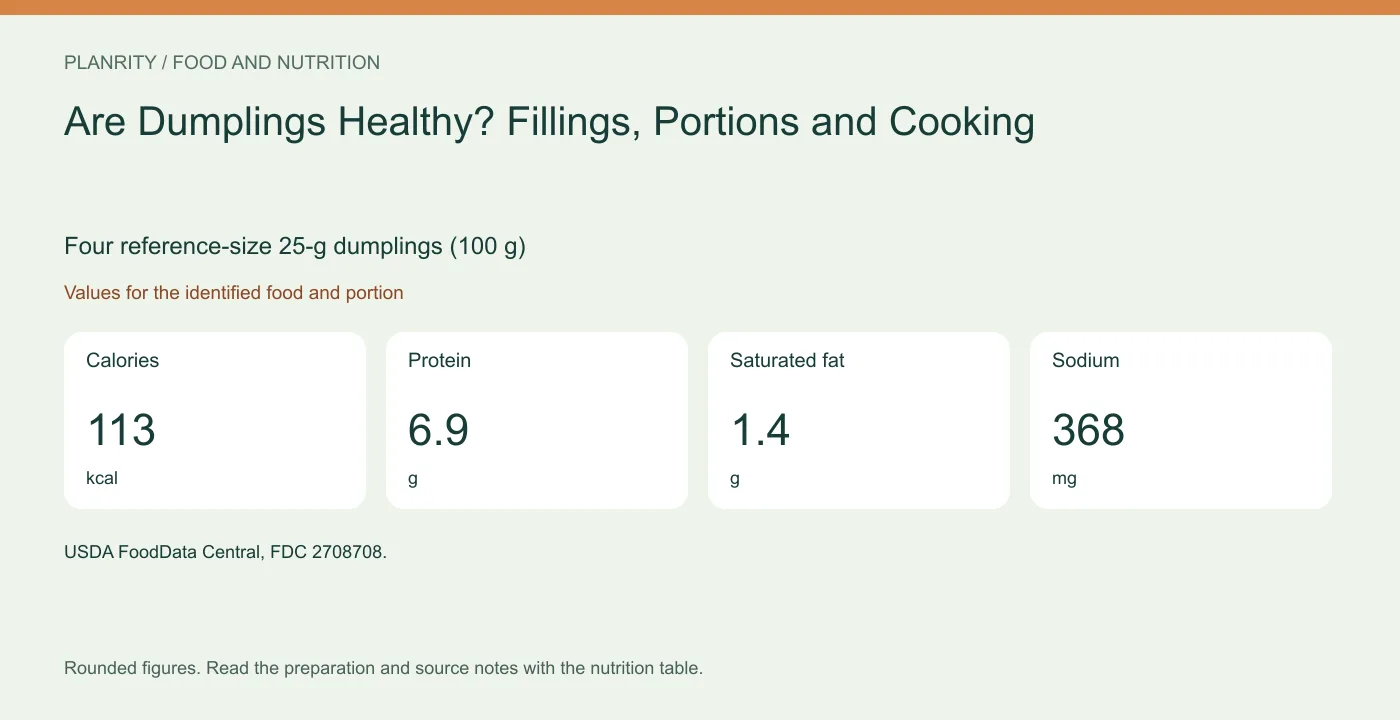
Source: USDA FoodData Central, FDC 2708708.
FNDDS assigns a 25-g item weight to the identified steamed reference, making four such items 100 g. This is a database reference size, not a claim that every dumpling weighs 25 g. Large restaurant dumplings or small frozen pieces can differ considerably.
| Reference serving | Weight | Calculation |
|---|---|---|
| One database-size piece | 25 g | One quarter of the per-100-g values |
| Four database-size pieces | 100 g | The nutrition table amount |
| Six database-size pieces | 150 g | One and a half times the table amount |
Use the actual package’s piece count and gram weight for a branded product. If you weigh a homemade cooked batch, record the number of pieces as well as the total weight. Equal counts do not ensure equal food amounts.
Steamed and fried reference foods
All rows below use the same 100-g weight.
| Food | Calories (kcal) | Protein (g) | Fat (g) | Saturated fat (g) | Fiber (g) | Sodium (mg) |
|---|---|---|---|---|---|---|
| Wonton, dumpling or pot sticker, steamed | 113 | 6.9 | 4.6 | 1.4 | 1.2 | 368 |
| Wonton, dumpling or pot sticker, fried | 192 | 8.8 | 11.1 | 2.5 | 1.5 | 467 |
| Wonton, dumpling or pot sticker, fried, no meat | 192 | 8.8 | 11.1 | 2.5 | 1.5 | 467 |
These are separate survey-food formulations, not the same dumpling cooked two ways in a controlled experiment. The fried reference contains more fat and calories per 100 g. Its filling and wrapper also differ from the steamed example, so frying oil is only part of the comparison.
The no-meat fried reference has the same reported values as the other fried reference. That illustrates a limitation of broad survey categories; it does not prove that every vegetable and meat dumpling is identical. A current label or a recipe calculation provides more product-specific information.
The same potstickers, three cooking methods
Ling Ling publishes boiling, steaming and pan-frying directions for its 10.5-oz Chicken & Vegetable Potstickers. The potsticker panel lists nine pieces (255 g), excluding the separate sauce. That is about 28.3 g per piece as packaged; it is not a measured cooked piece weight. Ling Ling: Chicken & Vegetable Potstickers, 10.5 oz, preparation methods and separate panels
| Same product, as-packaged allocation | Calories | Fat | Sodium |
|---|---|---|---|
| One ninth of the 255-g potsticker portion | 51 | 1.4 g | 124 mg |
| Three pieces, 85 g before cooking | 153 | 4.3 g | 373 mg |
| Nine pieces, 255 g before cooking | 460 | 13 g | 1,120 mg |
Boiling takes the manufacturer’s stated 5–6 minutes and steaming 12 minutes. Its pan-fry method adds 1 tablespoon of oil to the pan; the amount retained is not reported. For a nine-piece batch, that tablespoon is a batch input, not an addition for every piece. Water uptake, evaporation and possible nutrient losses are not measured, so these are starting-food allocations for all three methods, not three invented cooked analyses. Follow the full package method and check poultry filling reaches 165°F. Ling Ling: Chicken & Vegetable Potstickers, 10.5 oz, preparation methods and separate panels USDA safe minimum internal temperatures
The separate sauce supplies 610 mg sodium per tablespoon (17 g). One such serving added to three potstickers brings the starting-label total to about 983 mg sodium. Consuming less dip changes that addition; the dumpling itself still contains sodium. Ling Ling: Chicken & Vegetable Potstickers, 10.5 oz, preparation methods and separate panels
What dumplings can contribute
Protein from the filling: Meat, seafood, egg, soy or another ingredient can contribute protein. The wrapper-to-filling ratio affects how much appears in a serving.
Vegetables in a useful format: Cabbage, mushrooms and other vegetables can be part of the filling. The panel’s fiber amount is more useful than a vegetable name on the package.
Flexible meal portions: Separate pieces can help you understand the amount eaten when their size is known. They are not inherently portion-controlled if pieces vary or the plate is repeatedly refilled.
Sauce deserves its own calculation
Soy sauce, chili oil and prepared dips have different nutritional roles. Soy sauce may contribute sodium; chili oil contributes fat as well as any seasoning. Diluting a sauce only lowers total sodium intake if you actually consume less of the original sauce, not if you drink the entire diluted amount.
To calculate a dip, weigh or measure the sauce used and multiply the label amount by the number of servings consumed. Count any leftover sauce separately if you are estimating intake. Use the dip’s own label: a soy-based sauce and an oil-based chili sauce can have very different sodium and fat amounts.
The dumpling tables do not include a dip. They also do not include rice or a side dish. A meal estimate should include everything you eat rather than using the dumplings alone to represent the plate.
Build a satisfying meal
When dumplings provide the meal’s starch, consider vegetables and any extra protein you need before adding rice. Whether extra protein is needed depends on the filling and portion; a heavily meat-filled dumpling differs from a mostly-wrapper version.
There is no prescribed number of dumplings for everyone. Appetite, piece size, other foods and individual requirements matter. The reference table helps translate counts into weights, while the rest of the plate determines the overall meal.
Cooking and dietary considerations
Frozen products may be raw, partly cooked or fully cooked. Follow the package instructions and do not assume a browned wrapper means the filling is safe. Ground-meat and poultry fillings require the appropriate internal endpoint; poultry requires 165°F. USDA safe minimum internal temperatures
Wheat, soy, sesame, egg and shellfish may appear in wrappers, fillings or sauces. Ask about all components when an allergy matters. Ask about animal-based broth if you need a vegan filling.
People managing sodium closely should use the specific label and sauce quantity. For pregnancy or weakened immunity, thoroughly cooked filling and safe storage matter more than a generic “steamed is healthy” claim.
Buying and cooking checklist
- Identify the dumpling type and filling.
- Check the cooked or uncooked state on the package.
- Record piece count and gram weight together.
- Compare equal weights when assessing density.
- Include the actual dip and any side dishes.
- Cook the filling safely, following the product instructions.
- Use the same-product methods to separate starting food from cooking additions.
Calculate a family meal from the full package
If a frozen package is shared, start with its total weight and the amount actually cooked. Include cooking oil and any sauce packets used. Divide by the portions served only after those additions are counted. This is more reliable than assuming each person ate a standard number of pieces when sizes differ. Keep uncooked-package figures distinct from cooked weights when the preparation changes moisture.
Choose the method before counting pieces
For the Ling Ling example, three pieces start as 85 g of packaged potstickers. Their sodium allocation is about 373 mg. Adding the manufacturer’s full 17-g tablespoon of dip brings the total to about 983 mg; using half that dip allocates about 678 mg. Those totals count the sauce consumed, not the amount poured into a shared dipping bowl.
Choose the cooking method separately. The manufacturer provides boiling, steaming and pan-frying instructions for the same product. Pan-frying adds oil to the batch, while the package panel alone does not measure oil retention or final cooked weight. Follow one full method and check the filling safely, then decide whether the meal needs vegetables, protein or rice alongside. The dumpling’s piece count helps only when you know how big those pieces are.
What to take away
Choose dumplings by their filling, piece weight and preparation, and give the dipping sauce its own portion. Steaming and boiling avoid adding frying oil during those steps, but the wrapper and filling still contribute sodium. The named potsticker example shows how a small dip can change the total. Follow the package’s full cooking directions, cook the filling safely and add sides according to what the dumplings already supply.
Related food guides
Frequently asked questions
Are steamed dumplings always better than fried?
Steaming avoids adding frying oil during that step, but sodium, filling and portion still matter. The reference foods differ in more than cooking method, so their numerical difference is not a measured oil-absorption effect for every dumpling.
How many dumplings make a serving?
Use the actual piece weight. The selected USDA steamed reference assigns 25 grams per item, but other products can be larger or smaller. A useful serving description includes both the number of pieces and their total edible weight.
Are vegetable dumplings high in protein?
Not necessarily. The filling may contain soy or another protein ingredient, or it may consist largely of vegetables and starch. Read the specific panel or recipe rather than assuming that a vegetable label establishes a particular protein amount.
Does diluting soy sauce remove sodium?
Dilution lowers the concentration, but not the sodium in the original sauce. Total intake falls only if you consume less of that original quantity. Count the actual sauce amount used rather than treating added water as sodium removal.
Sources
- Wonton, dumpling or pot sticker, fried; 2708705, USDA
- Wonton, dumpling or pot sticker, fried, no meat; 2708706, USDA
- Wonton, dumpling or pot sticker, steamed; 2708708, USDA
- USDA safe minimum internal temperatures, USDA
- USDA FSIS: Leftovers and Food Safety, USDA
- How to Understand and Use the Nutrition Facts Label | FDA, FDA
- Sodium in Your Diet | FDA, FDA
- Selecting and Serving Produce Safely | FDA, FDA
- Ling Ling: Chicken & Vegetable Potstickers, 10.5 oz, preparation methods and separate panels, Ling Ling