Breads and grains
Are Hash Browns Healthy? Potatoes, Oil and Portions
Compare identified hash brown preparations and serving weights. Understand oil, sodium and breakfast pairings without assuming potato products are alike.
The short answer
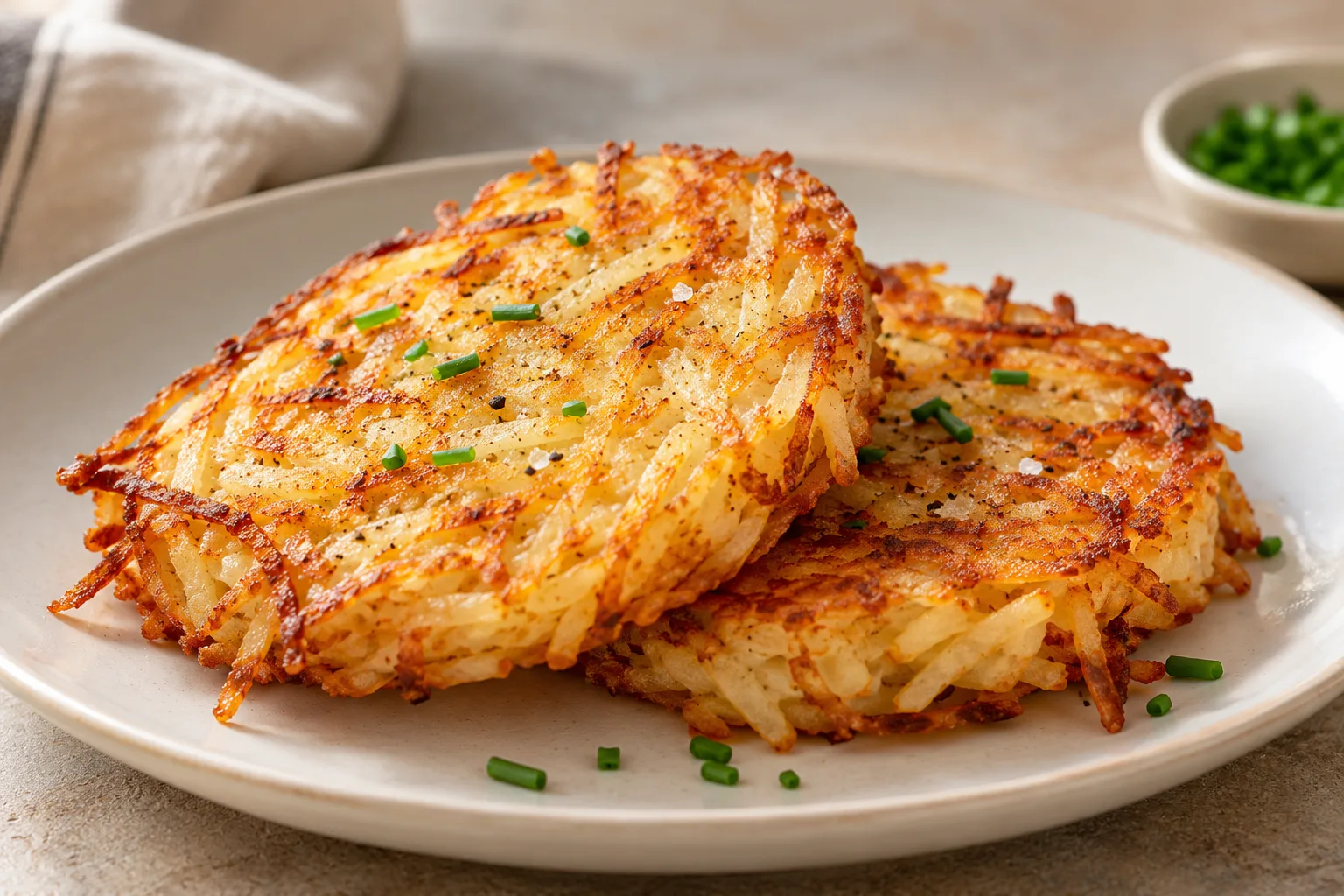
Sometimes Hash browns can be a breakfast side, but the cooking oil and seasoning matter. USDA’s frozen-potato reference prepared in canola oil supplies 219 calories per 100 g. Plain Ore-Ida shreds list 60 calories per 85 g before cooking additions, so use the package as a starting point and count the oil you add.
| Nutrient | Weighed cooked potato portion (100 g) | Per 100 g |
|---|---|---|
| Calories | 219 kcal | 219 kcal |
| Protein | 2.6 g | 2.6 g |
| Total fat | 11.6 g | 11.6 g |
| Saturated fat | 0.9 g | 0.9 g |
| Carbohydrate | 28.5 g | 28.5 g |
| Fiber | 3.2 g | 3.2 g |
| Total sugar | 0.3 g | 0.3 g |
| Sodium | 15 mg | 15 mg |
| Calcium | 17 mg | 17 mg |
| Iron | 0.5 mg | 0.5 mg |
| Potassium | 496 mg | 496 mg |
USDA FoodData Central, FDC 170044.
Potatoes contribute carbohydrate and other nutrients, while oil and salt can change the result. There is no need to describe the potato as either a superfood or the cause of every nutritional concern in the meal.
Identify the product and preparation
Hash browns may be shredded, diced or formed into a patty. Some frozen products are plain potatoes; others already contain oil, salt or seasonings. Check the ingredients and preparation directions to find out whether oil is already present.
At home, the amount of oil and moisture lost during cooking affect nutrient density. A thin crisp portion can contain less water per gram than the starting shredded potato. Comparing raw and cooked weights as though they were identical would obscure that change.
Nutrition for a cooked reference
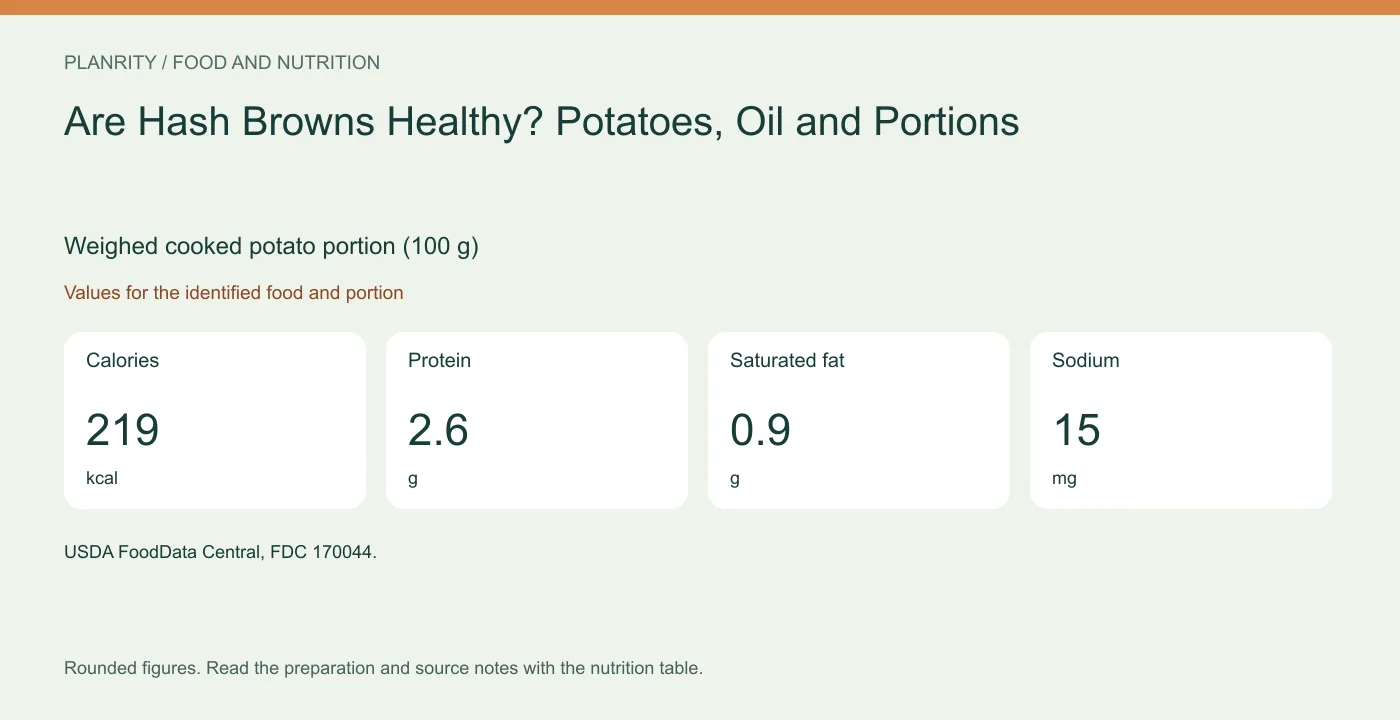
Source: USDA FoodData Central, FDC 170044.
The main record describes frozen plain hash browns prepared by pan-frying in canola oil. For a branded patty, use its own current label.
Preparation comparison
All rows below use the same 100-g weight.
| Food | Calories (kcal) | Protein (g) | Fat (g) | Saturated fat (g) | Fiber (g) | Sodium (mg) |
|---|---|---|---|---|---|---|
| Potatoes, hash brown, frozen, plain, prepared, pan fried in canola oil | 219 | 2.6 | 11.6 | 0.9 | 3.2 | 15 |
| Potatoes, hash brown, home-prepared | 265 | 3.0 | 12.5 | 1.9 | 3.2 | 342 |
| Ore-Ida Shredded Hash Brown Potatoes; UNPREPARED, 1 1/4 cups (85 g) | 71 | 2.4 | 0.0 | 0.0 | 1.2 | 29 |
The final row is the current US Ore-Ida Shredded Hash Brown Potatoes label: 1 1/4 cups (85 g) unprepared. It supplies 60 calories, 13 g carbohydrate, 2 g protein, 1 g fiber, 25 mg sodium and 290 mg potassium, with zero fat on the rounded panel. Ingredients are potatoes, dextrose and sodium acid pyrophosphate. This is a starting-food comparison, not proof that cooked hash browns contain those same amounts per 85 g. Kraft Heinz: Ore-Ida Shredded Hash Brown Potatoes, US label
For a home batch, weigh 170 g of these frozen shreds: that allocates two label servings, or 120 calories before cooking additions. If 10 g of olive oil is added and all of it is eaten, the USDA oil record adds about 88 calories and 10 g fat to the batch. Two equal shares would allocate about 104 calories each. This is an ingredient estimate; discarded oil or a different oil amount changes it. Oil, olive, salad or cooking; 171413
As water evaporates, the same potatoes weigh less. Dividing the batch equally keeps each share tied to its original ingredients; weighing the finished batch lets you calculate a cooked portion instead. The USDA prepared rows describe specific cooked reference recipes; their difference from the unprepared brand includes formulation and cooking, not simply the appliance used. Kraft Heinz: Ore-Ida Shredded Hash Brown Potatoes, US label
A serving-weight calculation readers can use
For a 75-g portion of the main cooked reference, multiply each per-100-g value by 0.75. For 150 g, multiply by 1.5. This is a proportional estimate for that preparation, not a universal serving recommendation. The formula makes the portion decision explicit.
If a package gives one patty as a serving, record its gram weight. Compare the grams in a small patty and a restaurant mound; their serving counts can hide a large difference in food amount. Count toppings and any extra oil used according to the preparation instructions.
What hash browns can contribute
A starch component: Potatoes can supply energy in a meal. Whether that is useful depends on the rest of breakfast and your needs.
Potassium and other nutrients: The identified table provides the values reported for this preparation.
A flexible base: Potatoes can accompany eggs, beans, vegetables or another protein food. The complete plate can address nutrients the potato portion supplies in smaller amounts.
Oil and cooking method
Air-frying or baking can use less added oil when the recipe actually uses less. Check for oil already in the product and measure any extra used in the appliance.
Measuring oil before cooking gives a clear input. It does not prove how much remains in the food after cooking. For a recipe estimate, state whether all oil is assumed retained, then measure the final cooked yield if a per-100-g claim is needed.
Both potato flesh and skin contribute nutrients. Keeping the skin is one option for texture and fiber, but peeled potato still provides carbohydrate and potassium. Use a nutrition record that matches the preparation you eat.
Sodium and the rest of breakfast
Seasoning blends, pre-seasoned potatoes and added salt can contribute sodium. The main potato record is not a measurement of a heavily salted restaurant serving. Use actual labels or measured additions where the number matters.
Bacon, sausage, cheese, butter and sauces each add their own nutrients. Eggs or another protein can help complete a potato-based breakfast, but cooking fats and portions still count. Avoid treating one ingredient as the sole explanation for the entire meal’s profile.
Practical breakfast choices
| Situation | Useful step | Why it helps |
|---|---|---|
| Plain frozen shreds | Read whether oil or salt is already present | Separates the starting ingredient from additions |
| Prepared patty | Check the current patty weight and panel | Makes the portion comparable |
| Home pan-frying | Measure oil and weigh cooked yield | Documents the recipe assumptions |
| Restaurant breakfast | Include sides and condiments | Evaluates the meal actually eaten |
There is no single hash-brown portion or weekly frequency appropriate for everyone. The 100-g amount is a comparison basis. People following carbohydrate, sodium or other medical restrictions should use their actual targets and product data.
Buying and cooking checklist
- Identify shredded, diced or formed products.
- Check whether the product is plain or pre-seasoned.
- Compare cooked states when evaluating ready-to-eat foods.
- Record patty weight rather than assuming a standard size.
- Measure added oil and salt at home.
- Include a protein food and other meal components as needed.
- Use current labels for a named brand or restaurant.
Build a home comparison one change at a time
To evaluate an oil adjustment, use the same potato product and starting weight in both preparations. Record the oil added, final cooked weight and anything discarded. If one version also removes salt or changes the portion, those are additional changes and should be named. Otherwise, it is impossible to tell which choice explains the numerical difference.
For a packaged product, follow its preparation instructions before deciding whether it needs extra oil. Plain shreds and preformed patties may behave differently. A cooking spray also contributes oil when used, so a calculation should describe the amount rather than assuming the word spray means no fat was added.
Separate the bag from the skillet
For a home breakfast, a 170-g batch of the Ore-Ida shreds allocates two package servings before cooking. Adding 10 g olive oil and eating all of it brings the batch to about 208 calories. Two equal shares allocate about 104 calories each, before salt or toppings. Use that ingredient estimate when dividing the batch, rather than calling any cooked 85-g scoop one package serving.
Then plan the rest of breakfast. Eggs, beans or another protein food can serve a different role from more potato. Cheese, butter and breakfast meats add nutrients too, including sodium or saturated fat depending on the product. A crisp texture does not require an unmeasured pour of oil: measure the amount for your method and follow the package’s safe preparation directions.
What to take away
Keep the potato product, cooking additions and finished breakfast separate in your calculations. Plain frozen shreds start differently from a prepared fried patty, and water loss changes the weight after cooking. A protein food or vegetables can make the plate more substantial, while butter, cheese and breakfast meats add their own nutrients. Choose the portion you want, measure oil for the batch and use a label that matches what you bought.
Related food guides
Frequently asked questions
Are air-fried hash browns always lower in fat?
Only the actual ingredients and preparation can establish that. A pre-fried frozen patty may already contain oil, while plain potato shreds may not. Count any oil you add and compare the final portions rather than relying on the appliance name.
Is one patty a standard serving?
The package defines that product’s serving, but patty weights differ. Use its gram weight and current panel. A restaurant portion may contain a different amount, so a universal calorie figure for one hash brown would be unreliable.
Can I use unprepared frozen-potato nutrition for cooked hash browns?
Not without accounting for preparation. Cooking can add oil and remove water, changing both total nutrients and their concentration per gram. Use a matching cooked record or a transparent recipe calculation with its assumptions stated.
Do hash browns make a complete breakfast?
They usually function as a starch component. The meal may need protein, produce or other foods according to your needs. Include additions and sides in the evaluation rather than assuming that potatoes alone supply every part of a balanced breakfast.
Sources
- Potatoes, hash brown, home-prepared; 170036, USDA
- Potatoes, hash brown, frozen, plain, prepared, pan fried in canola oil; 170044, USDA
- Oil, olive, salad or cooking; 171413, USDA
- How to Understand and Use the Nutrition Facts Label | FDA, FDA
- Sodium in Your Diet | FDA, FDA
- American Heart Association guidance on dietary fats, American Heart Association
- USDA safe minimum internal temperatures, USDA
- USDA FSIS: Leftovers and Food Safety, USDA
- Kraft Heinz: Ore-Ida Shredded Hash Brown Potatoes, US label