Meats and seafood
Healthy Lunch Meat: Compare Sodium, Protein and Portions
Compare healthy lunch meat with two turkey panels, plain chicken and three sandwich totals. Check sodium, protein, portions and deli-meat safety.
The short answer
For a lower-sodium sandwich, choose by the actual deli panel rather than the animal name. Boar’s Head No Salt Added Oven Roasted Turkey Breast lists 55 mg sodium and 14 g protein per 56 g. Its 46% Lower Sodium Oven Roasted Turkey Breast lists 360 mg and 12 g protein at the same weight. Both are turkey, but they make very different contributions to a sandwich’s sodium.
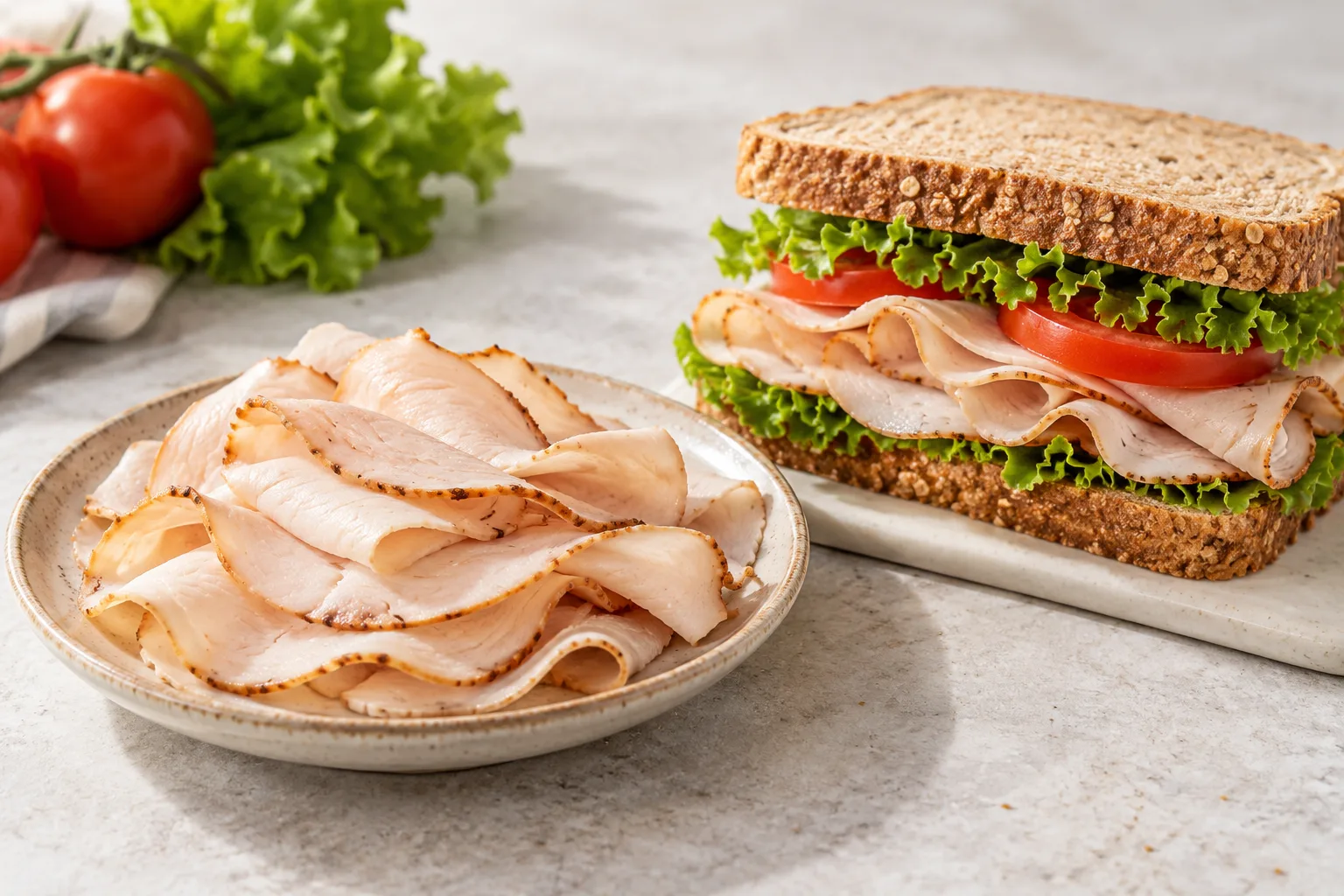
| Nutrient | 56 g No Salt Added Oven Roasted Turkey Breast |
|---|---|
| Calories | 70 kcal |
| Protein | 14 g |
| Sodium | 55 mg |
| Total fat | 1 g |
Official manufacturer panel; other turkey sodium amounts are separately identified in the article.
For a lower-sodium sandwich, choose by the actual deli panel rather than the animal name. Boar’s Head No Salt Added Oven Roasted Turkey Breast lists 55 mg sodium and 14 g protein per 56 g. Its 46% Lower Sodium Oven Roasted Turkey Breast lists 360 mg and 12 g protein at the same weight. Both are turkey, but they make very different contributions to a sandwich’s sodium.
Choose no-salt-added turkey when sodium is the main comparison, then count bread, cheese and condiments. Keep the processing and food-safety questions separate; a lower-sodium panel does not answer those for you.
Two deli panels and a freshly cooked alternative
The turkey figures come from the manufacturer’s No Salt Added nutrition page and 46% Lower Sodium Oven Roasted Turkey nutrition page. Plain chicken uses USDA roasted breast meat, FDC 171477, without added seasonings.
| Equal 56 g amount | Calories | Protein | Sodium |
|---|---|---|---|
| No Salt Added deli turkey | 70 | 14 g | 55 mg |
| 46% Lower Sodium deli turkey | 60 | 12 g | 360 mg |
| Plain roasted chicken reference | 92 | 17.4 g | 41 mg |
The second turkey has fewer listed calories but much more sodium than the first. Plain chicken supplies more protein at this weight, but requires cooking and safe storage. No single column settles which is most practical for your lunch.
Thin slices and thick slices can provide the same nutrients when their total weight is the same. At the deli, ask for the product’s exact name and current nutrition sheet, then order by weight. Do not match a differently smoked, seasoned or roasted product to these figures merely because it is turkey.
If you use 112 g of the lower-sodium turkey, the sodium becomes about 720 mg before bread or toppings—roughly 31% of the FDA’s 2,300 mg Daily Value. The corresponding no-salt-added portion supplies about 110 mg. Those are portion calculations, not a recommendation that everyone eat 112 g.
The fresh-chicken reference is not a value for rotisserie chicken, brined poultry or a chicken cold cut. Those have their own recipes and labels. Match the preparation before using the low plain-meat sodium figure.
What “lower sodium” actually tells you
A percentage reduction compares a food with a specified reference. It does not mean that percentage of your daily sodium allowance remains, and it does not necessarily describe a low-sodium food. A turkey reduced by 46% can still list hundreds of milligrams in a small portion.
The FDA’s sodium guide explains these label distinctions. The simplest shopping method is to read milligrams per serving, check the serving weight, then scale to the amount you put in the sandwich. If two packages use different serving sizes, compare milligrams per gram or convert both to 56 g.
For example, a package with 300 mg per 50 g has 6 mg per gram. A 75 g portion contributes about 450 mg. That calculation is more informative than choosing the package with the lower printed number when its serving is also smaller. Write the portion in grams once; you can then judge a familiar handful of slices more realistically.
“No salt added” also differs from “sodium free.” The featured turkey still contains 55 mg per serving. Some sodium occurs naturally in foods, and the finished ingredient list matters. Use the printed panel rather than treating a front-of-pack phrase as a promise of zero.
What those choices mean in the same sandwich
Use a fixed bread amount to isolate the filling. The USDA commercial whole-wheat bread reference, FDC 172688, contributes about 151 calories, 7.5 g protein, 3.6 g fiber and 273 mg sodium per 60 g. Add 56 g of one filling:
| Two-ingredient sandwich base | Calories | Protein | Sodium |
|---|---|---|---|
| Bread plus no-salt-added turkey | 221 | 21.5 g | 328 mg |
| Bread plus lower-sodium turkey | 211 | 19.5 g | 633 mg |
| Bread plus plain roasted chicken | 244 | 24.8 g | 314 mg |
These totals exclude vegetables, cheese, spread and sides. They show the effect of changing the filling while leaving the bread alone. A different loaf needs its own panel rather than inheriting the generic bread’s sodium.
For the no-salt-added turkey base, bread contributes more sodium than meat. With the lower-sodium turkey, the filling contributes more. That tells you where a second change might help: compare breads in the first case and compare meat portions or products in the second.
Add cheese because you want it, but count its weight separately. Planrity’s provolone guide covers that ingredient. Pickles, salty spreads and a soup or chips on the side can also change the lunch substantially. Keep vegetables in view as food you want rather than treating every sandwich adjustment as a reason to remove them.
Freshly cooked meat is a separate option
The USDA roasted chicken-breast reference, FDC 171477, provides about 92 calories, 17.4 g protein and 41 mg sodium per 56 g. This is plain cooked meat, not seasoned rotisserie chicken, brined chicken or a commercial chicken cold cut.
Leftover home-cooked chicken can therefore make a practical sandwich filling when you control the seasoning. It takes preparation and safe storage, and its texture differs from thin deli slices. A heavily salted roast will not retain the plain reference’s sodium figure. Count added salt, stock and sauces if those are part of your preparation.
The comparison also illustrates why “chicken versus turkey” is too broad a question. A plain turkey roast and a cured turkey slice are different foods. Planrity’s turkey nutrition guide separates the meat from common preparations. You can make the same distinction when choosing ham, roast beef or sliced poultry at the counter.
Protein does not answer the processed-meat question
Deli meats can be convenient sources of protein, but protein is only one reason to choose a food. The World Health Organization’s explanation of processed meat includes preservation and processing such as curing, salting, fermentation and smoking; the category can include poultry products as well as red meat.
A lower-sodium label does not show that a product has the same long-term health profile as a freshly cooked, unpreserved piece of meat. Nor does a “no added nitrates” claim answer every question about processing. Read the ingredients and consider how often cold cuts appear across breakfast, lunch and snacks.
An everyday lunch rotation can include freshly cooked poultry, eggs where suitable, or bean fillings rather than relying on one packaged meat each day. For a meat-free option, the bean comparison guide explains how cooked beans differ in protein, fiber and sodium. The aim is a workable rotation you enjoy, not a single product awarded a universal “healthiest” label.
Food safety can change the best choice
For pregnant people, adults aged 65 or older and people with weakened immune systems, the deli counter raises a separate concern. The CDC’s Listeria prevention advice recommends avoiding unheated deli meats and cold cuts, or reheating them to 165°F or until steaming hot before eating.
Buying an expensive brand, choosing turkey or selecting no-salt-added meat does not replace that step. Ask about the product you are buying, keep it refrigerated, and follow its storage instructions. Do not judge safety by a clean appearance or a normal smell alone.
For your next sandwich, make three decisions in order: choose a filling that suits your safety needs, compare sodium at the portion you will eat, then build the rest of lunch around it. That sequence keeps the useful protein contribution in view without allowing it to hide the rest of the meal.
Frequently asked questions
Is turkey lunch meat healthier than ham?
There is no reliable answer from the animal name alone. Compare the exact products at the same weight for sodium, protein and saturated fat, then check ingredients and processing. The turkey examples here range from 55 to 360 mg sodium per 56 g. A turkey label therefore cannot substitute for reading the panel, and lower sodium does not remove deli-meat handling precautions.
How many slices should I put in a sandwich?
Slice thickness and size vary, so weigh your usual amount rather than assuming that two or four slices match the label serving. Scale nutrients by portion grams divided by serving grams. The 56 g examples here are comparison portions, not a personal prescription. Appetite, the rest of lunch and any clinician-set dietary limits may call for a different amount.
Is no-salt-added deli turkey safe to eat cold during pregnancy?
The sodium claim does not address Listeria. CDC advice for people at higher risk, including pregnant people, is to avoid unheated deli meats or reheat them to 165°F or until steaming hot. Use the same safety approach even when a product is low in sodium, has a short ingredient list or comes from a freshly sliced deli order.
Sources
- Boar’s Head: No Salt Added Oven Roasted Turkey Breast: nutrition, Boar’s Head
- CDC: Preventing Listeria infection, CDC
- WHO: Carcinogenicity of red and processed meat, WHO
- FDA: Sodium in Your Diet, FDA
- USDA FoodData Central: Chicken, broilers or fryers, breast, meat only, cooked, roasted (FDC 171477), USDA FoodData Central
- USDA FoodData Central: Bread, whole-wheat, commercially prepared (FDC 172688), USDA FoodData Central
- Boar’s Head: 46% Lower Sodium Oven Roasted Turkey Breast: current listed panel, Boar’s Head