Meats and seafood
Are Crab Legs Healthy? Meat Weight, Sodium and Butter
Are crab legs healthy? Compare Trident snow crab with two USDA references, then count edible meat weight, sodium and measured dipping butter portions.
The short answer
Sometimes Crab legs can be a useful protein choice, but sodium varies enough that the actual product matters. Trident’s Wild Alaska Snow Crab Snap-N-Eat panel lists 120 calories, 16 g protein and 270 mg sodium per 85 g edible meat. At the same weight, the USDA king-crab reference has 911 mg sodium. Weigh the meat without shell and count butter separately rather than applying either figure to every crab dinner.
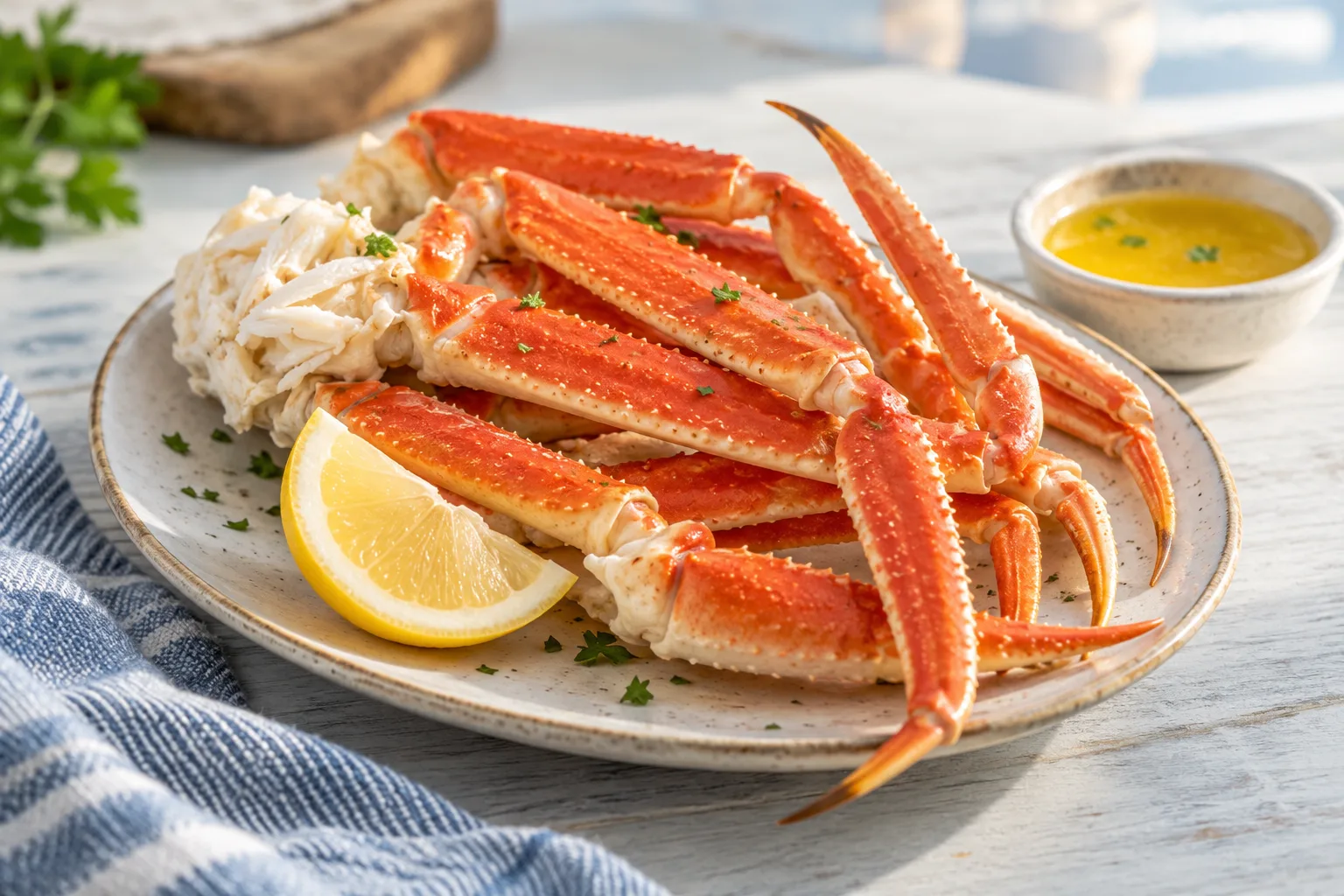
| Nutrient | Trident Wild Alaska Snow Crab Snap-N-Eat: 85 g edible meat |
|---|---|
| Calories | 120 kcal |
| Protein | 16 g |
| Total fat | 5 g |
| Saturated fat | 1 g |
| Sodium | 270 mg |
Official item 438758 edible-meat product panel; shell excluded. Generic USDA king/queen references in the body are different samples.
Crab legs can be a useful protein choice, but sodium varies enough that the actual product matters. Trident’s Wild Alaska Snow Crab Snap-N-Eat panel lists 120 calories, 16 g protein and 270 mg sodium per 85 g edible meat. At the same weight, the USDA king-crab reference has 911 mg sodium. Weigh the meat without shell and count butter separately rather than applying either figure to every crab dinner.
Use edible meat weight. Shell, joints and other discarded material do not belong in the nutrition amount. Once the product and meat portion are clear, add the dip and sides you actually eat.
A named product can differ from generic crab references
The Trident Wild Alaska Snow Crab Snap-N-Eat page, item 438758, explicitly defines a serving as 3 oz edible meat, 85 g. The generic comparisons use USDA cooked Alaska king crab, FDC 174202, and cooked queen crab, FDC 172008.
| Same 85 g edible meat | Trident snow-crab product | USDA queen-crab reference | USDA king-crab reference |
|---|---|---|---|
| Calories | 120 | 98 | 82 |
| Protein | 16 g | 20.2 g | 16.4 g |
| Total fat | 5 g | 1.3 g | 1.3 g |
| Saturated fat | 1 g | 0.2 g | 0.1 g |
| Sodium | 270 mg | 587 mg | 911 mg |
The named product lists less sodium but more fat than the two generic references. These are different products and samples, not evidence that one species or preparation always produces a particular result. The values do not establish how much sodium was naturally present versus introduced during processing.
For a package you buy, use its edible-meat serving statement and label. For a restaurant, ask whether the listed amount describes meat only or a complete seasoned dish. The brand-specific 270 mg figure is not an average for all snow crab, just as 911 mg is not a rule for every king-crab package.
Do not assume rinsing or reheating removes a predictable amount of sodium. If sodium is the priority, compare actual product panels at the same edible weight before choosing. That is a more reliable step than using a low plain-food number for an unidentified seafood boil.
Shell-on purchase weight is the wrong nutrition weight
A shell-on cluster includes shell, joints and other material you do not eat. The edible yield can vary, so a fixed conversion from purchase pounds to meat grams is not reliable for every order. The more shell in the purchase, the larger the gap between what the scale shows at checkout and what reaches your plate.
For a home estimate, remove the meat and weigh the amount you plan to eat. Then multiply the per-100-g reference by edible grams divided by 100. If you eat 170 g king-crab meat, the selected reference doubles the 85 g estimate to about 165 calories, 32.9 g protein and 1,822 mg sodium before butter or seasoning.
That sodium is about 79% of the FDA’s 2,300 mg Daily Value. It does not mean everyone should eat exactly half that amount. It shows why a lean seafood can still contribute substantial sodium, especially when a large edible portion is served.
The FDA’s Nutrition Facts guide helps interpret packaged serving descriptions. Check whether a panel describes edible meat, a stated serving of the product or a prepared dish. Do not combine a shell-on weight with a meat-only reference and present the result as precise.
Butter changes both crab examples
The USDA salted-butter reference, FDC 173410, supplies about 100 calories, 7.2 g saturated fat and 90 mg sodium per weighed 14 g. A restaurant cup may hold several such amounts.
| Example eaten | Calories | Protein | Saturated fat | Sodium |
|---|---|---|---|---|
| King-crab reference, 85 g | 82 | 16.4 g | 0.1 g | 911 mg |
| Same king crab plus 14 g butter | 183 | 16.6 g | 7.3 g | 1,001 mg |
| Trident snow-crab product, 85 g | 120 | 16 g | 1 g | 270 mg |
| Same Trident product plus 14 g butter | 220 | 16.1 g | 8.2 g | 360 mg |
Each butter row assumes all 14 g is eaten. If some stays in the cup, the consumed amount is lower, but a starting cup size alone cannot tell you exactly how much was used.
The butter is the largest saturated-fat contributor in both combined examples. Choosing a lower-sodium crab product addresses sodium; choosing a smaller butter amount addresses another part of the meal. You can make either change independently.
Ask for butter on the side if you want to control dipping, and use a recognizable amount. There is no need to describe the dip as nutritionally invisible because the food underneath is seafood.
Sodium needs its own meal plan
The FDA’s sodium guide recommends comparing foods and amounts. The king-crab reference’s 911 mg per 85 g is about 40% of the Daily Value, the queen-crab reference’s 587 mg about 26%, and the named product’s 270 mg about 12%. Those are meaningful contributions before salty dipping sauces or seasoned sides.
For someone following a clinician-set sodium limit, use that individual advice and the actual product. “Seafood is healthy” is too broad to answer whether a particular crab dinner fits that limit. Likewise, “no extra salt” at the table does not mean the food itself contains little sodium.
If cooking at home, check whether the legs are already cooked or seasoned before adding salt to the water. Follow package directions rather than assuming every frozen product needs the same preparation. A seasoned boil with sausage, sauces and salty spice blends is a different meal from plain crab meat.
Planrity’s fish guide compares seafood choices, while the ceviche guide covers a different preparation and its safety questions. Neither should be used to assign a low-sodium value to an unidentified crab product.
Add sides for the role you want them to play
Crab supplies protein, but the selected references contain no fiber. Vegetables, beans or another suitable side can provide a different component to the meal. A large butter portion is not the only way to make a crab plate feel complete.
For example, plain rice adds energy and carbohydrate, while a bean side supplies fiber as well as protein. The bean guide explains why the cooked food and added salt matter. Choose a side you want and count its preparation rather than assuming all vegetable or grain dishes are identical.
Lemon, herbs and other seasonings may help provide the flavor you enjoy with a smaller butter amount. That is a serving preference, not a guarantee that the meal becomes low sodium. A bottled seasoning blend still needs a label check, particularly when used generously across a large seafood boil.
At a restaurant, ask whether nutrition information includes butter, sauces and sides. If not, use the listing only for what it actually describes. A plate’s total cannot be inferred accurately from the crab’s lean protein figure alone.
Cook and handle the actual product safely
Crab is a crustacean shellfish allergen. The FDA’s allergy-label guidance supports checking ingredients and asking about shared preparation when allergies matter. Butter adds milk, and sauces may introduce other allergens.
The FoodSafety.gov temperature chart advises cooking crab and similar shellfish until the flesh is pearly or white and opaque. For a product sold already cooked, follow its safe thawing and reheating directions rather than treating it as raw seafood.
The FDA’s seafood handling guide covers safe purchasing, refrigeration and preparation. Keep seafood cold, separate raw foods from ready-to-eat foods, and refrigerate perishables promptly. A premium price or a fresh-looking shell does not replace safe handling.
For your next crab meal, identify the edible meat amount and product, then choose butter and sides deliberately. That preserves the useful lean-protein contribution while giving sodium and the rest of the plate the attention they need.
Frequently asked questions
Are crab legs low in fat?
The two generic USDA references have about 1.3 g total fat per 85 g; the named Trident product lists 5 g. Butter and rich sauces can change the meal substantially. A weighed 14 g salted-butter portion adds about 100 calories and 7.2 g saturated fat. Describe the meat and the dip separately rather than applying the plain crab figure to the whole plate.
How do I calculate nutrition for shell-on crab legs?
Use edible meat weight, not the purchase weight including shell. Remove and weigh the meat you plan to eat, then use a matching cooked reference or product panel. Yield varies, so this guide does not assign one fixed percentage to every cluster. Check whether a package’s own serving statement already specifies edible meat before calculating.
Is king crab lower in sodium than queen crab?
Not in these two USDA references. At 85 g cooked edible meat, Alaska king crab has about 911 mg sodium and queen crab about 587 mg. Current packaged products can differ because of preparation and seasoning. Use the exact panel when available and include butter, sauces and sides before judging the complete meal’s sodium.
Sources
- FDA: How to Understand and Use the Nutrition Facts Label, FDA
- FDA: Sodium in Your Diet, FDA
- FDA: Have Food Allergies? Read the Label, FDA
- FoodSafety.gov: Safe Minimum Internal Temperatures, FoodSafety.gov
- FDA: Selecting and Serving Fresh and Frozen Seafood Safely, FDA
- USDA FoodData Central: Crustaceans, crab, queen, cooked, moist heat (FDC 172008), USDA FoodData Central
- USDA FoodData Central: Butter, salted (FDC 173410), USDA FoodData Central
- USDA FoodData Central: Crustaceans, crab, alaska king, cooked, moist heat (FDC 174202), USDA FoodData Central
- Trident Seafoods: Wild Alaska Snow Crab Snap-N-Eat, item 438758, Trident Seafoods