Meats and seafood
Is Gyro Meat Healthy? Blends, Portions and Pita Meals
Understand gyro meat blends, sodium and portions. Compare an identified gyro sandwich with a calculated chicken pita and assess the complete meal clearly.
The short answer
Sometimes The meat blend can make gyro a substantial source of saturated fat and sodium. The named Athenian beef-and-lamb loaf lists 410 calories, 14 g saturated fat and 770 mg sodium per 4 oz (113 g) of raw product. That is a supplier portion before cooking; pita, sauce and fries add to the meal.
| Nutrient | Raw supplier portion (113 g) | Per 100 g |
|---|---|---|
| Calories | 410 kcal | 363 kcal |
| Protein | 18.0 g | 15.9 g |
| Total fat | 33.0 g | 29.2 g |
| Saturated fat | 14.0 g | 12.4 g |
| Carbohydrate | 9.0 g | 8.0 g |
| Fiber | 2.0 g | 1.8 g |
| Total sugar | 0.0 g | 0.0 g |
| Sodium | 770 mg | 681 mg |
Grecian Delight Athenian Raw Gyro Loaf, Kontos 20186; beef/lamb, 4 oz (113 g), AS SUPPLIED RAW.
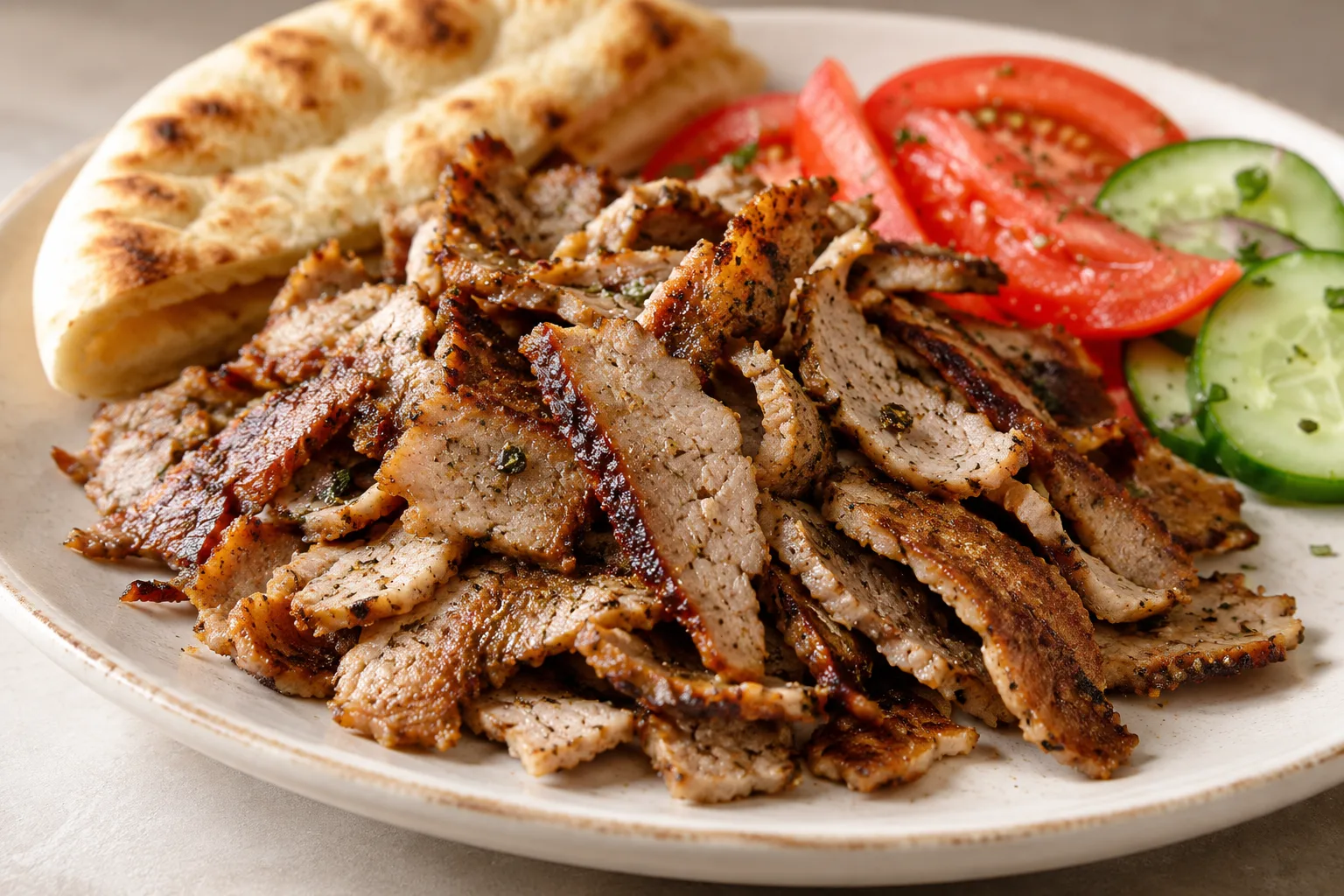
The word “gyro” does not specify one standardized meat. A restaurant may use a seasoned beef-and-lamb cone, pork, chicken, a handmade preparation or a commercially formulated product. Without the blend or a product label, a precise meat-only nutrition claim is uncertain.
What is in gyro meat?
Traditional and commercial preparations vary. Seasoned slices may come from stacked meat or a formed mixture. Some products include binders or other ingredients. The proportions of lamb and beef, the cuts used and the amount of added fat can all matter.
Ask whether the meat is a named product with a nutrition sheet. A “chicken gyro” may be a marinated thigh preparation, not plain skinless breast. Plain chicken breast and a seasoned chicken gyro have different ingredients; compare the product you intend to eat.
Identified meat-only nutrition
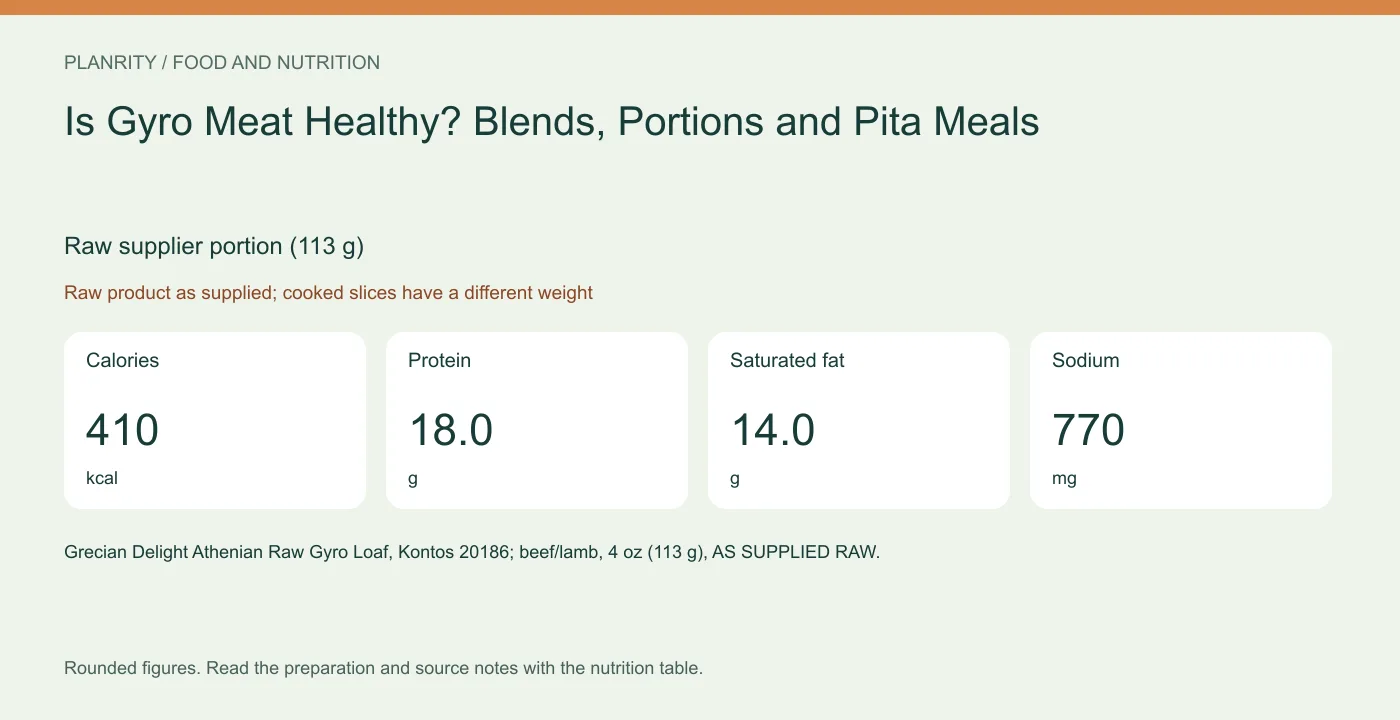
Source: Grecian Delight Athenian Raw Gyro Loaf, Kontos 20186; beef/lamb, 4 oz (113 g), AS SUPPLIED RAW.
The main table describes Grecian Delight Athenian Raw Gyro Loaf, beef and lamb, reproduced by official distributor Kontos Foods as product 20186. The 113-g serving is raw product as supplied; it is not a weighed portion of cooked restaurant slices. The panel revision date is not provided, so a different or newer package needs checking. Kontos Foods: Grecian Delight Athenian Raw Gyro Loaf, product 20186
Compare identifiable blends, then build the meal
All rows below use the same 100-g weight.
| Food | Calories (kcal) | Protein (g) | Fat (g) | Saturated fat (g) | Fiber (g) | Sodium (mg) |
|---|---|---|---|---|---|---|
| Grecian Delight Athenian Raw Gyro Loaf, Kontos 20186; beef/lamb, 4 oz (113 g), AS SUPPLIED RAW | 363 | 15.9 | 29.2 | 12.4 | 1.8 | 681 |
| Grecian Delight MEL501 All Chicken Gyro Cone; AS SUPPLIED FROZEN, per-100-g specification | 152 | 18.1 | 8.5 | 2.5 | 0.6 | 537 |
The chicken row uses Grecian Delight’s MEL501 All Chicken Gyro Cone specification effective May 28, 2024. It lists chicken, chicken skins, water, soy protein and other ingredients, with milk and soy declared. This is a frozen cone specification, not plain breast and not a cooked shaved-meat analysis. Both rows compare supplied-product weight; cooking losses can change their final density. The documents represent different products and dates, so this pair does not prove that every chicken gyro is leaner. Grecian Delight: MEL501 Chicken Gyro Cone specification, effective May 28, 2024; distributor-hosted original PDF Kontos Foods: Grecian Delight Athenian Raw Gyro Loaf, product 20186
The named chicken product supplies about 18.1 g protein, 8.5 g fat, 2.5 g saturated fat and 537 mg sodium per 100 g as supplied. The named raw beef/lamb loaf supplies about 15.9 g protein, 29.2 g fat, 12.4 g saturated fat and 681 mg sodium per 100 g. Compare the actual cooked product sheet when that is what you are buying. These meat-only figures exclude pita, vegetables, sauces and fries.
For a complete-meal example, the following pita uses weighed plain cooked chicken, bread, produce and yogurt. It is an alternative assembly, not a calculation for the commercial chicken gyro blend above. Seasoning, oil or sauce beyond the listed ingredients must be added separately.
Ingredients for Chicken pita assembly
| Nutrient | One calculated portion (275 g) | Per 100 g |
|---|---|---|
| Calories (kcal) | 332 | 121 |
| Protein (g) | 36.1 | 13.1 |
| Total fat (g) | 4.3 | 1.6 |
| Saturated fat (g) | 1.1 | 0.4 |
| Carbohydrate (g) | 38.4 | 14.0 |
| Fiber (g) | 4.5 | 1.6 |
| Total sugar (g) | 4.8 | 1.8 |
| Sodium (mg) | 330 | 120 |
| Calcium (mg) | 68 | 25 |
| Iron (mg) | 3.0 | 1.1 |
| Potassium (mg) | 554 | 201 |
Assemble the weighed cooked chicken, pita, tomato and cucumber with the plain yogurt. Warm components as appropriate, use safe cooked chicken, and keep chilled ingredients separate until serving. Herbs, garlic or seasoning can be added, but any nutritionally material additions need to be counted.
What a gyro meal can do well
Protein: Meat can provide a substantial protein component. The protein contribution depends on the amount of meat, which can vary independently of pita size.
Convenience: A sandwich can combine several meal components in a portable format. That practicality matters when choosing a meal you will actually eat.
Customizable additions: Tomato, onion, cucumber or salad can contribute produce. These additions should be substantial enough to serve a purpose rather than treated as a nutritional guarantee from a thin garnish.
What to watch for
Sodium: Salt may already be present in the meat, pita and sauce. Removing one sauce does not reveal the total. Ask for documented nutrition when you need more than a rough estimate.
Saturated fat: The meat blend and dairy sauces can change saturated fat. Check the blend’s fat content as well as the meat species.
Portion ambiguity: “One gyro” can mean different bread sizes and filling amounts. A standard sandwich count is useful only when its weight and ingredients are specified.
Meal extras: Fries inside the pita, extra bread, cheese and side dishes all change the meal. Include them in a meal comparison rather than discussing the meat as if it were eaten alone.
Food safety: A vertical cooking setup does not make every slice ready to eat. Meat must be cooked and handled safely, including any required final cooking after slicing. Follow the product’s instructions and the guidance for the actual meat mixture. USDA safe minimum internal temperatures
How to choose a portion
There is no official universal weekly limit for “gyro meat” established here. A practical approach is to look at the complete meal, your appetite and how its sodium and saturated fat fit with other foods you eat. A smaller sandwich is an option, but it is not a requirement for everyone.
At home, weigh the meat and bread separately if you are calculating nutrition. Include the full amount of sauce used, and distinguish sauce prepared with yogurt from an oil-rich dressing. A yogurt-based sauce and an oil-rich dressing can look similar while supplying different nutrients.
Who needs more detail?
Someone managing sodium closely needs the current product or restaurant figures. A person with milk, wheat, egg or another allergy needs ingredient and cross-contact information for the meat blend, bread and sauce. The dish name cannot answer either question.
People who are pregnant or have weakened immunity should favor thoroughly cooked meat and safe handling. Ask for the specific preparation if there is doubt about whether slices are cooked through. Reheat leftovers to 165°F rather than judging readiness by warmth at the surface. USDA safe minimum internal temperatures
Buying and ordering checklist
- Ask which meat or commercial blend is used.
- Request a product nutrition sheet where available.
- Identify whether figures describe meat or a complete sandwich.
- Count bread, sauce and fries as meal ingredients.
- Add vegetables you enjoy in a useful amount.
- Check allergens in the blend and sauces.
- Store leftovers promptly in appropriate containers. USDA FSIS: Leftovers and Food Safety
Ask one useful question at the counter
If a shop can show its product sheet, first check which weight the sheet uses. The beef-and-lamb loaf here is raw; its cooked slices will weigh less after moisture and drippings are lost. A 113-g portion of cooked slices is therefore not the same allocation as 113 g of raw loaf. Ask for cooked-product information if you need that distinction quantified.
For the meal, choose the meat portion, pita and sauce as separate decisions. A vegetable-filled pita with a modest sauce amount has different proportions from a meat-heavy wrap with fries inside it. The home chicken pita example demonstrates how to count the components, but it uses plain cooked breast rather than the commercial chicken cone. Keep the label of the ingredient you actually use with your calculation.
What to take away
For gyro, identify the meat blend first and judge the pita meal second. The named beef-and-lamb loaf is rich in saturated fat, while the identified chicken cone has a different formulation and nutrient profile. Both supplier sheets describe food before final cooking. Choose the amount of cooked meat you want, include sauce and bread in the meal, and ask for current product information when an exact sodium or fat figure matters.
Related food guides
Frequently asked questions
Is chicken gyro always leaner than beef-and-lamb gyro?
No. The cuts, skin, marinade, oil and portion determine the result. Plain chicken breast is not a substitute for the label of a seasoned chicken gyro product. Compare actual prepared foods at equal weights, then compare the complete meals you intend to eat.
Does the nutrition table describe gyro meat alone?
The main table describes a named raw beef-and-lamb gyro loaf as supplied, not a finished sandwich or cooked portion. The comparison includes a separately identified chicken cone. Pita, vegetables and sauce are counted only in the distinct chicken-pita calculation, whose ingredients and weights are provided.
Can I reduce sodium by skipping the sauce?
Skipping or reducing sauce may reduce sodium from that ingredient, but the meat and pita can already contain salt. The amount saved depends on the actual sauce and portion. Use a current label or restaurant disclosure if you need a numerical answer.
Is a gyro a complete meal?
It can include several meal components, but proportions vary. Check whether it provides an adequate amount of protein and vegetables for you, and consider any sides. A sandwich is not necessarily balanced merely because several ingredients are wrapped together.
Sources
- Cucumber, with peel, raw; 168409, USDA
- Tomatoes, red, ripe, raw, year round average; 170457, USDA
- Yogurt, Greek, plain, nonfat (Includes foods for USDA's Food Distribution Program); 170894, USDA
- Chicken, broilers or fryers, breast, meat only, cooked, roasted; 171477, USDA
- Bread, pita, whole-wheat; 174916, USDA
- USDA safe minimum internal temperatures, USDA
- USDA FSIS: Leftovers and Food Safety, USDA
- How to Understand and Use the Nutrition Facts Label | FDA, FDA
- Sodium in Your Diet | FDA, FDA
- American Heart Association guidance on dietary fats, American Heart Association
- Kontos Foods: Grecian Delight Athenian Raw Gyro Loaf, product 20186, Kontos Foods
- Grecian Delight: MEL501 Chicken Gyro Cone specification, effective May 28, 2024; distributor-hosted original PDF, Grecian Delight / Kronos Foods; distributor-hosted specification