Cuisines and takeaway
Is Butter Chicken Healthy? Sauce, Rice and Meal Portions
Is butter chicken healthy? Check a complete Saffron Road meal and a clear ingredient model, with rice, cream, butter, sodium and chicken safety advice.
The short answer
Sometimes Butter chicken can make a useful protein-containing meal, but the recipe and sides change the verdict. Saffron Road’s inspected 283 g meal, including basmati rice, lists 390 calories, 26 g protein and 670 mg sodium. The richer four-portion ingredient example below reaches about 613 calories with its rice. Compare the actual complete dish rather than assigning one butter-chicken number to every order.
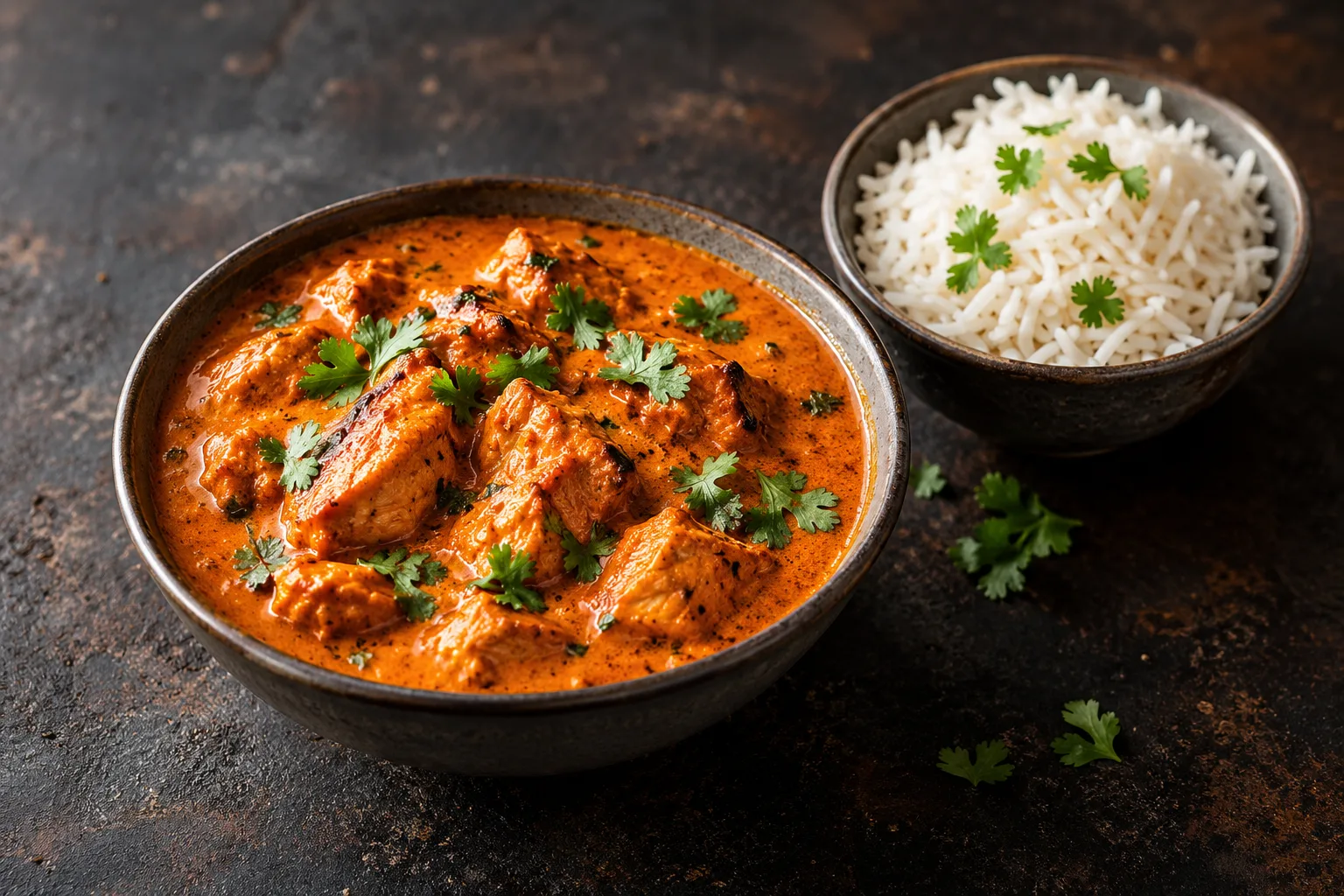
| Nutrient | Saffron Road Butter Chicken with rice: whole 283 g package |
|---|---|
| Calories | 390 kcal |
| Protein | 26 g |
| Fiber | 3 g |
| Saturated fat | 4 g |
| Sodium | 670 mg |
| Added sugar | 3 g |
Official product-linked package panel. The separate home ingredient model in the body describes another meal.
Butter chicken can make a useful protein-containing meal, but the recipe and sides change the verdict. Saffron Road’s inspected 283 g meal, including basmati rice, lists 390 calories, 26 g protein and 670 mg sodium. The richer four-portion ingredient example below reaches about 613 calories with its rice. Compare the actual complete dish rather than assigning one butter-chicken number to every order.
Choose the chicken, sauce and rice amounts for the meal you want. Reducing cream and butter changes saturated fat; reducing rice changes another part of the plate. The comparisons below keep those choices separate.
An identified complete meal versus a recipe estimate
The Saffron Road Butter Chicken product links its whole-package nutrition panel. The listed one-package, 283 g portion includes chicken, sauce and basmati rice:
| Whole packaged meal | Listed amount |
|---|---|
| Calories | 390 |
| Protein | 26 g |
| Fiber | 3 g |
| Saturated fat | 4 g |
| Sodium | 670 mg |
| Added sugar | 3 g |
This is a real product panel, not a restaurant average. Its portion and recipe differ from the home model below, so a lower total does not prove the same quantity of chicken or sauce has fewer calories. The product also contains milk.
Rice is already included. Adding another 150 g of plain cooked rice would add about 195 calories, bringing that package-plus-extra-rice meal to about 585 calories. Do not add the rice twice when the label already counts it, or forget the extra rice when you actually serve it.
For takeout, ask whether the nutrition listing includes sides and how much of a shared container it describes. A dish can have a large sauce volume with a modest chicken amount. Choose the portion of curry, rice and bread you want before interpreting a generic serving number.
A transparent four-portion ingredient example
This example shows how the main ingredients affect nutrition. It is not a kitchen-tested recipe or a claim about traditional proportions. The amounts below are summed using USDA food references and divided into four equal portions. Cooking water loss is not used to invent a finished per-100-g value.
| Ingredient for the four-portion batch | Amount and food state |
|---|---|
| Chicken breast | 400 g cooked, roasted meat only |
| Tomato puree | 400 g canned, without added salt |
| Plain whole-milk yogurt | 100 g |
| Heavy whipping cream | 120 g |
| Salted butter | 40 g |
| Onion | 150 g raw input weight |
| Garlic | 12 g raw input weight |
| Curry powder | 8 g |
| Table salt | 4 g |
| Rice served separately | 600 g cooked white rice, 150 g per person |
The main references are USDA cooked chicken breast, FDC 171477, unsalted tomato puree, FDC 170460, whole-milk yogurt, FDC 171284, heavy cream, FDC 170859 and salted butter, FDC 173410. These specify the food forms being counted.
The smaller ingredients use raw onion, FDC 170000, raw garlic, FDC 169230, curry powder, FDC 170924 and table salt, FDC 173468. A different spice blend containing salt needs its own values.
What changes when rice joins the plate?
The rice calculation uses USDA cooked enriched long-grain white rice, FDC 168878. The stated 150 g is cooked weight. Measuring 150 g dry rice would describe a substantially different amount of food.
| Calculated portion | Calories | Protein | Saturated fat | Sodium |
|---|---|---|---|---|
| One fourth of the curry example | 418 | 35.4 g | 13.7 g | 577 mg |
| Same curry plus 150 g cooked rice | 613 | 39.4 g | 13.8 g | 578 mg |
| Half the cream and butter, same rice | 526 | 38.9 g | 7.8 g | 542 mg |
The rice adds about 195 calories in this example, with very little sodium because the selected reference is plain. Seasoned restaurant rice can be different. Naan, papadums, chutneys and drinks are outside the table and need to be considered separately if you include them.
For the lighter-dairy comparison, the four-portion batch uses 60 g cream and 20 g butter instead of 120 g and 40 g. Everything else stays fixed. That change lowers the calculated meal by about 87 calories and 6 g saturated fat, without changing the chicken portion. It also changes the sauce; the calculation does not claim the versions taste identical.
Pick the change that addresses your concern
If saturated fat is your main concern, reducing cream and butter directly addresses it in this example. Reducing only rice lowers energy and carbohydrate but leaves nearly all the curry’s saturated fat. If you want a smaller overall meal, a smaller rice portion or sharing the curry may be useful without changing its recipe.
If protein is the priority, check that the serving contains enough chicken for your needs rather than choosing by sauce volume. A large container is not evidence of a large meat portion. Adding another cream-heavy side is also a different change from adding cooked chicken.
Vegetables can provide another part of the plate without needing to be blended invisibly into the sauce. A bean side is another option when you want plant protein and fiber. Planrity’s bean comparison gives examples, while the fried-rice guide illustrates why a seasoned rice dish is a separate food from plain rice.
The specified home-model meal supplies about 4.3 g fiber; the identified Saffron Road package lists 3 g. That amount depends on the tomato, onion, spice and rice references used; it is not a universal butter-chicken figure. Consider what else you eat through the day rather than expecting a chicken curry to provide every useful nutrient in one bowl.
Salt and restaurant comparisons need their own attention
The four grams of added salt in this model contribute about 388 mg sodium per portion. Butter, dairy, chicken and tomato supply the rest. If a recipe adds salty stock or uses salted tomato products, replacing only the table salt figure will not capture the full change.
The FDA’s sodium guide uses 2,300 mg as the general Daily Value. The example meal’s 578 mg is about one quarter of that reference. A restaurant meal could be higher or lower, and any individual clinician-set sodium limit takes priority over a generic comparison.
When ordering, ask for the nutrition listing if one exists. Otherwise, make the portion decision you can control: share a main, choose one rice or bread accompaniment, and taste the dish before adding salty condiments. That is more practical than treating every Indian restaurant order as nutritionally interchangeable. Planrity’s Chinese-food comparison uses the same dish-specific approach for another broad cuisine label.
Cook and store the chicken safely
The nutrition model starts with already cooked chicken. If preparing a dish from raw poultry, the FoodSafety.gov temperature chart specifies 165°F, or 74°C, checked with a food thermometer. Reheat leftovers to the same temperature. Sauce color or a browned exterior does not replace a temperature check.
Keep raw-chicken utensils and marinade away from ready-to-eat food. The FDA’s safe-handling advice recommends reserving a clean portion of marinade before raw meat touches it. Refrigerate perishable leftovers promptly and use shallow containers for quicker cooling.
Butter chicken commonly involves milk ingredients, and restaurant recipes may include other allergens. Ask about the actual recipe when allergies matter. A sauce described as creamy, mild or tomato-based does not provide a complete ingredient list.
Two different ways to make the packaged meal larger
If the identified 283 g meal is smaller than the dinner you want, decide what you want to add. A 75 g portion of plain cooked black beans adds about 99 calories, 6.6 g protein and 6.5 g fiber using USDA FDC 173735.
| Meal amount | Calories | Protein | Fiber | Sodium |
|---|---|---|---|---|
| One Saffron Road package | 390 | 26 g | 3 g | 670 mg |
| One package plus 75 g plain beans | 489 | 32.6 g | 9.5 g | About 671 mg |
| Two packages | 780 | 52 g | 6 g | 1,340 mg |
These are different amounts and combinations, not equal-size meals. The beans are an optional side for someone who likes that pairing, not a claim about a traditional butter-chicken recipe. Salted canned beans change the sodium estimate. Adding food can make the meal more substantial without requiring a second portion of every ingredient in the packaged dish.
Frequently asked questions
Is butter chicken high in protein?
It can be, depending on the amount of chicken. The specified example has 100 g cooked breast meat per portion and supplies about 35 g protein before rice, or 39 g with it. A restaurant serving with less meat and more sauce will differ. Use a dish-specific panel when available rather than judging protein from the size of the container.
Is butter chicken healthier without rice?
Removing the example’s 150 g cooked rice lowers energy by about 195 calories and reduces carbohydrate. It changes very little of the curry’s saturated fat, which comes mainly from cream and butter. Whether rice belongs in your meal depends on appetite, other accompaniments and your goals. A smaller rice portion is also an option; there is no requirement to remove it entirely.
Can I use less cream and butter?
Yes, but the sauce’s texture and flavor will change. Halving those two ingredients in this four-portion model lowers the meal with rice from about 613 to 526 calories and saturated fat from 13.8 to 7.8 g. This is an ingredient calculation, not a tested recipe or a promise that substitutions cook exactly the same way.
Sources
- FDA: Sodium in Your Diet, FDA
- FoodSafety.gov: Safe Minimum Internal Temperatures, FoodSafety.gov
- FDA: Handling Food Safely While Eating Outdoors, FDA
- USDA FoodData Central: Rice, white, long-grain, regular, enriched, cooked (FDC 168878), USDA FoodData Central
- USDA FoodData Central: Garlic, raw (FDC 169230), USDA FoodData Central
- USDA FoodData Central: Onions, raw (FDC 170000), USDA FoodData Central
- USDA FoodData Central: Tomato products, canned, puree, without salt added (FDC 170460), USDA FoodData Central
- USDA FoodData Central: Cream, fluid, heavy whipping (FDC 170859), USDA FoodData Central
- USDA FoodData Central: Spices, curry powder (FDC 170924), USDA FoodData Central
- USDA FoodData Central: Yogurt, plain, whole milk (FDC 171284), USDA FoodData Central
- USDA FoodData Central: Chicken, broilers or fryers, breast, meat only, cooked, roasted (FDC 171477), USDA FoodData Central
- USDA FoodData Central: Butter, salted (FDC 173410), USDA FoodData Central
- USDA FoodData Central: Salt, table (FDC 173468), USDA FoodData Central
- USDA FoodData Central: Beans, black, mature seeds, cooked, boiled, without salt (FDC 173735), USDA FoodData Central
- Saffron Road: Butter Chicken frozen meal, Saffron Road
- Saffron Road: Butter Chicken linked nutrition panel, Saffron Road