Cuisines and takeaway
Is Wonton Soup Healthy? Sodium, Portions and Meals
Wonton soup can be a light starter with substantial sodium. Compare three soups at equal weight and build a measured meal without overlooking the broth.
The short answer
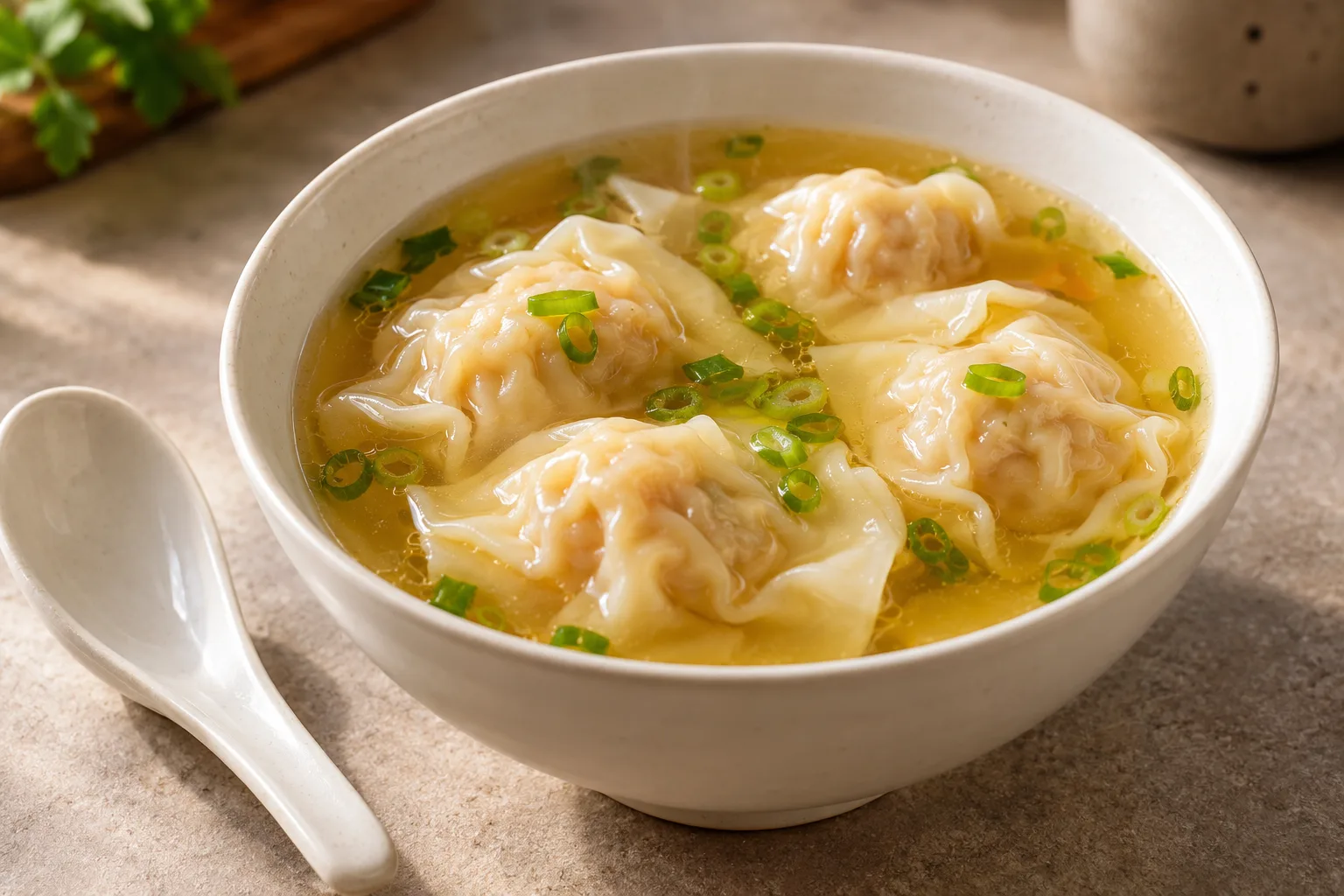
Sometimes Wonton soup can be a light part of a meal, but sodium is its main nutritional trade-off in the USDA restaurant reference. A 223 g cup contains about 71 calories, 4.6 g protein and 905 mg sodium. Two cups contain about 143 calories but 1,811 mg sodium—roughly 79% of the FDA's sodium Daily Value. A modest calorie figure does not tell the whole story.
| Nutrient | USDA restaurant wonton soup: reference cup, 223 g |
|---|---|
| Calories | 71 kcal |
| Protein | 4.6 g |
| Fiber | 0.4 g |
| Total carbohydrate | 11.7 g |
| Sodium | 905 mg |
USDA SR Legacy FDC 171821, per-100-g values multiplied by 2.23; no universal wonton count is specified.
Wonton soup can be a light part of a meal, but sodium is its main nutritional trade-off in the USDA restaurant reference. A 223 g cup contains about 71 calories, 4.6 g protein and 905 mg sodium. Two cups contain about 143 calories but 1,811 mg sodium—roughly 79% of the FDA’s sodium Daily Value. A modest calorie figure does not tell the whole story.
Your restaurant’s recipe may differ. The amount of broth, number and filling of wontons, and any noodles or sauces all affect the bowl. Use the figures below as a reference for understanding portions, rather than a precise estimate for an unmeasured takeaway order.
What is included in these nutrition figures?
The source is USDA FoodData Central’s restaurant wonton soup entry, from SR Legacy. It describes the soup as a combined food. It does not specify a universal number of wontons per cup, so the data cannot tell you the nutrition of one individual dumpling.
The record gives a cup weight of 223 g. That matters: a household bowl is not a defined nutrient portion, and a takeaway tub may hold several cups. A soup with noodles, extra meat or a different broth needs separate information.
| USDA restaurant wonton soup | Per 100 g | Per 223 g reference cup | Two cups, 446 g |
|---|---|---|---|
| Calories | 32 | 71 | 143 |
| Protein | 2.08 g | 4.6 g | 9.3 g |
| Carbohydrate | 5.25 g | 11.7 g | 23.4 g |
| Total fat | 0.26 g | 0.6 g | 1.2 g |
| Fiber | 0.2 g | 0.4 g | 0.9 g |
| Sodium | 406 mg | 905 mg | 1,811 mg |
Serving figures are calculated from unrounded per-100-g values and rounded for reading. For example, 406 mg sodium × 2.23 gives 905.38 mg per reference cup. This calculation keeps the source portion visible instead of attaching a single number to every restaurant bowl.
Why sodium deserves more attention than calories
One reference cup provides about 39% of the FDA’s 2,300 mg sodium Daily Value; two provide about 79%. Those are substantial shares before you count other dishes or dipping sauces. They are general label comparisons, not a personal daily sodium prescription.
The FDA sodium guide recommends comparing sodium at the amount you actually consume. A bowl can taste relatively light and still contribute a large amount. Do not judge its sodium only by whether you find the broth especially salty.
If you have been given a sodium limit by a clinician, use that guidance when deciding whether a restaurant soup fits your meal. For general ordering, ask whether nutrition information is available, consider a smaller portion and think about the other dishes alongside it. A lighter-calorie starter can still be the meal’s largest sodium contributor.
Build a meal around the cup, rather than doubling the soup
A reference cup supplies about 4.6 g protein and 0.4 g fiber. If you want a more substantial meal, adding a protein-containing food and vegetables changes the bowl more than simply ordering twice as much soup.
For a worked example, combine the 223-g cup with 75 g plain roasted chicken breast, 100 g cooked broccoli and 100 g cooked white rice. The chicken, broccoli and rice are weighed ready to eat, before extra oil, salt or sauce. Using USDA references for roasted chicken breast, broccoli without added salt and cooked enriched white rice, this example totals about 360 calories, 33.0 g protein, 4.1 g fiber and 1,003 mg sodium.
This is an ingredient calculation, not a standard restaurant order or a tested recipe. It illustrates what the extra foods contribute: most protein comes from chicken, most fiber from broccoli, and most sodium still comes from the soup. Adding those foods does not remove the broth’s sodium.
Compare that with two reference cups of soup alone: about 143 calories, 9.3 g protein, 0.9 g fiber and 1,811 mg sodium. These are different quantities and meals, so choose according to appetite and the role you want the soup to play.
For a small starter, one cup may do exactly what you want. For dinner, look at the accompanying food as part of the decision. Our Chinese food guide examines other restaurant options with their own portions.
Wonton, egg drop or hot-and-sour soup?
Compare the soups at the same weight before deciding from the name. The table below scales three USDA restaurant references to 223 g, the wonton entry’s cup weight. It does not assume that every soup’s own cup or restaurant ladle weighs 223 g.
| Restaurant soup reference, equal 223 g | Calories | Protein | Fiber | Sodium |
|---|---|---|---|---|
| Wonton soup | 71 | 4.6 g | 0.4 g | 905 mg |
| Egg drop soup | 60 | 2.6 g | 0.9 g | 825 mg |
| Hot-and-sour soup | 87 | 5.8 g | 1.1 g | 838 mg |
Sources: USDA wonton soup, egg drop soup and hot-and-sour soup. These are generic SR Legacy foods; your restaurant’s recipe can differ.
The sodium difference between wonton and egg drop is only about 80 mg at this weight. Halving a two-cup wonton portion changes the reference contribution by about 905 mg. In these examples, portion size produces the much larger sodium change than switching between the three soups.
Hot-and-sour has the most protein and fiber in this equal-weight table, but the amounts remain modest. Flavor preference can reasonably decide between them when their exact restaurant nutrition is unknown.
Wonton noodle soup needs another calculation because the noodles and other additions change the dish. For dumplings served separately, use suitable wrapper and filling information; our dumpling guide considers those choices. Our congee guide examines a different rice-based bowl.
Leaving broth: useful control, uncertain numbers
You can decide how much broth to consume, but this combined-food record does not separate sodium in the liquid from sodium in the wontons. It cannot supply an exact subtraction for the broth left behind.
For the same reason, draining the dumplings does not turn the soup entry into a dumpling-only analysis. Use a suitable packaged-wonton label or a recipe calculation when that is the food being estimated.
For an order without component nutrition, describe the amount eaten approximately instead of assigning a precise sodium reduction. Asking for a smaller soup portion is easier to connect to this reference than guessing the composition of the liquid remaining.
At home, choose the broth before adding seasoning
Select a broth using its sodium per prepared cup. Reduced sodium is a comparison claim, not a synonym for sodium-free. An unsalted starting broth leaves more room to assess seasoning after the wontons are added.
Record the broth amount, the wonton product or recipe, and the portions made. A packaged wonton label may specify both a piece count and a weight; use the matching amount. Homemade fillings need their own ingredient quantities and yield.
Add noodles, vegetables, oil and sauces separately if included. The FDA Nutrition Facts guide explains why the serving and prepared quantity matter. A concentrated stock label should be interpreted at its stated dilution before comparing it with a ready-to-eat soup.
Check the filling, wrapper and allergens
Wontons and broth can contain different allergens. Depending on the recipe, the wrapper or seasoning may contain wheat, egg or soy; fillings may contain crustacean shellfish; a finishing ingredient may add sesame. The FDA allergy guide identifies these among the major allergens to check.
Ask about the whole dish, including stock, seasoning and shared equipment. A pork description on the menu does not answer every ingredient question, and removing a visible garnish does not establish that the soup meets an allergy requirement.
If preparing it yourself, check each package rather than assuming all wonton wrappers or broths have the same ingredients. Keep an ingredient list with a homemade batch when other people will eat it, especially when a filling is not obvious from the finished dumpling.
Cook the filling and handle leftovers safely
The wrapper’s appearance does not establish that a raw filling has reached a safe temperature. The FoodSafety.gov temperature chart lists 165°F/74°C for poultry and 160°F/71°C for ground meat. Follow product directions and check the center of the filling with a food thermometer; a cooked-looking wrapper is not the endpoint.
The CDC’s dining-out guidance advises prompt refrigeration of leftovers and eating them within three to four days. Refrigerate within two hours, or one hour above 90°F. FoodSafety.gov lists 165°F/74°C for reheating leftovers.
For your next order, first decide whether you want a starter or a full meal. Then check the bowl size, what is included and whether a sodium figure is available. That gives a clearer answer than deciding from the words “wonton soup” alone.
Prepared with AI assistance. This guide has not been medically reviewed and provides general information, not personal medical advice.
Frequently asked questions
Is wonton soup low in calories?
The USDA restaurant reference supplies about 71 calories per 223-g cup, alongside about 905 mg sodium. A larger bowl, extra wontons or noodles changes the total. Consider the sodium and the rest of the meal as well as calories.
Is changing to egg drop soup a large sodium reduction?
At an equal 223 g, these USDA references differ by about 80 mg sodium: wonton has 905 mg and egg drop 825 mg. Reducing a two-cup wonton portion to one reference cup changes sodium by about 905 mg, a much larger difference in these examples.
How many wontons does the reference cup contain?
The record specifies 223 g combined soup without a universal wonton count. Use the restaurant's information or a separate dumpling label if you need a per-piece estimate. Piece size and filling vary.
Sources
- FDA: How to Understand and Use the Nutrition Facts Label, FDA
- FDA: Sodium in Your Diet, FDA
- FDA: Have Food Allergies? Read the Label, FDA
- FoodSafety.gov: Safe Minimum Internal Temperatures, FoodSafety.gov
- CDC: Food Safety Tips for Dining Out, CDC
- USDA SR Legacy: Soup, wonton, Chinese restaurant (FDC 171821), USDA SR Legacy
- USDA SR Legacy: Rice, white, long-grain, regular, enriched, cooked (FDC 168878), USDA SR Legacy
- USDA SR Legacy: Broccoli, cooked, boiled, drained, without salt (FDC 169967), USDA SR Legacy
- USDA SR Legacy: Chicken, broilers or fryers, breast, meat only, cooked, roasted (FDC 171477), USDA SR Legacy
- USDA SR Legacy: Soup, egg drop, Chinese restaurant (FDC 174807), USDA SR Legacy
- USDA SR Legacy: Soup, hot and sour, Chinese restaurant (FDC 174808), USDA SR Legacy