Cuisines and takeaway
Are Poke Bowls Healthy? Build and Compare a Bowl
Explore a calculated cooked-salmon bowl, two alternative proteins and the separate effects of rice and soy sauce. Raw-seafood safety needs its own decision.
The short answer
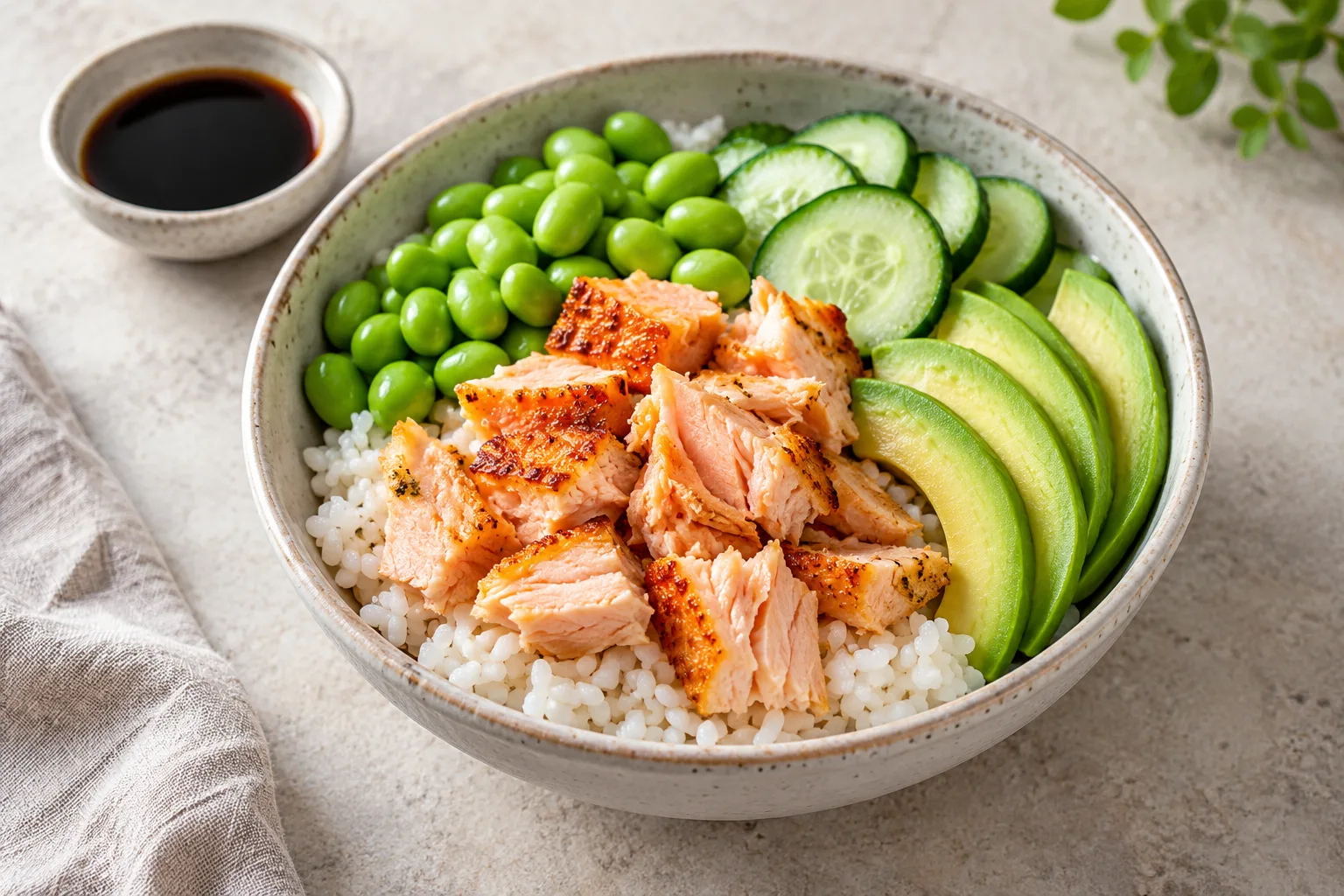
Yes Yes, a poke bowl can make a substantial meal, but the base, toppings and sauce matter more than the name. Our cooked-salmon poke-style example supplies approximately 592 calories, 37.5 g protein, 8.4 g fiber and 622 mg sodium. A larger rice portion and twice the soy sauce bring the same example to about 727 calories and 1,172 mg sodium. These are ingredient calculations, not restaurant nutrition figures.
| Nutrient | Calculated cooked-salmon poke-style bowl: 485 g |
|---|---|
| Calories | 592 kcal |
| Protein | 37.5 g |
| Fiber | 8.4 g |
| Sodium | 622 mg |
| Total fat | 24.2 g |
Six USDA SR Legacy ingredients at specified food-ready weights; not a restaurant average or a tested recipe.
Yes, a poke bowl can make a substantial meal, but the base, toppings and sauce matter more than the name. Our cooked-salmon poke-style example supplies approximately 592 calories, 37.5 g protein, 8.4 g fiber and 622 mg sodium. A larger rice portion and twice the soy sauce bring the same example to about 727 calories and 1,172 mg sodium. These are ingredient calculations, not restaurant nutrition figures.
Traditional poke and the many bowls sold under that name are not one fixed recipe. Some contain raw fish, while others offer cooked seafood, tofu or other proteins. The example below uses cooked salmon so its nutrition calculation and the separate question of raw-fish safety are easy to distinguish.
Build around the base, protein and dressing
Start with the amount of rice or other base you want, then a protein and vegetables. Choose avocado, edamame and dressing for what they add to that meal. The worked example below makes those choices measurable without treating any one topping as a requirement.
For a restaurant order, ask what is included before choosing extras. A standard bowl may already contain a marinade or dressing, so a second sauce changes the order beyond the plain ingredients you can see.
A cooked-salmon bowl you can calculate
Here is one ingredient combination using food-ready weights. Rice, salmon and edamame are weighed after cooking or preparation; cucumber and avocado are weighed as eaten. The amounts are an example, not a prescribed portion or a recipe we have cooked and taste-tested.
| Ingredient | Amount | Calories | Protein | Fiber | Sodium |
|---|---|---|---|---|---|
| Cooked enriched long-grain white rice | 150 g | 195 | 4.0 g | 0.6 g | 2 mg |
| Cooked farmed Atlantic salmon | 100 g | 206 | 22.1 g | 0 g | 61 mg |
| Prepared shelled edamame | 75 g | 91 | 8.9 g | 3.9 g | 5 mg |
| Raw cucumber with peel | 100 g | 15 | 0.7 g | 0.5 g | 2 mg |
| Raw avocado | 50 g | 80 | 1.0 g | 3.4 g | 4 mg |
| Shoyu soy sauce | 10 g | 5 | 0.8 g | 0.1 g | 549 mg |
| Whole example bowl | 485 g | 592 | 37.5 g | 8.4 g | 622 mg |
Totals use unrounded values, so rounded rows may not add exactly. The references are USDA SR Legacy entries for cooked rice, cooked salmon, prepared edamame, cucumber, avocado and shoyu. They describe reference foods, rather than every supplier’s ingredients.
To reproduce a nutrient total, multiply each food’s per-100-g value by its weight divided by 100, then add the results. Use cooked rice data with cooked rice weights. Using dry rice figures for a cooked serving would change the calculation substantially.
How rice and sauce change the numbers
Three versions show why a bowl’s size and dressing deserve separate attention. All other ingredients stay the same.
| Version | Cooked rice | Soy sauce | Calculated calories | Calculated sodium |
|---|---|---|---|---|
| Smaller rice portion | 100 g | 10 g | 527 | 621 mg |
| Example bowl above | 150 g | 10 g | 592 | 622 mg |
| More rice and more sauce | 250 g | 20 g | 727 | 1,172 mg |
Adding 100 g cooked rice contributes 130 calories and 1 mg sodium in this reference. Another 10 g of soy sauce contributes about 5 calories and 549 mg sodium. Reducing rice and reducing dressing answer different questions: the first changes the base’s size, while the second can substantially change sodium.
The FDA Nutrition Facts guide uses a 2,300 mg sodium Daily Value. Our example supplies about 27% of that reference; the larger, more heavily sauced version supplies about 51%. These percentages help compare meals. They are not an individually prescribed daily allowance.
Keep the rice choice separate from the sauce choice
White rice supplies much of this bowl’s carbohydrate, while edamame and avocado supply most of its fiber. In the smaller-rice version, the other toppings remain unchanged; reducing the base changes energy much more than sodium.
For a larger meal, a larger base may be what you want. For a smaller one, ask for less rice or a rice-and-greens base. The greens variation needs its own ingredient amounts if you want a numerical estimate.
Our fried rice guide examines another rice meal where preparation and portions change the result.
Compare three protein choices in the same bowl
Keep the example’s 150 g cooked rice, 75 g edamame, 100 g cucumber, 50 g avocado and 10 g soy sauce. For the main protein, compare 100 g cooked salmon, 100 g plain roasted chicken breast, or another 150 g prepared edamame in place of the salmon. The plant-based version therefore contains 225 g edamame in total.
| Calculated poke-style version | Calories | Protein | Fiber | Sodium |
|---|---|---|---|---|
| 100 g cooked salmon | 592 | 37.5 g | 8.4 g | 622 mg |
| 100 g roasted chicken breast | 551 | 46.5 g | 8.4 g | 635 mg |
| Edamame replacing salmon, 225 g edamame total | 568 | 33.3 g | 16.2 g | 570 mg |
The chicken calculation uses USDA roasted chicken breast, meat only; the remaining references and weights are the same as in the first table. All foods are weighed ready to eat, using the ingredient-calculation method above.
The chicken version has more protein in this comparison. The edamame version has more fiber and a larger bean portion, so it is a different eating experience rather than a one-for-one visual substitute. The salmon version remains an option if that is the flavor and texture you prefer.
Dressings and marinades matter when adapting the comparison. Plain roasted chicken figures do not describe teriyaki chicken, and the edamame figures do not include extra seasoning. Use the restaurant’s actual information where available.
Choose toppings for a specific contribution
In the example, 50 g avocado adds 80 calories and about 3.4 g fiber. The original 75 g edamame adds about 8.9 g protein and 3.9 g fiber. Keep either because you enjoy it and want that contribution.
Crunchy toppings, creamy sauces and sweet glazes need their own information. A useful ordering question is whether you want avocado plus a creamy dressing, or whether one supplies the texture you wanted. Sauce on the side gives you control over the amount added.
Raw fish safety is a separate decision
A nutritious ingredient list does not establish that raw fish is safe. The FDA seafood safety guidance explains that freezing can kill some parasites but does not kill all harmful germs. Cooking is the safest option.
The FDA advises pregnant people, children, older adults and people with weakened immune systems to avoid raw or undercooked seafood. Choose a cooked option and ask how the restaurant prevents contact with raw ingredients. A “sushi-grade” description is not a substitute for understanding preparation and handling.
For home preparation, the FoodSafety.gov temperature chart lists 145°F/63°C for fish. Use a thermometer. Keep raw fish and its utensils separate from cooked food and ready-to-eat toppings. Refrigerate perishable food within two hours, or within one hour above 90°F, following FDA guidance.
Our ceviche guide discusses another seafood dish where preparation matters. The fish guide helps compare fish choices more broadly.
Check allergens before ordering
This example contains fish, soy and wheat in the specified shoyu reference. Other sauces may introduce sesame, and other bowls may contain crustacean shellfish. The FDA food-allergy guide identifies these among the major allergens requiring attention.
For an allergy, ask about the exact protein, marinade, dressing and shared equipment. Removing a visible topping is not enough to establish that the remaining bowl meets your needs. At home, use the actual packages rather than assuming every sauce has the same formulation.
Turn the comparison into an order
First choose a cooked or raw seafood option with safety in mind. Next choose the base size, protein and vegetables. Add toppings deliberately, then decide whether the included marinade already provides the dressing you want.
An order such as cooked salmon, a smaller rice portion, cucumber, edamame and one sauce on the side is specific enough to discuss with the restaurant. It still needs the restaurant’s portions to produce a reliable nutrient total. The example numbers belong to the weighed bowls above.
At home, keep a note of the cooked rice and protein weights and weigh the soy sauce. This makes the next bowl easier to adjust: change one component and recalculate its contribution instead of starting from an unrelated online bowl estimate.
Prepared with AI assistance. This guide has not been medically reviewed and provides general information, not personal medical advice.
Frequently asked questions
Are poke bowls healthy for lunch?
They can be. A bowl with protein, a base and vegetables can make a substantial lunch. Our cooked-salmon example supplies about 592 calories, 37.5 g protein and 8.4 g fiber. Restaurant orders may differ considerably, especially in rice and sauce quantities.
Does extra soy sauce add many calories?
In our USDA shoyu example, an extra 10 g adds only about 5 calories but about 549 mg sodium. Calories alone therefore miss the main change. Check your sauce and measure it if a precise estimate matters.
Is frozen raw fish safe for everyone?
No. FDA guidance says freezing does not kill all harmful germs. People advised to avoid raw seafood should choose cooked options. Cooked protein also needs careful handling and protection from contact with raw ingredients.
Sources
- FDA: How to Understand and Use the Nutrition Facts Label, FDA
- FDA: Have Food Allergies? Read the Label, FDA
- FDA: Selecting and Serving Fresh and Frozen Seafood Safely, FDA
- FoodSafety.gov: Safe Minimum Internal Temperatures, FoodSafety.gov
- USDA SR Legacy: Rice, white, long-grain, regular, enriched, cooked (FDC 168878), USDA SR Legacy
- USDA SR Legacy: Fish, salmon, Atlantic, farmed, cooked, dry heat (FDC 175168), USDA SR Legacy
- USDA SR Legacy: Edamame, frozen, prepared (FDC 168411), USDA SR Legacy
- USDA SR Legacy: Cucumber, with peel, raw (FDC 168409), USDA SR Legacy
- USDA SR Legacy: Avocados, raw, all commercial varieties (FDC 171705), USDA SR Legacy
- USDA SR Legacy: Soy sauce made from soy and wheat (shoyu) (FDC 174277), USDA SR Legacy
- USDA SR Legacy: Chicken, broilers or fryers, breast, meat only, cooked, roasted (FDC 171477), USDA SR Legacy