Snacks
Are Chomps Beef Sticks Healthy? Protein and Sodium
Are Chomps beef sticks healthy? Compare full sticks, turkey and Chomplings for protein and sodium, plus processed-meat context and snack portions.
The short answer
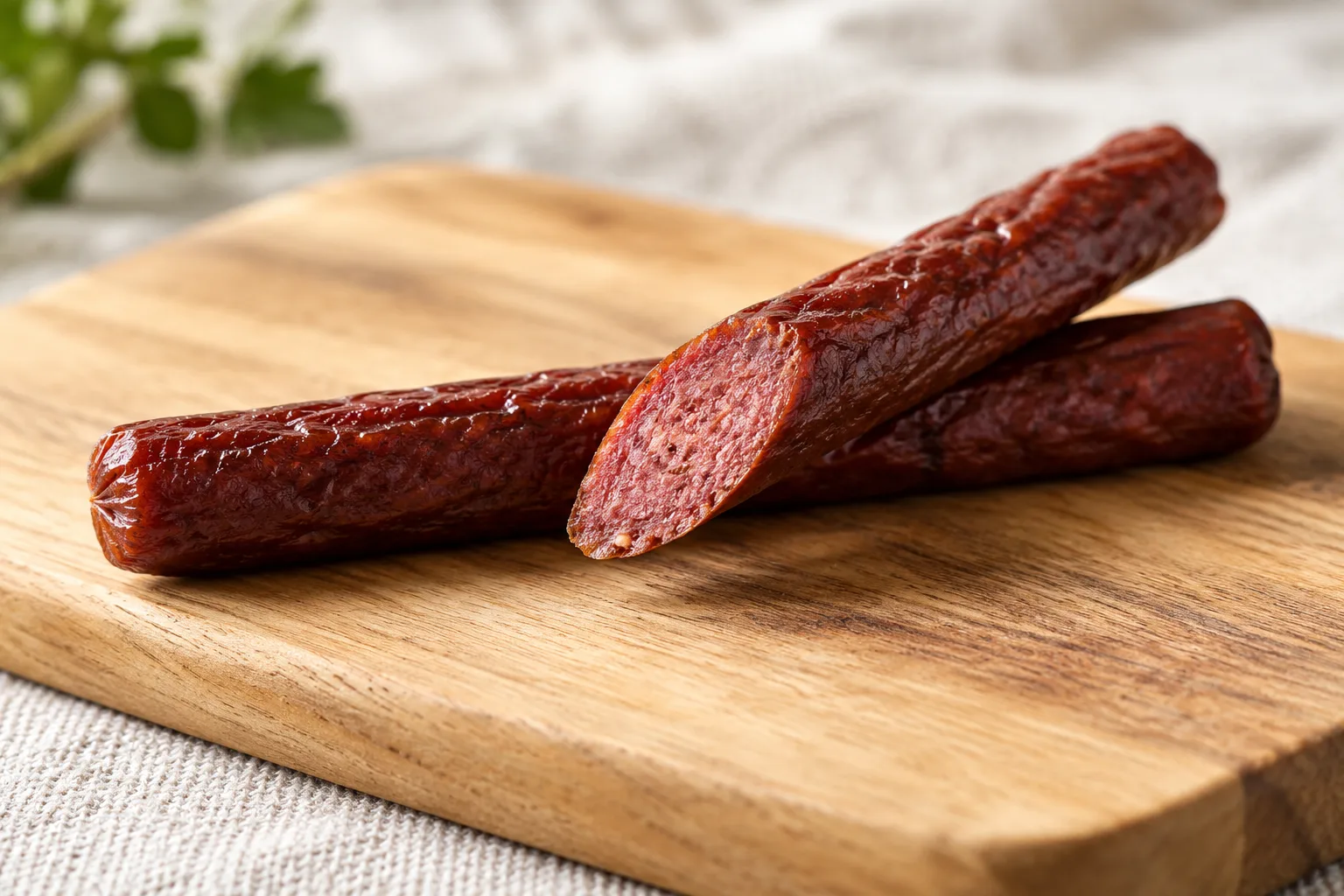
Sometimes Chomps beef sticks are a convenient protein snack, but their zero-sugar claim does not make sodium or processed meat irrelevant. The manufacturer lists 100 calories, 10 g protein and 380 mg sodium for a full-size 1.15 oz Original Beef stick. Two sticks supply 20 g protein and about 760 mg sodium—roughly one third of the FDA’s daily sodium reference.
| Nutrient | Chomps Original Beef: one full-size 1.15 oz stick |
|---|---|
| Calories | 100 kcal |
| Protein | 10 g |
| Total fat | 7 g |
| Sodium | 380 mg |
Official manufacturer comparison table; Chomplings and turkey have their own values.
Chomps beef sticks are a convenient protein snack, but their zero-sugar claim does not make sodium or processed meat irrelevant. The manufacturer lists 100 calories, 10 g protein and 380 mg sodium for a full-size 1.15 oz Original Beef stick. Two sticks supply 20 g protein and about 760 mg sodium—roughly one third of the FDA’s daily sodium reference.
Choose the stick for its portion and convenience, then compare sodium and protein with realistic alternatives. A zero-sugar or grass-fed claim does not describe the complete snack or how often preserved meat appears in your meals.
Full sticks and Chomplings are different portions
The official Chomps nutrition page separates full-size sticks from smaller Chomplings. The following figures come from that manufacturer comparison. They should not be assigned to every flavor or future formulation without checking the current package.
| Product and listed size | Calories | Protein | Total fat | Sodium |
|---|---|---|---|---|
| Original Beef, 1.15 oz stick | 100 | 10 g | 7 g | 380 mg |
| Original Turkey, 1.15 oz stick | 80 | 12 g | 3.5 g | 390 mg |
| Original Beef Chompling, 0.5 oz | 45 | 4 g | 3 g | 170 mg |
The Original Beef product page also identifies the product’s zero-sugar positioning and shelf-stable convenience before opening. Use the actual wrapper for the complete ingredient, allergen and storage information. An assortment box can contain products with different nutrition even when their packaging looks similar.
Notice that the turkey example has less total fat and more protein than the beef example, but slightly more sodium. Changing the meat species is therefore not the same as reducing every nutrient you may want to limit. Match the product and portion to the comparison you actually care about.
One stick, two sticks and the day’s sodium
The Original Beef stick’s 380 mg sodium is about 17% of the FDA’s 2,300 mg Daily Value. Two sticks reach approximately 33%. These percentages are general label comparisons, not a personal sodium allowance or a reason to assume everyone should eat the same snack portion.
| Original Beef amount | Calories | Protein | Sodium |
|---|---|---|---|
| One full-size stick | 100 | 10 g | 380 mg |
| Two full-size sticks | 200 | 20 g | 760 mg |
| One small Chompling | 45 | 4 g | 170 mg |
The FDA’s sodium guide explains why packaged-food sodium is worth comparing. A stick may be only one part of a salty lunch that also includes cheese, crackers or a sandwich. Count the complete combination when sodium matters to you.
The smaller Chompling reduces the amount eaten, but it also supplies less protein. When packing several small sticks, count the combined wrapper servings; a smaller format does not guarantee a smaller total snack. Two Chomplings are not automatically equivalent to one full-size stick because the sizes and rounded panels differ. Use the product’s own amounts rather than assuming all branded meat-stick formats scale perfectly by piece count.
If you are choosing a snack mainly for protein, compare the amount of protein at the portion you will eat alongside sodium, cost and convenience. A higher protein total can be useful without being the only criterion that determines a good purchase.
Zero sugar answers a narrow question
The reviewed Original Beef is presented as containing zero sugar. That may matter when comparing it with a sweetened meat snack, but it does not mean zero calories, zero fat or low sodium. Nor does it tell you whether the whole snack includes sugar from another food or drink.
The FDA’s Nutrition Facts guide helps separate those lines. Read the entire panel for the actual stick. A front-of-pack claim is useful when it answers your specific question, but it cannot replace the portion, sodium and fat figures printed elsewhere.
Similarly, “grass-fed” describes an aspect of production rather than a measured health outcome for the person eating the stick. This guide does not infer lower disease risk, superior digestion or a uniquely beneficial nutrient profile from that claim. The directly useful evidence is the identified product’s composition and the role it plays in your diet.
If you want a snack with little added sugar, several food categories can meet that goal. The next choice may be about fiber, refrigeration or taste rather than sugar alone. You do not need to buy a meat stick every time you want to avoid a sweet snack.
A meat stick remains a processed-meat food
The World Health Organization’s processed-meat explanation describes processing such as salting, curing, fermentation, smoking or preservation, and gives sausages and dried meat among its examples. A preserved meat stick should not be treated as identical to a freshly cooked, unpreserved meat portion.
Zero sugar, a short ingredient list and a grass-fed claim do not remove that distinction. The WHO identifies an association between processed-meat intake and colorectal cancer; its hazard classification is not a calculation of your personal risk from one snack. Avoid both extremes: calling an individual stick harmless because it has protein, or predicting disease from a single serving.
For regular eating, consider the pattern across meals. If breakfast, lunch and snacks all rely on preserved meats, a different snack can add variety without requiring a complicated diet overhaul. Freshly cooked poultry, suitable dairy or bean-based foods provide different combinations and have different storage needs.
Planrity’s turkey guide separates plain meat from deli preparations. The bean comparison offers another way to think about protein alongside fiber rather than comparing every food only on protein grams.
Compare convenience with another protein option
A meat stick is useful when you want a portable, shelf-stable protein component. If refrigeration is available, another food may provide a different protein-and-sodium balance. USDA plain nonfat Greek yogurt, FDC 170894, supplies about 100 calories, 17.3 g protein and 61 mg sodium per weighed 170 g container reference.
| Snack component | Calories | Protein | Sodium |
|---|---|---|---|
| Original Beef full stick | 100 | 10 g | 380 mg |
| Original Turkey full stick | 80 | 12 g | 390 mg |
| Plain nonfat Greek yogurt reference, 170 g | 100 | 17.3 g | 61 mg |
The similar calorie amounts do not mean equal food weight or the same eating experience. The yogurt needs refrigeration and contains milk; the stick is more compact and has its own product instructions. This is a composition comparison, not a claim that one will keep every person full longer.
For a desk or home snack, the yogurt may fit a lower-sodium protein goal. For a trip where you cannot keep food cold, a shelf-stable product may be more practical. Dietary suitability and preference can change the choice. Current branded yogurts also differ from the plain USDA reference, especially when sweeteners or toppings are included.
Neither component supplies meaningful fiber in these examples. Add a food for the role you want it to fill, such as suitable fruit, rather than assuming another meat stick addresses every gap. Crackers and cheese can also be enjoyable, but their sodium adds to the stick’s.
For other comparisons, the Quest chip guide covers another packaged protein food, while the bean guide shows how plant protein and fiber can appear together. These foods have different storage and meal roles; use the one that fits the occasion.
Check safety instructions rather than assuming all sticks are alike
Shelf-stable before opening is not the same as suitable for every person in every circumstance. Follow the wrapper’s storage and use directions, and do not assume another brand has the same requirements. Keep the packaging long enough to identify the flavor, product and any lot information if needed.
The CDC’s Listeria prevention guidance advises higher-risk people—including pregnant people, adults 65 or older and those with weakened immunity—to avoid unheated fermented or dry sausages, or reheat them to 165°F or until steaming hot. If you are unsure how a particular meat stick fits your safety needs, ask your clinician or the manufacturer rather than relying on its marketing category.
For your next purchase, decide whether you want one full stick, a smaller portion or another snack. Read the current sodium and ingredient information and consider how often processed meat appears elsewhere in your meals. That gives the protein contribution a sensible place in the decision.
Frequently asked questions
Are Chomps turkey sticks lower in sodium than beef sticks?
Not in the manufacturer examples reviewed here. Original Turkey lists 390 mg sodium per full-size 1.15 oz stick, compared with 380 mg for Original Beef. Turkey has less total fat and more protein in that comparison, but those advantages do not establish lower sodium. Check the exact flavor and current wrapper before choosing.
Are Chomplings just half a regular stick?
They are a separate smaller format with their own panel. The reviewed 0.5 oz Original Beef Chompling lists 45 calories, 4 g protein and 170 mg sodium. A full 1.15 oz Original Beef stick lists 100 calories, 10 g protein and 380 mg sodium. Use those stated portions rather than assuming every small stick is exactly half of a larger one.
Does zero sugar make Chomps an everyday healthy snack?
It answers the sugar question but not the whole dietary question. The reviewed full-size beef stick also contains 380 mg sodium and is a preserved meat product. Consider portion, frequency, your other foods and any relevant safety guidance. It can be convenient without needing to become the default protein choice for every snack.
Sources
- Chomps: Meat-stick nutrition facts by product, Chomps
- Chomps: Original Beef sticks: product information, Chomps
- CDC: Preventing Listeria infection, CDC
- WHO: Carcinogenicity of red and processed meat, WHO
- FDA: How to Understand and Use the Nutrition Facts Label, FDA
- FDA: Sodium in Your Diet, FDA
- USDA FoodData Central: Yogurt, Greek, plain, nonfat (Includes foods for USDA's Food Distribution Program) (FDC 170894), USDA FoodData Central