Snacks
Are Pop-Tarts Healthy? Pastries, Pouches and Breakfast
Are Pop-Tarts healthy? Check the two-pastry label, one-pastry estimates, added sugar, protein and fiber, with practical ways to build a quick breakfast.
The short answer
Sometimes Pop-Tarts are a sweet convenience food rather than a strong everyday breakfast on their own. The US Frosted Strawberry label reviewed here lists 370 calories, 30 g added sugar, 4 g protein and 1 g fiber for two pastries. That added sugar is 60% of the FDA’s 50 g Daily Value, before any sweetened drink or other breakfast food.
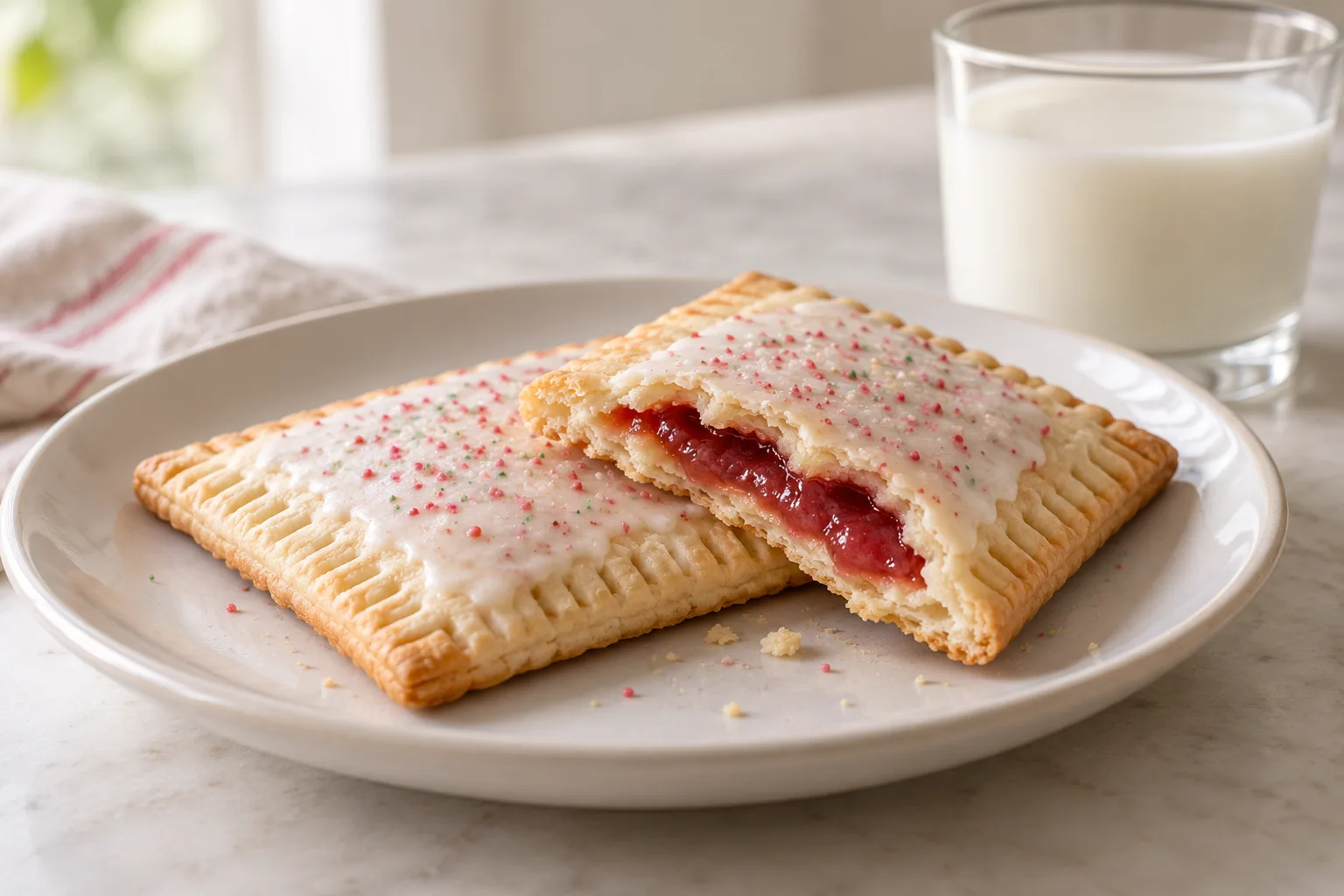
| Nutrient | US Frosted Strawberry: two pastries, 96 g |
|---|---|
| Calories | 370 kcal |
| Protein | 4 g |
| Fiber | 1 g |
| Added sugar | 30 g |
| Sodium | 310 mg |
| Saturated fat | 2.5 g |
Official US manufacturer panel for the identified 13.5 oz package.
Pop-Tarts are a sweet convenience food rather than a strong everyday breakfast on their own. The US Frosted Strawberry label reviewed here lists 370 calories, 30 g added sugar, 4 g protein and 1 g fiber for two pastries. That added sugar is 60% of the FDA’s 50 g Daily Value, before any sweetened drink or other breakfast food.
Choose one or two pastries deliberately, then decide what will accompany them. The complete-breakfast comparison below shows why adding protein and fruit changes more than calories, and why a fruit-flavored filling is a separate food choice.
The serving is two pastries, not one bite or one box
The official Frosted Strawberry Pop-Tarts page provides a US panel for a 13.5 oz package containing four servings. Each serving is two pastries, 96 g. Other sizes, flavors and product lines need their own panels.
| Item | Two pastries, label serving | One pastry, calculated half |
|---|---|---|
| Calories | 370 | 185 |
| Added sugar | 30 g | 15 g |
| Total sugar | 31 g | 15.5 g |
| Protein | 4 g | 2 g |
| Fiber | 1 g | 0.5 g |
| Sodium | 310 mg | 155 mg |
| Saturated fat | 2.5 g | About 1.3 g |
The one-pastry column is an estimate from halving the rounded two-pastry label. It is not a separate manufacturer analysis. If your package has a different panel or serving weight, use that information instead.
Check the servings-per-container line before eating from a larger package. A box is not one serving, while a pouch can contain the two pastries counted together here. The FDA’s Nutrition Facts guide explains why all nutrient figures must be read alongside the serving amount.
Added sugar is the clearest limitation in this example
The reviewed serving contains 31 g total sugar, of which 30 g is listed as added sugar. Added sugar is part of total sugar; adding the two figures together would double-count it. The small difference between them does not make the fruit-flavored filling equivalent to a serving of fresh fruit.
The FDA’s added-sugars explanation uses a 50 g Daily Value on a 2,000-calorie reference diet. Two pastries contribute 60% of that value; one contributes approximately 30%. These are comparison tools rather than a personal breakfast sugar allowance.
If you also have a sweetened coffee, juice drink or sweetened cereal, read those amounts separately. Removing frosting from one food while overlooking a large sweetened drink may not address the main source of added sugar in your usual breakfast. Planrity’s creamer comparison shows how a measured coffee addition can change the total.
An unfrosted or differently flavored pastry may have a different formula, so do not assume the sugar reduction from the name. Compare the actual serving size and added-sugars line. A shorter product name or a less colorful package is not evidence of a lower-sugar meal.
Compare a pastry snack with a complete breakfast
The two-pastry serving provides 4 g protein and 1 g fiber. Instead of adding more pastries to raise those amounts, you can choose an accompaniment that contributes something different.
The examples below use a USDA reference cup of plain 2% milk, FDC 171267, weighing 244 g, and a medium 118 g edible banana, FDC 173944. Added sugar comes from the pastries; the selected plain milk and fruit are not sweetened additions.
| Breakfast example | Calories | Protein | Fiber | Added sugar from pastries |
|---|---|---|---|---|
| Two pastries alone | 370 | 4 g | 1 g | 30 g |
| One pastry, milk and banana | 412 | 11.3 g | 3.6 g | 15 g |
| Two pastries, milk and banana | 597 | 13.3 g | 4.1 g | 30 g |
The middle row has more food, more protein and more fiber than two pastries alone, while halving the pastry-derived added sugar. It is not a calorie reduction: it is about 42 calories higher. That is a more useful distinction than calling every addition a way to make breakfast lighter.
The milk and banana also contribute naturally present sugar, so total sugar is not the same as the added-sugar column shown. Use the full panels if carbohydrate tracking matters to you.
Choose a suitable milk or protein food for your needs. Plant beverages can differ greatly in protein; a low-protein almond beverage should not be assigned the dairy reference’s 8.1 g per cup. The portion you enjoy, dietary suitability and what else you eat all belong in the decision.
Make the accompaniment as convenient as the pastry
If a rushed morning is the recurring problem, keep the food you want to add easy to reach. A banana needs little preparation; a suitable protein food can be packed in advance or bought in a single portion. The useful improvement is a breakfast you can repeat, not an ideal meal you never have time to assemble.
Fruit adds another food; it does not remove the sugar in the pastry. Likewise, replacing one pastry with milk and fruit changes both the amount and composition of breakfast. Use the complete combination when comparing it with another meal.
For another familiar option, the waffle guide separates the base from toppings. The Nature Valley bar guide helps when you are choosing between portable packaged foods. Count their accompaniments too, so one food is not being compared with another food’s entire breakfast.
What if you are choosing for children or a special diet?
This article is a general adult label comparison. It is not a child-feeding plan or a prescription for diabetes, food allergy or another medical condition. Serving size on a package describes the manufacturer’s label basis; it is not proof that every child or adult should eat that amount.
For carbohydrate tracking, look at total carbohydrate as well as sugar. The reviewed two-pastry serving lists 71 g carbohydrate. Choosing a smaller portion changes that total, but a sweetener claim alone would not answer the same question. Use the exact product and any individualized advice you have been given.
For allergies, read the current ingredient and allergen statements rather than relying on the flavor name. The FDA’s allergy-label guidance explains why the full label matters. A strawberry description does not identify every ingredient in the pastry, filling or frosting.
Make the next purchase a portion decision
Choose the flavor you enjoy, identify whether the panel counts one or two pastries, and decide whether the pouch is your intended portion. Then plan the rest of breakfast around the nutrients you want rather than expecting the pastry to provide everything.
If you choose one pastry, treat the second as a separate portion rather than an inevitable part of the meal. Follow the package’s storage directions for anything saved. This makes the one-pastry comparison a practical option instead of a number that assumes you always finish the pouch.
If added sugar is the priority, one pastry instead of two halves the label-based estimate from 30 to 15 g. If protein is the priority, a separate protein food makes a different change. If convenience is the priority, choose an accompaniment that is just as easy to access as the pastry.
Pop-Tarts do not need a special health halo to fit occasionally into a meal. The honest advantage is convenience and personal enjoyment. The nutritional tradeoff is a sweet serving with modest protein and fiber, which becomes clearer as soon as the pastry count is explicit.
Frequently asked questions
Is one Pop-Tart half the printed serving?
For the reviewed US Frosted Strawberry package, yes: the panel counts two pastries weighing 96 g. One pastry is therefore approximately half the listed nutrients, or 185 calories and 15 g added sugar. These are calculations from rounded values. Check your package because different product formats and markets may use another serving size.
Are strawberry Pop-Tarts a replacement for fruit?
Treat them as a pastry, not as a direct substitute for fresh fruit. The two-pastry serving here has 1 g fiber and 30 g added sugar. A medium fresh banana reference provides about 3.1 g fiber with a different food composition. You can eat fruit alongside a pastry, but the addition does not remove the pastry’s sugar.
What can I eat with a Pop-Tart for breakfast?
Choose an accompaniment for the role you want it to fill, such as a suitable protein food and fresh fruit. One pastry plus a reference cup of plain 2% milk supplies approximately 307 calories and 10.1 g protein in this guide’s calculation. Other milks and foods need their own labels. Keep allergies, appetite and any individual dietary advice in view.
Sources
- Pop-Tarts: Frosted Strawberry Pop-Tarts: US nutrition, Pop-Tarts
- FDA: How to Understand and Use the Nutrition Facts Label, FDA
- FDA: Added Sugars on the Nutrition Facts Label, FDA
- FDA: Have Food Allergies? Read the Label, FDA
- USDA FoodData Central: Milk, reduced fat, fluid, 2% milkfat, with added vitamin A and vitamin D (FDC 171267), USDA FoodData Central
- USDA FoodData Central: Bananas, raw (FDC 173944), USDA FoodData Central