Snacks
Is SkinnyPop Healthy? Portions, Fiber and Comparisons
Is SkinnyPop healthy? Check the current Original label, whole-bag estimates, fiber, oil and sodium, with a plain air-popped popcorn comparison.
The short answer
Sometimes SkinnyPop Original can be a convenient popcorn snack, but it is not the same as plain air-popped corn. The reviewed 4.4 oz bag’s current label lists 150 calories, 10 g fat, 2 g fiber and 130 mg sodium per 28 g serving. Eating the whole bag, about 4.5 servings, is approximately 675 calories rather than one small snack serving.
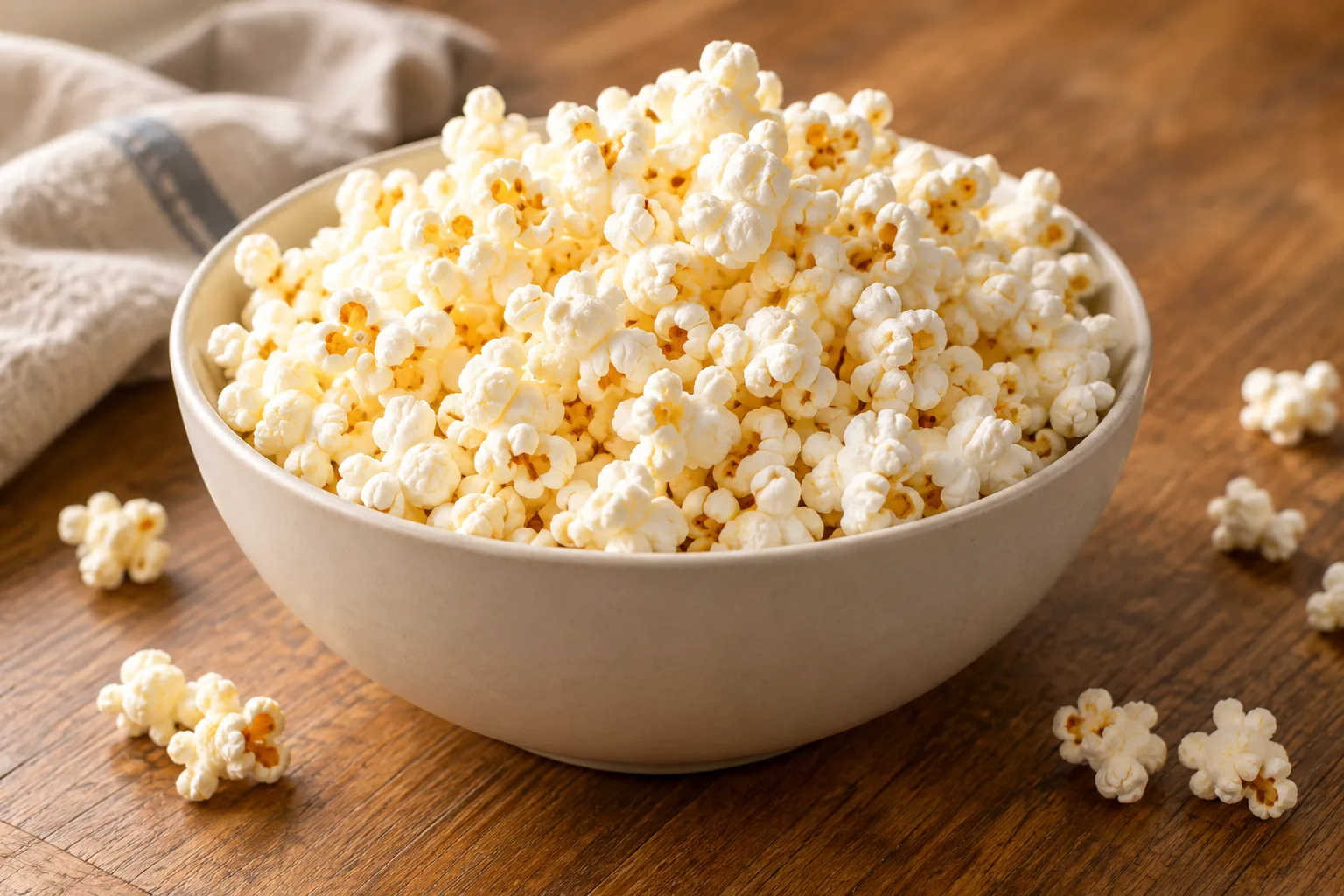
| Nutrient | SkinnyPop Original, UPC 850251004001: 3 cups, 28 g |
|---|---|
| Calories | 150 kcal |
| Protein | 2 g |
| Fiber | 2 g |
| Total fat | 10 g |
| Saturated fat | 1 g |
| Sodium | 130 mg |
Matching official SmartLabel nutrition section, checked 25 October 2026; avoid older unmatched panels.
SkinnyPop Original can be a convenient popcorn snack, but it is not the same as plain air-popped corn. The reviewed 4.4 oz bag’s current label lists 150 calories, 10 g fat, 2 g fiber and 130 mg sodium per 28 g serving. Eating the whole bag, about 4.5 servings, is approximately 675 calories rather than one small snack serving.
Decide whether you want ready-to-eat seasoned popcorn, a plainer snack with less oil, or another protein component. Compare those needs separately; neither the word “skinny” nor zero added sugar identifies every nutrient in the bag.
Match the exact package before using an online number
This guide uses Hershey’s SkinnyPop Original 4.4 oz product page and the matching official SmartLabel, UPC 850251004001. The panel was checked for the current serving, including the fiber line that is not displayed in the main product page’s abbreviated HTML nutrition listing.
| Label item | Original, 3 cups or 28 g |
|---|---|
| Calories | 150 |
| Total fat | 10 g |
| Saturated fat | 1 g |
| Protein | 2 g |
| Fiber | 2 g |
| Sodium | 130 mg |
| Added sugar | 0 g |
These figures belong to that package and formulation. Older online descriptions may show other sodium or fiber amounts. Mini bags, flavored products and another country’s package should not be assumed to match. Use the label on the bag you buy if it differs.
The ingredient list for the reviewed Original is popcorn, sunflower oil and salt. A short list can be easy to understand, but the number of ingredients is not a substitute for the amounts in the nutrition panel. Oil contributes to the fat and energy even when there are no added sugars.
Three cups is not three servings
The manufacturer’s serving is three cups weighing 28 g. That is one label serving, not three. Conversely, a large bag contains several servings even though it can feel like a single package to open during a film or a work session.
| Portion, calculated from label | Calories | Fat | Fiber | Sodium |
|---|---|---|---|---|
| 28 g, one serving | 150 | 10 g | 2 g | 130 mg |
| 56 g, two servings | 300 | 20 g | 4 g | 260 mg |
| Whole bag, about 4.5 servings | About 675 | About 45 g | About 9 g | About 585 mg |
If you split the bag with another person, use the amount actually taken rather than assuming both people ate exactly half. Pouring separate bowls makes that amount easier to recognize, especially when people serve themselves at different times. Leaving some popcorn in the bag is also different from finishing the package: estimate the portion eaten, not the fact that the bag was opened.
Whole-bag estimates use the label’s approximate serving count and rounded nutrient values. They are not a separate laboratory analysis of the package. If a different package provides a whole-container column, use that column instead of multiplying rounded serving amounts.
The FDA’s Nutrition Facts guide explains why serving size and servings per container have to be read together. Pour your usual amount into a bowl once and compare its weight with 28 g. That gives a more reliable estimate than assuming a bowl or an open bag is always one serving.
How it compares with plain air-popped popcorn
The USDA unsalted air-popped popcorn reference, FDC 170246, supplies approximately 107 calories, 1.2 g fat, 3.4 g protein and 4.2 g fiber per 28 g. Its sodium is about 1 mg at that weight. This is a generic reference for plain popcorn, not a home test of SkinnyPop or a matched brand trial.
At equal weight, the reviewed SkinnyPop has more fat and energy and less listed fiber than this plain reference. Added oil is one reason prepared popcorn differs from plain popped kernels. The products also have different amounts of the popcorn component within the same total weight.
That does not make plain popcorn the right choice for every situation. It requires preparation or access to a suitable ready-to-eat product, and you may prefer a seasoned snack. If you add butter, oil or salt to plain popcorn, count those additions before presenting it as identical to the unsalted reference.
Equal weight is the cleanest nutrition comparison here. Cups are useful for serving, but popped pieces pack differently. A volume of plain popcorn should not be assigned the same gram weight as a different product without checking its own portion information.
Zero sugar does not necessarily mean fewer calories
For a flavored-popcorn comparison, BOOMCHICKAPOP Sweet & Salty Kettle Corn’s official SmartLabel lists a 28 g serving. Holding the weight constant makes the tradeoff visible:
| Named 28 g snack | SkinnyPop Original | Sweet & Salty Kettle Corn |
|---|---|---|
| Calories | 150 | 140 |
| Total fat | 10 g | 8 g |
| Fiber | 2 g | 2 g |
| Added sugar | 0 g | 8 g |
| Sodium | 130 mg | 110 mg |
SkinnyPop is the zero-added-sugar choice in this pair, but not the lower-calorie one. The kettle corn supplies added sugar while listing less total fat. Neither is the same as plain unsalted popcorn, and neither comparison establishes a universal winner for every snack goal.
Use the exact flavor and package: a sweet popcorn and a savory one can differ substantially despite both starting with corn. If you mainly want less added sugar, the original SkinnyPop panel gives a clear answer. If you mainly want less oil or fewer calories, compare those lines separately rather than inferring them from sugar.
Corn crisps are another category. The PopCorners guide identifies a formed-crisp product and its own serving information. The Chex Mix guide covers a mixture, while Quest chips serve a different protein-focused purpose. Choose the food you want, then use its panel.
Sodium, sugar and fat each tell you something different
The reviewed serving has 130 mg sodium, about 6% of the FDA’s 2,300 mg Daily Value. That can be a relatively modest part of the day in one portion, while several portions add more. The FDA’s sodium guide is useful when comparing flavored popcorns or salty snack alternatives.
Zero added sugar is a separate feature. It does not mean zero calories or zero fat, and it does not imply that every flavored SkinnyPop product has the same sugar panel. Check the actual label when choosing a sweet flavor or a mixed snack.
The serving’s 10 g total fat includes 1 g saturated fat. Total fat and saturated fat should not be treated as the same figure. If your priority is reducing energy from added oil, compare total fat and calories. If your priority is saturated fat, compare that line specifically rather than assuming all fats have an identical composition.
Make the snack fit the occasion
If you want popcorn as a side to lunch, put the portion next to the rest of the meal rather than using it as the entire lunch by default. The reviewed serving has 2 g protein. Another suitable food can provide a different nutrient contribution without requiring you to abandon the popcorn you enjoy.
If you want a snack for a long journey, an individual package can make the portion easier to identify, but read that package’s own weight and panel. If you are sharing a large bag, a bowl can make the amount more visible. These are portion tools, not guarantees about how much anyone should eat.
Read the current package for allergy information, especially when switching flavors. The FDA’s allergy-label advice applies to familiar brands as well as new ones. Choose SkinnyPop for a snack you enjoy, then judge the amount and composition honestly rather than asking the brand name to provide a health verdict.
Frequently asked questions
Is an entire bag of SkinnyPop one serving?
Not for the reviewed 4.4 oz Original bag. Its label lists about 4.5 servings, each 28 g or three cups. Multiplying the rounded panel gives approximately 675 calories and 585 mg sodium for the bag. Smaller single-serving packages need their own panels. The fact that a bag can be opened at once does not make its contents one nutrition serving.
Is SkinnyPop the same as air-popped popcorn?
The reviewed Original includes sunflower oil and salt, while the USDA plain comparison is unsalted air-popped popcorn. At 28 g, the plain reference has about 107 calories and 1.2 g fat, compared with 150 calories and 10 g fat on the SkinnyPop label. If you add oil or butter to plain popcorn, include those additions in the comparison.
Does SkinnyPop provide much protein or fiber?
The matching current SmartLabel lists 2 g protein and 2 g fiber per 28 g serving. Those are contributions, but they do not make the snack a substantial protein meal on its own. Different formulations or older online labels may show other fiber values. Use the panel for your exact bag, and choose an accompaniment if you want a different nutrient balance.
Sources
- Hershey: SkinnyPop Original Popcorn, 4.4 oz bag, Hershey
- FDA: How to Understand and Use the Nutrition Facts Label, FDA
- FDA: Sodium in Your Diet, FDA
- FDA: Have Food Allergies? Read the Label, FDA
- Hershey: Original Popcorn SmartLabel, UPC 850251004001, Hershey
- USDA FoodData Central: Snacks, popcorn, air-popped (Unsalted) (FDC 170246), USDA FoodData Central
- Angie’s / Conagra: Sweet & Salty Kettle Corn, UPC 818780011938, Angie’s / Conagra