Snacks
Are Quest Chips Healthy? Protein, Sodium and Real Trade-Offs
Quest offers much more protein than the equal-weight tortilla-chip reference, with similar calories. Compare sodium, fiber and realistic snack combinations.
The short answer
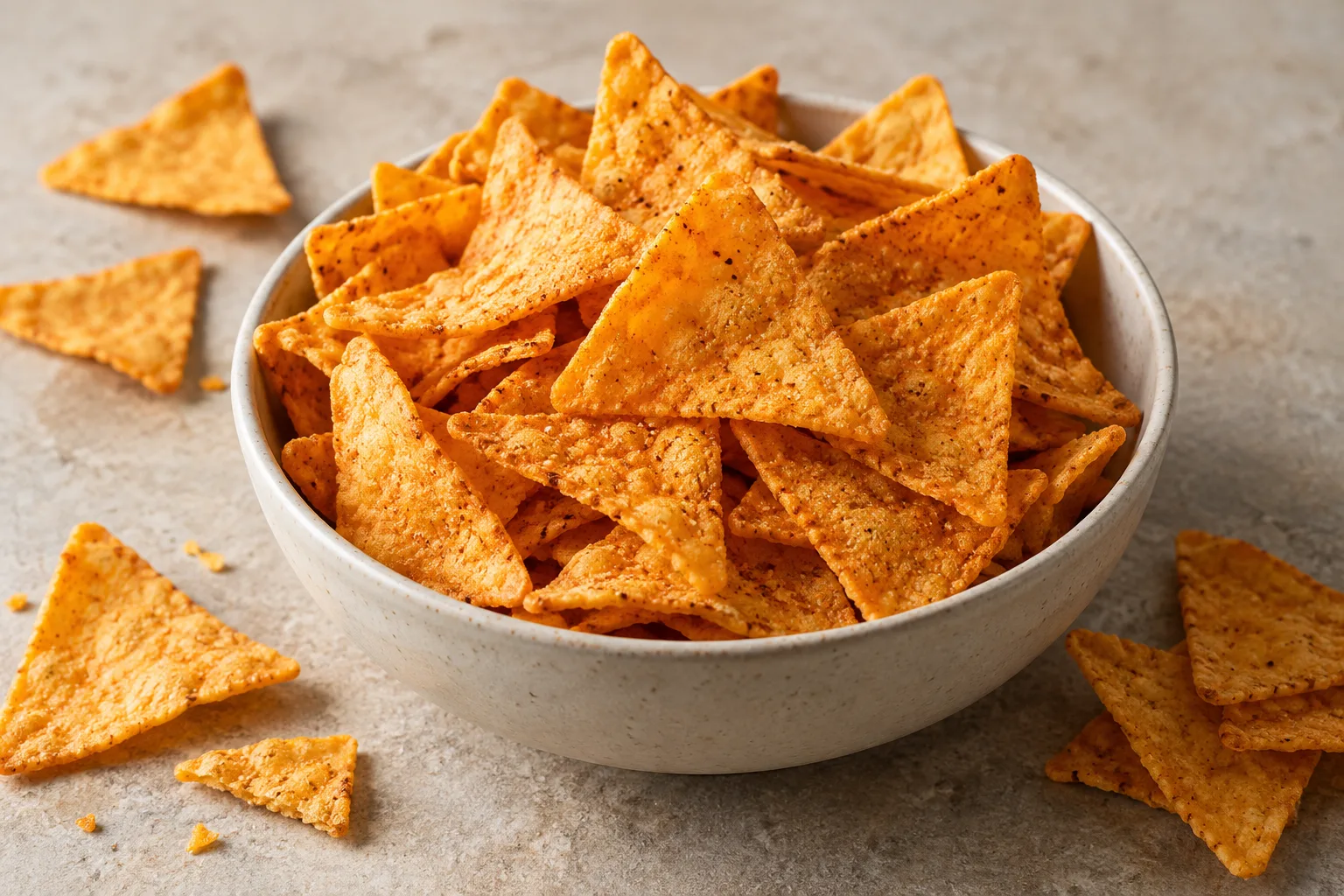
Sometimes Quest Tortilla Style chips are useful when you want protein in a crunchy snack. The inspected Nacho Cheese bag has 18 g protein and 150 calories per 32 g. An equal weight of USDA's salted white-corn tortilla-chip reference has about 2.3 g protein and 151 calories. The substantial difference is protein, rather than fewer calories; Quest's bag also has more sodium and less fiber than that reference.
| Nutrient | Quest Nacho Cheese Tortilla Style: 32-g bag |
|---|---|
| Calories | 150 kcal |
| Protein | 18 g |
| Fiber | 1 g |
| Total carbohydrate | 5 g |
| Sodium | 330 mg |
| Saturated fat | 1.5 g |
Official US manufacturer label inspected 25 October 2026. Ranch is a separate formulation.
Quest Tortilla Style chips are useful when you want protein in a crunchy snack. The inspected Nacho Cheese bag has 18 g protein and 150 calories per 32 g. An equal weight of USDA’s salted white-corn tortilla-chip reference has about 2.3 g protein and 151 calories. The substantial difference is protein, rather than fewer calories; Quest’s bag also has more sodium and less fiber than that reference.
That makes them a practical option for one purpose, rather than a universal upgrade for every snack. Choose them when the protein contribution is useful and you enjoy the format. If fiber or lower sodium is your priority, another food or a different combination may suit you better.
Nacho Cheese and Ranch: the current bag labels
This guide uses the manufacturer’s US Tortilla Style Protein Chips pages inspected on 25 October 2026. Both identified bags weigh 32 g, so their listed servings form an equal-weight comparison. Other Quest formats and flavors need their own panels.
| Per 32-g bag | Nacho Cheese | Ranch |
|---|---|---|
| Calories | 150 | 140 |
| Protein | 18 g | 19 g |
| Total fat | 6 g | 5 g |
| Saturated fat | 1.5 g | 1 g |
| Total carbohydrate | 5 g | 5 g |
| Fiber | 1 g | 1 g |
| Total sugar | 1 g | 1 g |
| Added sugar | 0 g | 0 g |
| Sodium | 330 mg | 280 mg |
Sources: Quest Nacho Cheese Tortilla Style and Quest Ranch Tortilla Style. Both ingredient lists identify milk protein isolate and whey protein isolate. The protein comes from the formulation, not from the chip shape or flavor name.
Ranch has slightly more displayed protein and less sodium in this pair. If the flavors are equally appealing, those differences may help you decide. They are modest enough that the exact bag and the rest of your snack remain more useful than a broad verdict about ranch versus cheese flavors.
Quest versus ordinary tortilla chips at equal weight
For a benchmark, USDA’s salted white-corn tortilla-chip reference, FDC 167558, is scaled to the same 32 g. It is a generic SR Legacy food, not a current competing brand label. The comparison combines that reference with the identified Quest panels.
| Per 32 g | Quest Nacho Cheese | Quest Ranch | USDA tortilla-chip reference |
|---|---|---|---|
| Calories | 150 | 140 | 151 |
| Protein | 18 g | 19 g | 2.3 g |
| Fiber | 1 g | 1 g | 1.7 g |
| Sodium | 330 mg | 280 mg | 105 mg |
| Saturated fat | 1.5 g | 1 g | 0.9 g |
Nacho Cheese supplies roughly eight times the protein of this reference at almost the same calories. Its sodium is also about three times the reference amount. Those are useful trade-offs to know when the bag is replacing ordinary chips.
If you simply want a crunchy side and already have another protein-containing food, ordinary chips in a suitable portion remain an option. If you specifically want the chips themselves to contribute protein, Quest answers that task more directly. This table does not compare flavor, appetite satisfaction or every corn-chip recipe.
Another protein-snack option: cottage cheese
A different format may be worth considering when crunch is optional. A 150-g portion of USDA’s 2% cottage-cheese reference supplies about 122 calories, 15.7 g protein and 462 mg sodium. It has 0 g fiber in the reference.
That is a realistic portion comparison, rather than an equal-weight claim: 150 g cottage cheese versus a 32-g chip bag. It shows that a familiar dairy food can provide a similar amount of protein, but is not necessarily lower in sodium. The individual cheese label can differ from the generic reference.
Convenience also matters. A sealed chip bag is easier to carry without a bowl or spoon; cottage cheese needs cold storage. The FDA’s food-handling guidance advises keeping cold perishable food at 40°F or below when transporting it. Choose the format you can store and eat comfortably.
Both options contain milk ingredients. Someone avoiding milk protein needs a different shortlist, rather than swapping between them solely on protein grams.
One bag, two bags or chips with beans?
Portion changes and food combinations produce different snacks. Two Nacho Cheese bags double the displayed label amounts to 300 calories, 36 g protein, 2 g fiber and 660 mg sodium.
Alternatively, pair one bag with 75 g plain cooked black beans, using USDA’s without-added-salt reference. The beans contribute 99 calories, about 6.6 g protein, 6.5 g fiber and 1 mg sodium. Mash them for a dip-like texture if that suits how you want to eat the snack.
| Calculated snack | Calories | Protein | Fiber | Sodium |
|---|---|---|---|---|
| Two Nacho Cheese bags | 300 | 36 g | 2 g | 660 mg |
| One bag plus 75 g plain cooked black beans | 249 | 24.6 g | 7.5 g | 331 mg |
The bean pairing is an ingredient calculation, not a tested recipe. Salt, oil, salsa or cheese added to the beans changes the total. Prepared dips therefore need their own label rather than the plain-bean figures.
The second option supplies less protein than two bags but considerably more fiber. It also changes the texture and preparation effort. Our cooked-bean guide can help compare legumes, while our chips-and-salsa guide separates the dip from the chip portion.
What the carbohydrate lines actually mean
Both inspected Quest bags display 5 g total carbohydrate, 1 g fiber and 1 g total sugar, including 0 g added sugar. Low added sugar therefore does not mean zero carbohydrate.
Subtracting the displayed fiber from total carbohydrate gives 4 g. That is arithmetic from rounded panel values, not a replacement for the total-carbohydrate line. If you follow a prescribed carbohydrate plan, use the counting method and product information relevant to that plan.
The FDA Nutrition Facts guide explains the distinction between serving amounts and nutrient lines. A single bag is convenient to count, but the calculation changes if you use two bags or add a dip. Keep those additions visible instead of assuming the chip panel represents a loaded plate.
Sodium can decide the choice
The FDA sodium guide uses a 2,300 mg Daily Value. Nacho Cheese’s 330 mg is about 14% of that general reference; Ranch’s 280 mg is about 12%. A prescribed sodium limit may require a different comparison for your circumstances.
If sodium is the reason you are changing snacks, compare that line directly. The ordinary tortilla-chip reference in the table is lower, while the cottage-cheese portion is higher. Neither “high protein” nor a dairy-food reputation predicts the better sodium result.
For a portion eaten with salsa or a seasoned filling, count those foods too. Serving the chips in a bowl with a chosen dip amount makes the combination easier to estimate than repeatedly adding toppings from several containers.
Milk allergy and gluten-free wording
These chips contain milk-derived proteins. Ranch also lists buttermilk powder, and Nacho Cheese lists dairy ingredients. A tortilla-style appearance does not make them milk-free or suitable for someone with a milk allergy.
Use the actual package’s ingredient and allergen statements, following the FDA food-allergy guide. Contact the manufacturer about an unresolved cross-contact question. A gluten-free statement answers a separate question, explained in the FDA gluten-labeling guidance.
For another portable dairy format, our Babybel guide examines named cheese portions. Use it as another comparison when milk is acceptable, rather than as an allergy alternative.
A practical choice for your next snack
Name the job first: a crunchy side, protein while traveling, or a larger snack before dinner. For protein in a chip format, the 18–19 g in these bags is the strongest reason to choose them. For fiber, the bean pairing or another food changes the snack more effectively than adding a second bag.
Try one flavor before buying a multipack, and judge whether you enjoy the texture as well as the numbers. The evidence here is manufacturer labels and generic food-composition data; it does not establish which product you will find most satisfying.
Prepared with AI assistance. This guide has not been medically reviewed and provides general information, not personal medical advice.
Frequently asked questions
Are Quest chips much lower in calories than ordinary chips?
Not in this equal-weight comparison. The Nacho Cheese bag has 150 calories per 32 g, and the generic tortilla-chip reference has about 151. The much larger difference is protein: 18 g versus about 2.3 g.
Which compared Quest flavor has less sodium?
The inspected Ranch bag lists 280 mg per 32 g, compared with 330 mg for Nacho Cheese. Check the actual variety and bag before applying those figures to a different product.
Are Quest Tortilla Style chips milk-free?
No. The inspected Nacho Cheese and Ranch products contain milk-derived proteins. A gluten-free claim does not address milk allergy; use the ingredient and allergen statement for that decision.
Sources
- FDA: How to Understand and Use the Nutrition Facts Label, FDA
- FDA: Sodium in Your Diet, FDA
- FDA: Have Food Allergies? Read the Label, FDA
- FDA: Gluten and Food Labeling, FDA
- Quest: Nacho Cheese Tortilla Style Protein Chips, Quest
- Quest: Ranch Tortilla Style Protein Chips, Quest
- FDA: Handling Food Safely While Eating Outdoors, FDA
- USDA SR Legacy: Snacks, tortilla chips, plain, white corn, salted (FDC 167558), USDA SR Legacy
- USDA SR Legacy: Cheese, cottage, lowfat, 2% milkfat (FDC 172182), USDA SR Legacy
- USDA SR Legacy: Beans, black, mature seeds, cooked, boiled, without salt (FDC 173735), USDA SR Legacy