Snacks
Are PopCorners Healthy? How They Compare With Popcorn
Sea Salt PopCorners has less fat than the potato-chip reference, while plain popcorn supplies more fiber. Compare equal weights, the whole bag and a measured bean pairing.
The short answer
Sometimes Sea Salt PopCorners can serve as a crunchy snack, but plain air-popped popcorn is the stronger choice for fiber in this comparison. At an equal 28 g, the identified PopCorners label has 120 calories, 2 g protein, 0 g displayed fiber and 150 mg sodium. USDA's unsalted air-popped popcorn reference has about 107 calories, 3.4 g protein, 4.2 g fiber and 1 mg sodium.
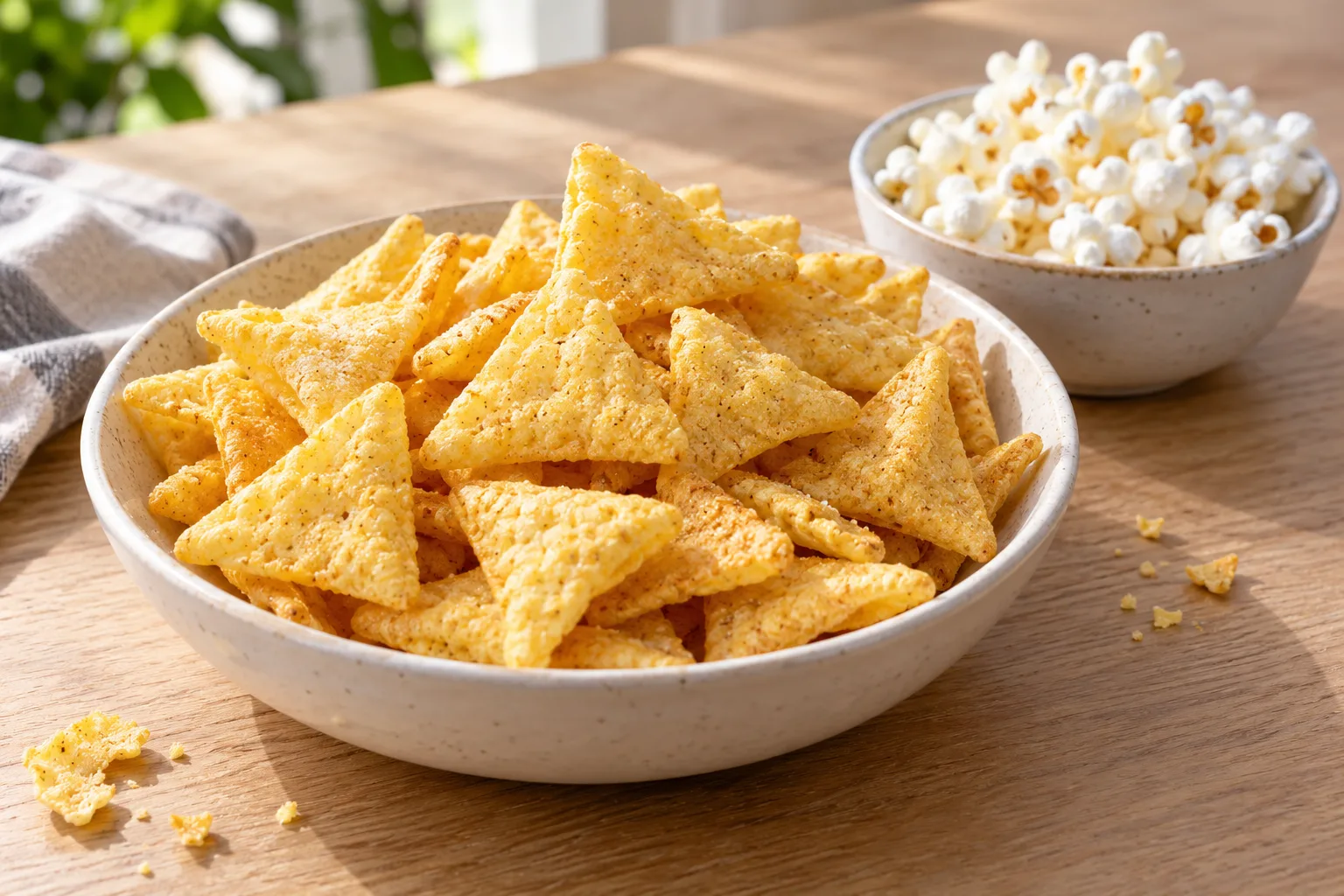
| Nutrient | Sea Salt PopCorners: 28 g, about 21 crisps |
|---|---|
| Calories | 120 kcal |
| Protein | 2 g |
| Fiber | 0 g |
| Sodium | 150 mg |
| Total fat | 2.5 g |
Official PepsiCo SmartLabel UPC 810607023100 inspected 25 October 2026. Whole 85-g package has a separate panel.
Sea Salt PopCorners can serve as a crunchy snack, but plain air-popped popcorn is the stronger choice for fiber in this comparison. At an equal 28 g, the identified PopCorners label has 120 calories, 2 g protein, 0 g displayed fiber and 150 mg sodium. USDA’s unsalted air-popped popcorn reference has about 107 calories, 3.4 g protein, 4.2 g fiber and 1 mg sodium.
PopCorners also has less fat than the plain potato-chip reference below. That makes the answer specific: useful if you prefer its texture and a measured chip-style portion; less useful if your main aim is more fiber. Popped corn crisps and a bowl of whole popped kernels are different foods.
The Sea Salt product used here
The numerical reference is Sea Salt PopCorners, UPC 810607023100, in the 3-oz/85-g bag on PepsiCo’s official SmartLabel page, inspected on 25 October 2026. The ingredients are yellow corn, sunflower oil and sea salt. Its serving is 28 g, described as about 21 crisps.
The manufacturer’s FAQ describes a separate PopCorners Protein range with 9 g protein per 1 oz. That figure belongs to those products; ordinary Sea Salt lists 2 g per 28 g. Check the full name when a multipack or online listing uses the same brand logo for different ranges.
Other flavors can have different ingredients and panels. The comparisons in this guide therefore identify the exact Sea Salt reference rather than assigning one number to the whole brand.
PopCorners versus popcorn, tortilla chips and potato chips
Equal weight helps separate product composition from portion size. The USDA foods below are generic SR Legacy references, not current labels for named competing brands. Every row is a weighed 28 g amount; the reference is not an assumption about how much anyone should eat.
| Food, 28 g | Calories | Fat | Protein | Fiber | Sodium |
|---|---|---|---|---|---|
| Identified Sea Salt PopCorners | 120 | 2.5 g | 2 g | 0 g displayed | 150 mg |
| Unsalted air-popped popcorn | 107 | 1.2 g | 3.4 g | 4.2 g | 1 mg |
| Salted white-corn tortilla chips | 132 | 5.8 g | 2.0 g | 1.5 g | 92 mg |
| Plain salted potato chips | 149 | 9.5 g | 1.8 g | 0.9 g | 148 mg |
USDA sources: unsalted air-popped popcorn, FDC 170246, salted white-corn tortilla chips, FDC 167558 and plain salted potato chips, FDC 169677. Figures are scaled from per-100-g data and rounded after calculation.
Against these references, PopCorners saves about 29 calories and 7 g fat compared with potato chips at equal weight, while sodium is very similar. Against plain popcorn, the advantage disappears: PopCorners has more sodium and much less displayed fiber. Neither comparison establishes what will taste better or how filling the snack will feel to you.
If fiber is the priority, choose the whole popped kernels
The 4.2 g fiber in 28 g of the air-popped reference is a meaningful difference from Sea Salt’s displayed 0 g. USDA assigns 8 g to a cup of this popcorn, making 28 g approximately 3½ reference cups. PopCorners’ 28 g is about 21 crisps, so equal weight also looks very different in the bowl.
The popcorn comparison assumes no added salt, butter, oil or sweet coating. A heavily seasoned microwave bag needs its own panel. If you prepare popcorn at home, weigh the popped food for this comparison; the weight of uncooked kernels is a different starting point.
If plain popcorn is not the snack you want, the fiber difference can guide the accompaniment instead. You can enjoy a smaller crisp portion alongside another food without claiming that the crisps themselves became a high-fiber product.
If the alternative is chips, decide which difference matters
Compared with the potato-chip reference, Sea Salt PopCorners has about 74% less fat and 19% fewer calories at equal weight. The larger proportional change is therefore in fat. Someone comparing sodium would see little separation between these two rows and would need a different product or portion to make a substantial change.
The tortilla-chip reference has more fat and fiber than Sea Salt PopCorners, with less sodium in this particular record. That illustrates why “better than chips” is too broad a claim: chip recipes and the nutrient being compared both matter.
For a serving with dip, include the dip amount. Our chips-and-salsa guide examines that combination separately. A crisp chosen for its lower fat can still be served with a substantial amount of another ingredient; the packet’s panel describes the crisp portion only.
Eating the whole bag changes the answer
The identified 85-g bag has a separate package panel. Use those figures for the full bag instead of multiplying every rounded serving value by three.
| Amount of the identified Sea Salt product | Calories | Protein | Fiber | Sodium |
|---|---|---|---|---|
| One 28-g serving | 120 | 2 g | 0 g displayed | 150 mg |
| Two displayed servings, 56 g | About 240 | About 4 g | Exact amount unavailable from the rounded serving value | About 300 mg |
| Full 85-g bag, package panel | 370 | 7 g | 1 g | 440 mg |
Three 28-g servings weigh 84 g, while the package is 85 g; nutrition values are also rounded. The whole-bag panel supplies the manufacturer’s answer for that amount. Its 1 g fiber also shows why the serving’s displayed zero should not be read as an exact absence of fiber. The FDA label-reading guide explains how servings and quantities consumed relate.
For a smaller portion, weighing is usually easier than counting broken pieces. Put the intended amount in a bowl and decide whether you want another food with it before repeatedly returning to the bag.
A more substantial pairing, with actual numbers
Consider 28 g of the identified Sea Salt crisps with 75 g plain cooked black beans, mashed if you want a dip-like texture. Using USDA’s cooked black beans without added salt, the beans contribute 99 calories, about 6.6 g protein, 6.5 g fiber and 1 mg sodium.
The calculated pairing totals approximately 219 calories, 8.6 g protein, 6.5 g fiber and 151 mg sodium before extra seasoning or ingredients. This is an ingredient calculation, not a taste-tested recipe. Prepared bean dip can contain oil, salt or other foods and needs its own figures.
That pairing supplies more fiber than adding a second 28-g portion of crisps, while the double-crisp portion supplies about 240 calories and 4 g protein. Choose according to your appetite and preference rather than expecting both options to do the same job. Our cooked-bean guide compares other legumes if black beans are not your preference.
How much sodium is that in context?
The FDA sodium guide uses a 2,300 mg Daily Value. One Sea Salt serving is about 7% of that general reference; the whole bag is about 19%. These percentages help compare amounts without defining a personal sodium allowance.
If a snack sits alongside a sandwich or soup, those foods also contribute sodium. At home, the plain popcorn reference gives you control over the seasoning you add. With a packaged snack, the useful choices are the actual product and portion.
Gluten and allergy information
The identified Sea Salt SmartLabel states that it contains none of the nine common allergens listed there. This is the manufacturer’s statement for that product, rather than an independent cross-contact test. Cheese flavors and other ranges require their own ingredient checks.
Follow the FDA food-allergy guidance for the actual package and any unresolved manufacturer questions. The FDA gluten-labeling guide also distinguishes a gluten-free claim from fiber, protein or sodium content.
For a different portable format, our Nature Valley comparison considers named bars. Pick the food that suits the eating occasion, using a comparison relevant to what you want it to contribute.
Prepared with AI assistance. This guide has not been medically reviewed and provides general information, not personal medical advice.
Frequently asked questions
Are PopCorners healthier than plain popcorn?
For fiber and sodium, the unsalted air-popped reference compares more favorably: about 4.2 g fiber and 1 mg sodium per 28 g, versus Sea Salt PopCorners' displayed 0 g fiber and 150 mg sodium. Added popcorn toppings change that comparison.
How many calories are in the whole Sea Salt bag?
The identified 3-oz/85-g bag's separate package panel lists 370 calories. Use your own bag's size and panel; a 28-g serving contains 120 calories, and different packages can contain different amounts.
Which PopCorners have 9 g protein?
The manufacturer's FAQ describes a separate PopCorners Protein range with 9 g per 1 oz. Ordinary Sea Salt in this guide lists 2 g per 28 g. Match the full product name before using the higher figure.
Sources
- FDA: How to Understand and Use the Nutrition Facts Label, FDA
- FDA: Sodium in Your Diet, FDA
- FDA: Have Food Allergies? Read the Label, FDA
- FDA: Gluten and Food Labeling, FDA
- PopCorners Sea Salt: official SmartLabel, UPC 810607023100, PopCorners Sea Salt
- PopCorners: official product FAQs, PopCorners
- USDA SR Legacy: Snacks, tortilla chips, plain, white corn, salted (FDC 167558), USDA SR Legacy
- USDA SR Legacy: Snacks, potato chips, plain, salted (FDC 169677), USDA SR Legacy
- USDA SR Legacy: Snacks, popcorn, air-popped (Unsalted) (FDC 170246), USDA SR Legacy
- USDA SR Legacy: Beans, black, mature seeds, cooked, boiled, without salt (FDC 173735), USDA SR Legacy