Snacks
Is Kettle Corn Healthy? Sugar, Oil and Portion Sizes
Is kettle corn healthy? Check a BOOMCHICKAPOP label, larger portions and added sugar, then compare plain popcorn and a practical mix at equal weights.
The short answer
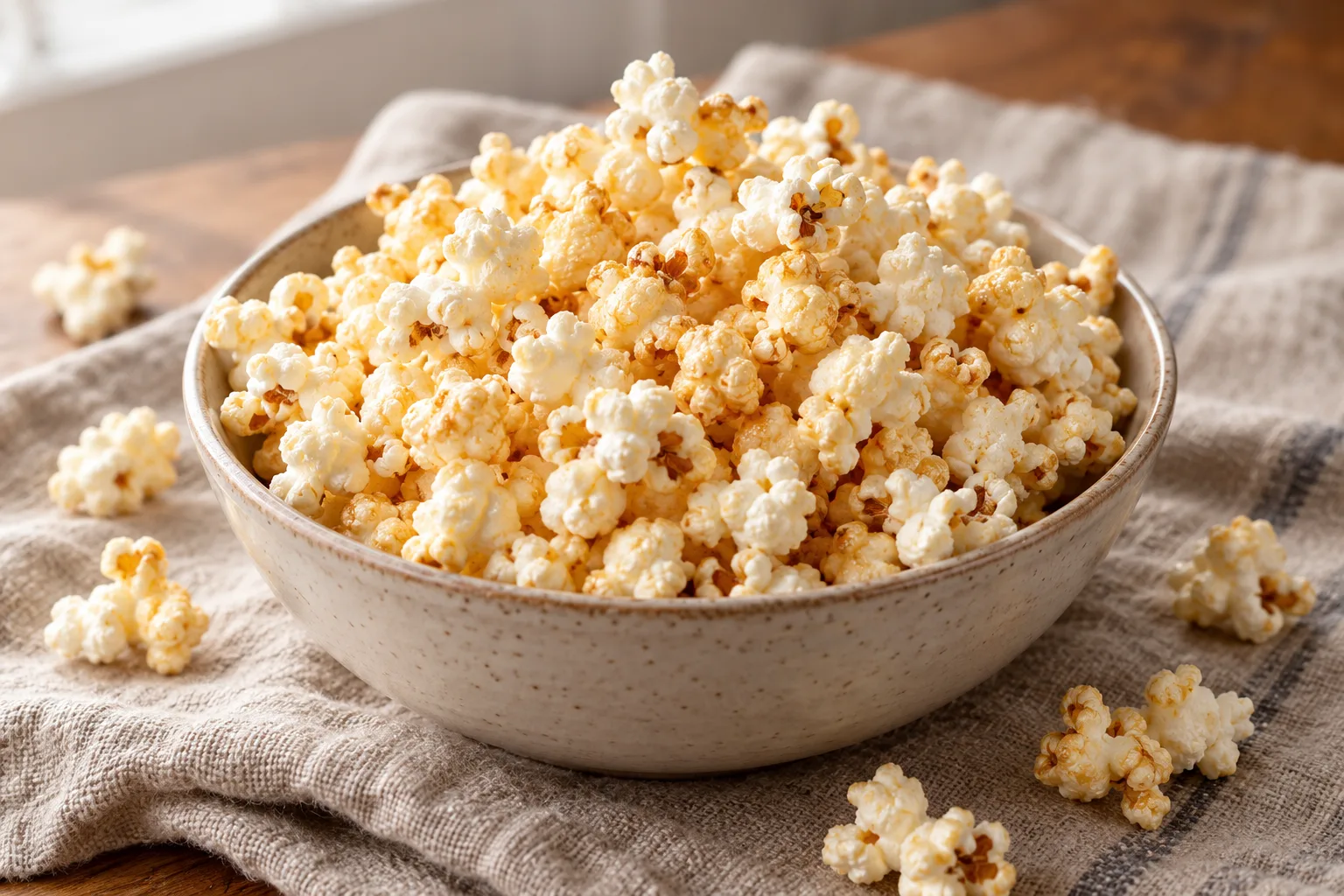
Sometimes Kettle corn can fit as a sweet snack when the portion is clear. Angie’s BOOMCHICKAPOP Sweet & Salty Kettle Corn lists 140 calories, 8 g added sugar, 2 g fiber and 110 mg sodium per 2-cup, 28 g serving. A 4-cup portion doubles those amounts. Use that product label for the bag, rather than treating sweetened kettle corn as plain popcorn.
| Nutrient | BOOMCHICKAPOP Sweet & Salty: 2 cups, 28 g |
|---|---|
| Calories | 140 kcal |
| Protein | 1 g |
| Fiber | 2 g |
| Total fat | 8 g |
| Added sugar | 8 g |
| Sodium | 110 mg |
Official SmartLabel UPC 818780011938; about seven servings in the identified 7 oz bag. Larger totals inherit rounded label limits.
Kettle corn can fit as a sweet snack when the portion is clear. Angie’s BOOMCHICKAPOP Sweet & Salty Kettle Corn lists 140 calories, 8 g added sugar, 2 g fiber and 110 mg sodium per 2-cup, 28 g serving. A 4-cup portion doubles those amounts. Use that product label for the bag, rather than treating sweetened kettle corn as plain popcorn.
Choose the bag or batch you will eat, then identify its portion. Kettle corn supplies popcorn fiber alongside the oil, sugar and salt in the recipe. Bowl size and a whole-grain claim do not establish the amount.
A real kettle-corn label to start with
The official SmartLabel for Sweet & Salty Kettle Corn, UPC 818780011938, identifies a 7 oz, 198 g bag with about seven servings. Its ingredients are popcorn, sunflower oil, cane sugar and sea salt. The panel describes that product; other flavors, microwave bags and snack-size packages need their own information.
| Listed item | Two cups, 28 g |
|---|---|
| Calories | 140 |
| Total fat | 8 g |
| Saturated fat | 0.5 g |
| Fiber | 2 g |
| Total sugar | 8 g |
| Added sugar | 8 g |
| Sodium | 110 mg |
| Protein | 1 g |
The 8 g added sugar is already included in total sugar. Do not add the two rows together. The panel’s second volume option is one cup, with smaller amounts; it is not another analysis of a 28 g serving.
This product makes the tradeoff concrete: it supplies popcorn fiber alongside added oil, sugar and salt. The short ingredient list does not remove those additions. Choose it when you want that sweet-and-salty snack, and use the portion you actually serve.
If your bag has another UPC or a different formula, use its panel. A brand name and a similar front design are not enough to establish that every package matches the figures above.
Two cups, four cups and a whole bag
| Amount, calculated from this label | Calories | Added sugar | Fiber | Sodium |
|---|---|---|---|---|
| Two cups, 28 g | 140 | 8 g | 2 g | 110 mg |
| Four cups, 56 g | 280 | 16 g | 4 g | 220 mg |
| About seven servings, approximately the bag | About 980 | About 56 g | About 14 g | About 770 mg |
The bag estimate uses its approximate serving count and rounded nutrient values; it is not an exact whole-package analysis. The printed net weight is 198 g, while seven rounded 28 g servings total 196 g. That small mismatch is another reason to treat the multiplied bag total as approximate.
A four-cup bowl can still look light because popcorn occupies a lot of space. It nevertheless contains twice the food in the two-cup label serving. Opening a bag once does not make its several servings one small snack.
The FDA’s Nutrition Facts guide explains why serving size and servings per container belong together. Pour a usual bowl once and compare its weight with the package. Use a whole-container column when the exact product supplies one.
Kettle corn versus plain popcorn at the same weight
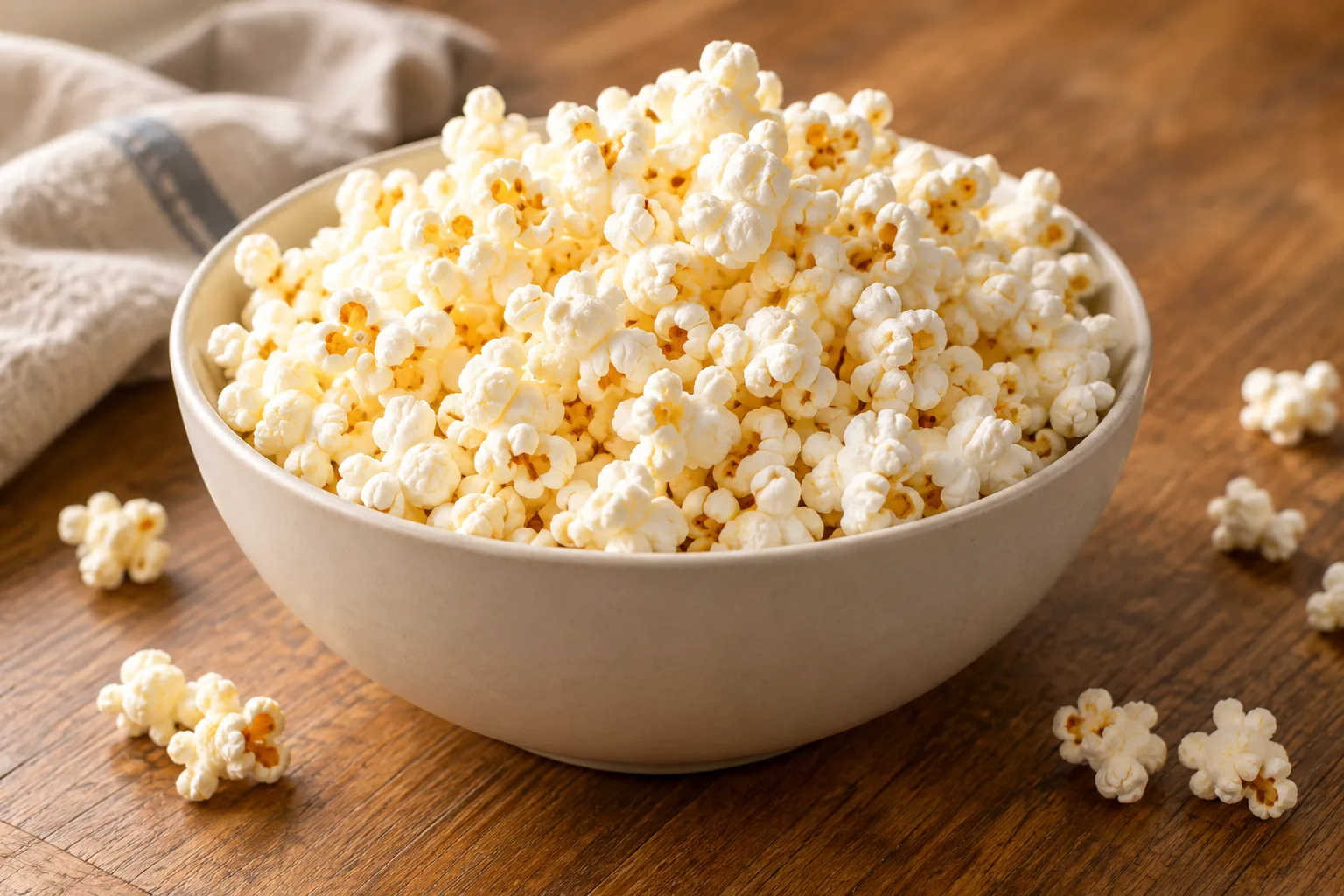
The USDA unsalted air-popped popcorn reference, FDC 170246, supplies about 107 calories, 4.2 g fiber, 1.2 g fat and 1 mg sodium per 28 g. At the same weight, the named kettle corn lists 140 calories, 2 g fiber, 8 g fat and 110 mg sodium.
That comparison identifies a different snack rather than a universal rule about every popcorn recipe. Oil and sugar take up part of the finished kettle-corn portion’s weight, while the plain reference describes unsalted popped corn alone. Butter, oil or salt added at home would change the plain example.
Use weight to compare composition and cups to recognize your own serving. The number of cups in one brand’s 28 g serving should not be transferred to another popcorn or homemade batch, because the pieces can pack differently.
For a corn crisp, Planrity’s PopCorners guide describes a different formulation and shape. If your choice is a mixed party snack, the Chex Mix guide covers its separate ingredients. Compare the actual foods you would buy instead of grouping every corn-based snack under one nutrition number.
Decide whether you want the sweetened snack
The named kettle corn’s 8 g added sugar per serving is 16% of the FDA’s 50 g Daily Value; four cups supply 16 g, or 32%. Those percentages compare portions with a general label reference, not a personal snack allowance.
The FDA’s added-sugars guide explains the distinction between added and total sugar. For this product both lines are 8 g. A different product could have another composition, so use the actual panel rather than estimating from how sweet it tastes.
If your priority is less added sugar, plain popcorn or a smaller kettle-corn portion makes a direct change. If you want a sweet snack, choose the amount you enjoy and include it in the day’s eating pattern. Calling the ingredient cane sugar does not remove it from the added-sugar total; Planrity’s cane-sugar guide explains that naming issue.
What a homemade ingredient calculation can tell you
For a home batch, count the ingredients that remain in the food eaten and divide by the portion. An illustrative 28 g mixture of 20 g plain popped corn, 4 g olive oil and 4 g granulated sugar supplies about 127 calories, 3 g fiber and 4 g added sugar. It is a composition example, not a tested kettle-corn recipe or a claim about the branded product above.
That estimate combines the plain popcorn record with USDA olive oil, FDC 171413, and granulated sugar, FDC 169655. It assumes all listed ingredients are eaten and no salt is added.
Adding 0.2 g table salt, FDC 173468, would add about 78 mg sodium. Oil, sugar and salt therefore need separate amounts; making a snack at home does not establish that any of them is lower. The FDA’s sodium guide can help when comparing finished bags or batches.
Choose a snack portion you can recognize
For a film or shared table, pour an amount into a bowl rather than estimating the whole occasion from one small label serving. If you want more food, you can have more, but use the larger amount when comparing energy, sugar and sodium.
For a work snack, an individual package may make the amount easier to identify. Check its panel because a small bag can still contain more than one listed serving. If you prefer a homemade batch, retain the ingredient weights and divide by the finished amount eaten rather than claiming a universal cup value.
Check the current ingredients for allergies and flavor additions. The FDA’s allergy-label advice applies even to familiar snack names. Choose kettle corn because you enjoy it, with the sweetener, oil and portion kept visible in the decision.
A half-and-half mix is another portion option
If you enjoy a less-sweet mix, combine equal weights of the named kettle corn and plain unsalted air-popped popcorn. Fourteen grams of each makes a 28 g comparison portion:
| Same total 28 g | Named kettle corn alone | Half kettle corn, half plain reference |
|---|---|---|
| Calories | 140 | About 123 |
| Added sugar | 8 g | About 4 g |
| Fiber | 2 g | About 3.1 g |
| Sodium | 110 mg | About 56 mg |
The mixture is calculated from the two foods’ values, not a tested branded recipe. Its volume is not assumed to equal the kettle corn’s two-cup serving, because the pieces can pack differently. A larger bowl of the mix still needs a larger estimate.
This changes the snack you serve instead of relabeling the original bag. You may prefer the full sweet-and-salty product; in that case, choose its portion directly. If you use plain popcorn with butter or salt, include those additions before applying the mix figures.
Frequently asked questions
How much sugar is in a serving of kettle corn?
The identified BOOMCHICKAPOP Sweet & Salty label lists 8 g total sugar, all of it added sugar, per two cups or 28 g. Four cups would supply about 16 g. Other brands and recipes differ. Added sugar is already included within total sugar, so the two rows should not be added together.
Is kettle corn as high in fiber as plain popcorn?
At equal 28 g weight, the named kettle corn has 2 g listed fiber, while the USDA unsalted air-popped reference has about 4.2 g. Coatings and oil change the proportion of popcorn within a finished portion. A larger serving can supply more fiber while also increasing sugar and fat; compare the amount you will actually eat.
Is the whole bag one serving?
The reviewed 7 oz bag lists about seven servings. Multiplying its rounded panel gives roughly 980 calories and 56 g added sugar for the bag. Those are approximate totals, not a separate package analysis. Smaller bags may have different serving counts, so check the specific package rather than assuming every bag is one serving.
Sources
- FDA: How to Understand and Use the Nutrition Facts Label, FDA
- FDA: Sodium in Your Diet, FDA
- FDA: Added Sugars on the Nutrition Facts Label, FDA
- FDA: Have Food Allergies? Read the Label, FDA
- USDA FoodData Central: Sugars, granulated (FDC 169655), USDA FoodData Central
- USDA FoodData Central: Snacks, popcorn, air-popped (Unsalted) (FDC 170246), USDA FoodData Central
- USDA FoodData Central: Oil, olive, salad or cooking (FDC 171413), USDA FoodData Central
- USDA FoodData Central: Salt, table (FDC 173468), USDA FoodData Central
- Angie’s / Conagra: Sweet & Salty Kettle Corn, UPC 818780011938, Angie’s / Conagra