Cuisines and takeaway
Is Hibachi Healthy? Build and Compare a Complete Meal
Assess hibachi-style meals with measured rice, protein, vegetables, oil and sauce. Compare calculated bowls and understand portions and sodium trade-offs.
The short answer
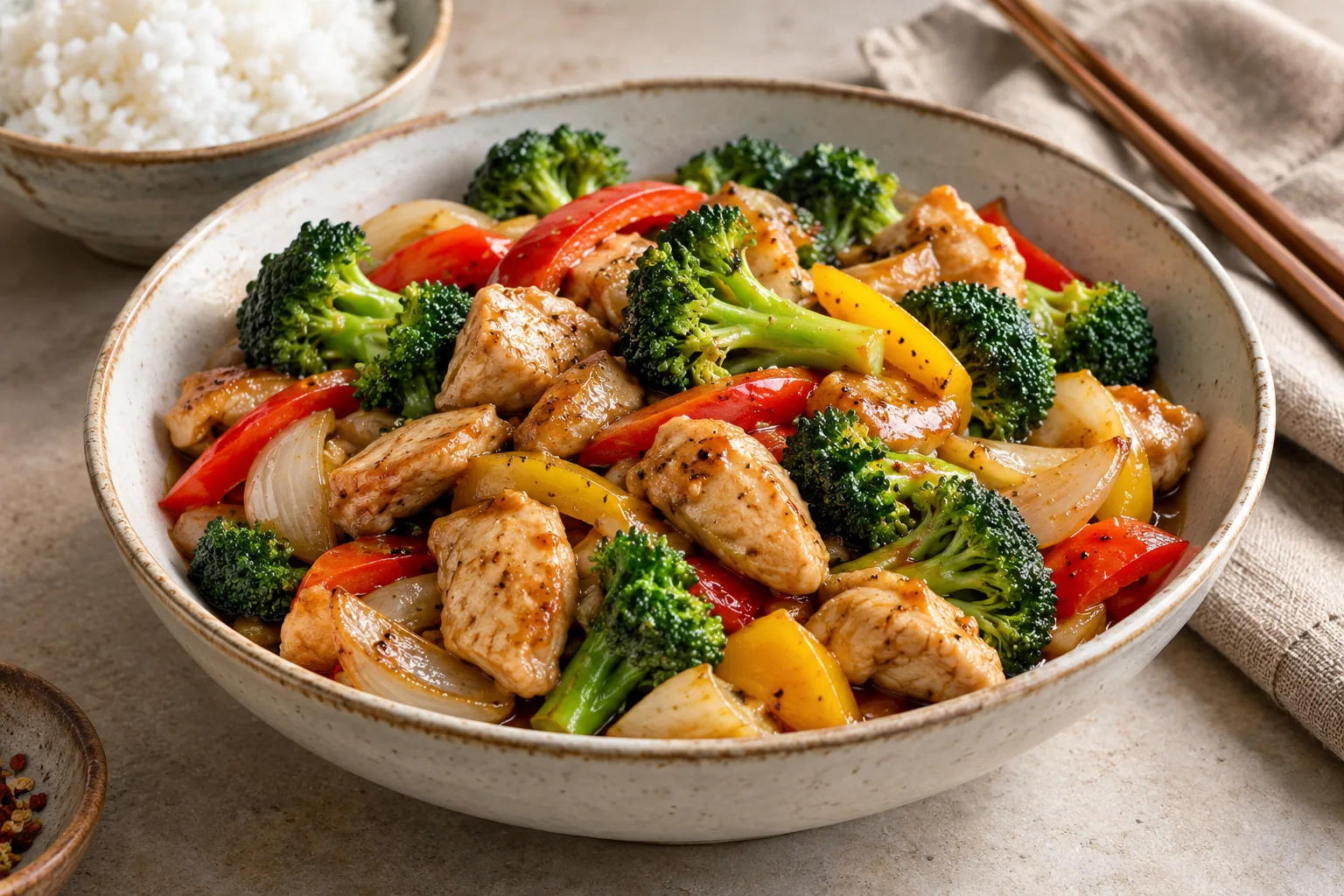
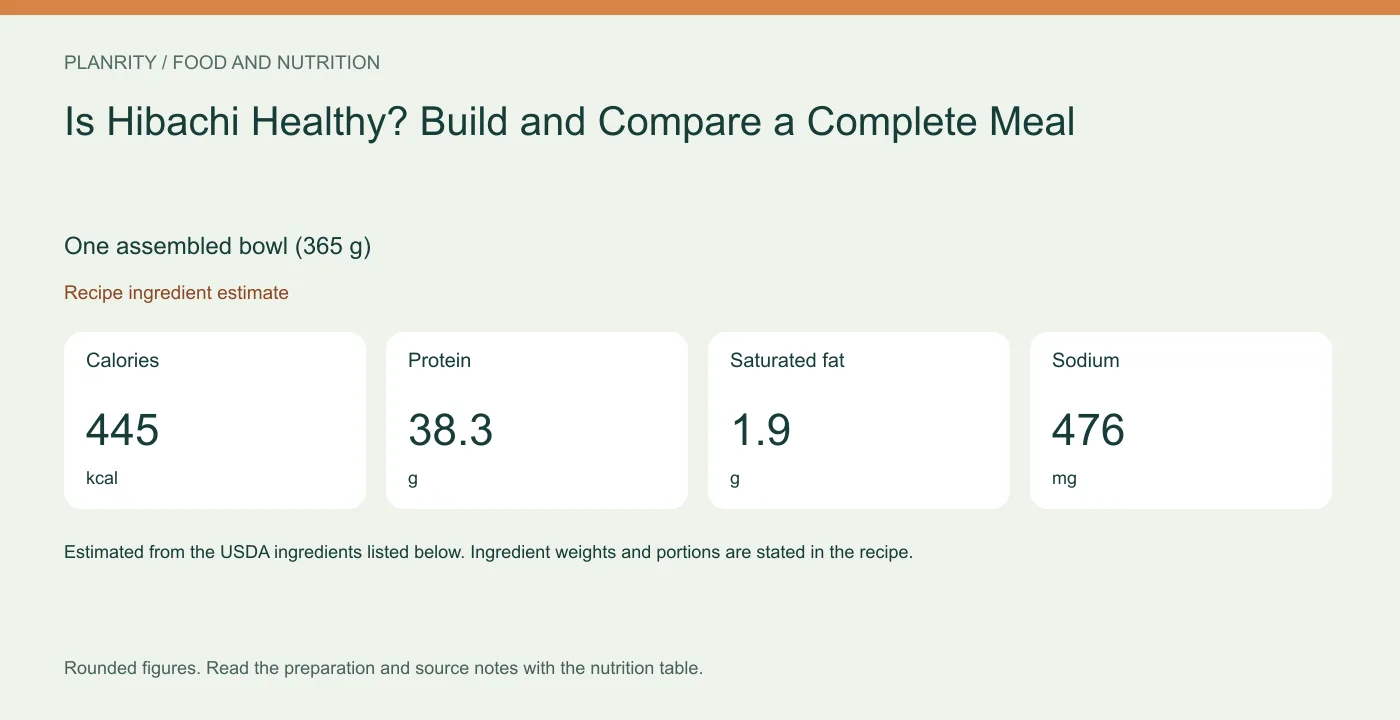
Sometimes A hibachi-style meal can be a balanced choice, but rice, butter, oil and sauce change the total. The home chicken bowl calculated here supplies about 445 calories and 38.3 g protein, including its measured rice, broccoli, oil and sauce. It is a home ingredient estimate; restaurant portions need the restaurant’s own information.
| Nutrient | One assembled bowl (365 g) | Per 100 g |
|---|---|---|
| Calories | 445 kcal | 122 kcal |
| Protein | 38.3 g | 10.5 g |
| Total fat | 9.4 g | 2.6 g |
| Saturated fat | 1.9 g | 0.5 g |
| Carbohydrate | 50.0 g | 13.7 g |
| Fiber | 4.0 g | 1.1 g |
| Total sugar | 1.5 g | 0.4 g |
| Sodium | 476 mg | 131 mg |
| Calcium | 73 mg | 20 mg |
| Iron | 3.7 mg | 1.0 mg |
| Potassium | 637 mg | 174 mg |
Estimated from the USDA ingredients listed below. Ingredient weights and portions are stated in the recipe.
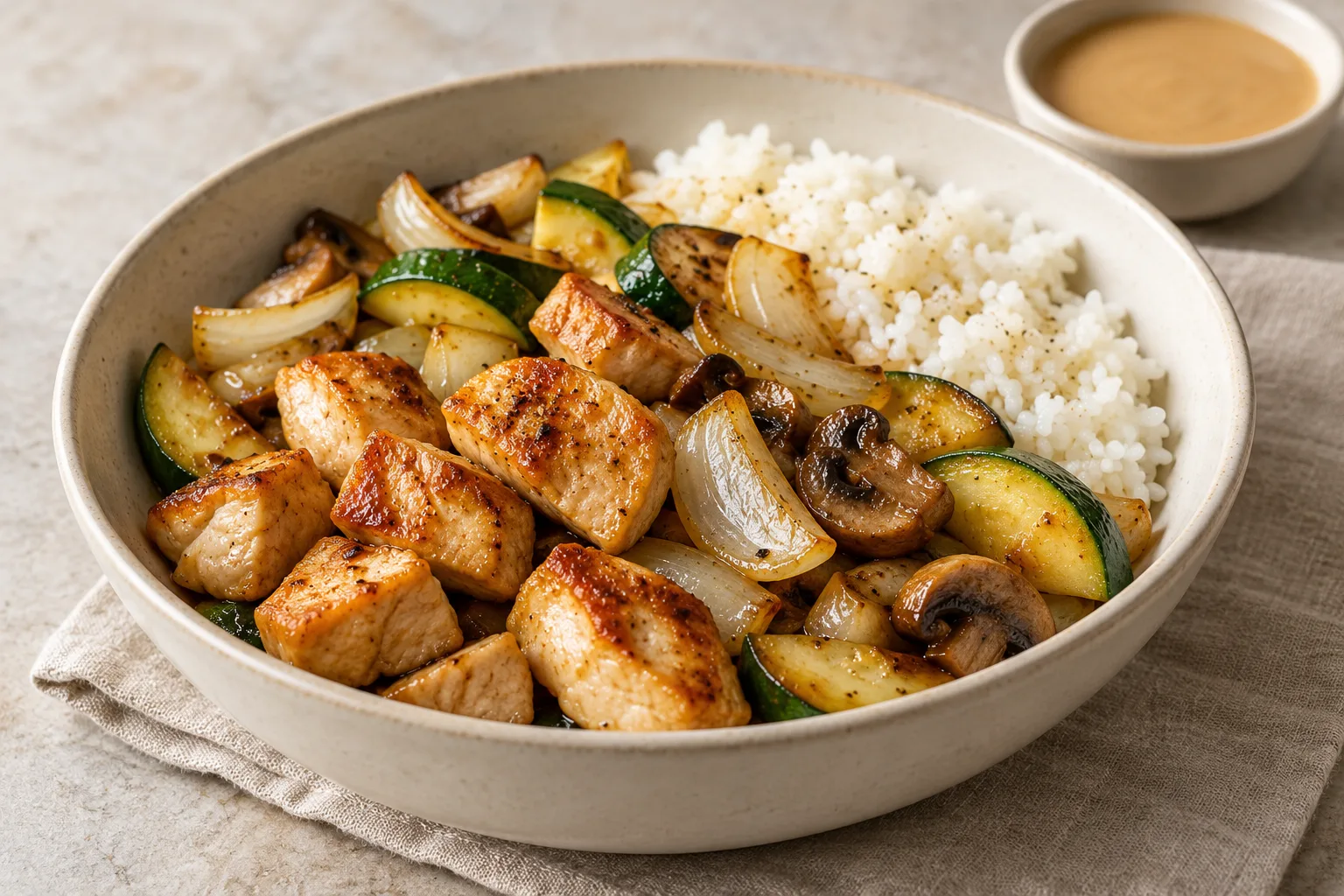
In many US restaurant searches, “hibachi” refers to a meal prepared on a flat cooking surface in a teppanyaki-style setting. Restaurants use different ingredients and portions. The calculations below are defined home-style assemblies, not nutrition claims about every restaurant.
Count the meal, not just the protein
A grilled chicken portion can look nutritionally modest on its own while the complete meal includes rice, butter, oil, sauces and other courses. Soup, salad dressing and dipping sauces also belong in the calculation if they are consumed.
This does not make those additions inherently wrong. It means a meal estimate should include them rather than using the chicken as a stand-in for everything on the plate.
Ingredients for Hibachi-style chicken bowl assembly
The ingredients are weighed in their cooked states except the measured oil and sauce. Combine or warm them as appropriate. The calculation assumes the entire amount of oil and sauce is retained, and it does not include an unlisted creamy dipping sauce or extra butter.
For a home preparation, cook raw chicken to 165°F before it is served, and handle cooked food with clean utensils. If assembling from leftovers, reheat them to 165°F before serving. USDA safe minimum internal temperatures
Nutrition for the bowl
The 365-g weight is the sum of the listed ingredients, not a measured final griddle yield. Additional evaporation changes density, and food left on the cooking surface changes what is eaten. This is a transparent estimate for the stated assembly.
What extra rice and butter change
All rows below use the same 100-g weight.
| Food | Calories (kcal) | Protein (g) | Fat (g) | Saturated fat (g) | Fiber (g) | Sodium (mg) |
|---|---|---|---|---|---|---|
| Hibachi-style chicken bowl assembly | 122 | 10.5 | 2.6 | 0.5 | 1.1 | 131 |
| Same hibachi-style bowl with extra rice and butter | 140 | 8.0 | 4.0 | 1.7 | 0.9 | 107 |
| Rice, white, long-grain, regular, enriched, cooked | 130 | 2.7 | 0.3 | 0.1 | 0.4 | 1 |
| Chicken, broilers or fryers, breast, meat only, cooked, roasted | 165 | 31.0 | 3.6 | 1.0 | 0.0 | 74 |
The second bowl adds 150 g cooked rice and 14 g butter to the first. It is a defined change rather than a claim that restaurant meals universally contain that amount. Comparing both density and the full bowl matters: the larger bowl has more food as well as a different composition.
Ingredients for Same hibachi-style bowl with extra rice and butter
| Nutrient | One calculated portion (529 g) | Per 100 g |
|---|---|---|
| Calories (kcal) | 740 | 140 |
| Protein (g) | 42.5 | 8.0 |
| Total fat (g) | 21.2 | 4.0 |
| Saturated fat (g) | 9.2 | 1.7 |
| Carbohydrate (g) | 92.3 | 17.4 |
| Fiber (g) | 4.6 | 0.9 |
| Total sugar (g) | 1.6 | 0.3 |
| Sodium (mg) | 568 | 107 |
| Calcium (mg) | 91 | 17 |
| Iron (mg) | 5.5 | 1.0 |
| Potassium (mg) | 693 | 131 |
Do not read a per-100-g comparison as the complete meal total. A food can have a similar density while a much larger portion supplies substantially more energy or sodium. Use the full per-portion calculation when deciding what you plan to eat.
What the meal can contribute
A defined protein portion: The cooked chicken supplies protein. Beef, tofu or seafood could fill that role in another meal, but each needs its own record and preparation details.
A substantial vegetable component: The example includes a weighed broccoli portion. Restaurant vegetables may include a different mixture and more cooking fat, so use their own recipe information where available.
A practical starch component: Rice can provide energy and a familiar meal base. Its amount can be adjusted without treating rice itself as a nutritional mistake.
Oil, butter and sauces
Oil and butter are separate ingredients with different fat compositions. If both are used, both count. Ask about oil as well as butter. A measured home recipe makes this easier to track than watching an unspecified restaurant pour.
Soy-based sauce contributes sodium even in a reduced-sodium version. A creamy dipping sauce may add fat and other nutrients. Its appearance does not reveal whether the main base is yogurt, mayonnaise or oil, so use its actual recipe or label when possible.
“Sauce on the side” offers control over the amount of that sauce but does not remove seasoning already cooked into the protein or rice. For someone with a strict sodium restriction, current restaurant disclosure is more useful than a broad estimate.
Ordering according to your needs
If you want a meal similar to the example, ask about a plain protein, vegetables, rice and measured or separately served sauce. A restaurant may or may not be able to reproduce those choices. When it cannot, acknowledge the uncertainty rather than calling the meal equivalent.
Brown rice, where available, can change fiber, but it does not answer the oil and sauce questions. Fried rice is another prepared food, not the same as plain rice plus an assumed small oil amount. Use its disclosed nutrition if you order it.
The portion that works for you depends on appetite, activity and other meals. There is no universal instruction here to eat only half a restaurant plate. Share, save or eat the amount that fits your needs while maintaining safe storage for leftovers.
Allergies and food safety
Soy, wheat, sesame, milk, egg and shellfish may appear in sauces or foods cooked nearby. Ask about ingredients and shared cooking equipment if you have an allergy, including how the kitchen handles foods and sauces that contain the allergen.
People who are pregnant or have weakened immunity should pay particular attention to thoroughly cooked animal foods and safe holding. A lively cooking performance is not evidence of a measured internal temperature. Store any take-home portion promptly. USDA FSIS: Leftovers and Food Safety
Meal checklist
- Identify the protein and whether its weight is raw or cooked.
- Count rice as plain, fried or otherwise prepared.
- Include oil and butter as separate additions.
- Ask what is in the dipping sauce.
- Consider soup, salad dressing and side dishes if included.
- Check allergies and shared-surface handling.
- Use the whole-meal amount rather than protein-only figures.
Identify the additions during ordering
The base bowl includes 150 g cooked rice. The larger scenario adds another 150 g rice and 14 g butter, bringing the meal to about 740 calories rather than 445. The increase is about 295 calories for the complete serving, not a mysterious effect of the hibachi cooking style. Rice supplies more food and carbohydrate; butter changes the fat contribution.
At home, measure those additions for the whole bowl before cooking. At a restaurant, ask whether the rice is already fried and whether butter is used alongside oil. Sauce on the side can help you choose the amount, but the meat and vegetables may already be seasoned. Choose the meal size you need; the example is a way to understand the components, not a rule requiring the smallest portion.
What to take away
Build the hibachi meal around the protein, vegetables and rice you want, then account for oil, butter and sauce. The home bowl demonstrates one complete combination; extra rice and butter change the full serving as well as its density. Ask how a restaurant prepares each component rather than treating hibachi as a fixed nutrition category. For a repeatable home meal, measure additions before cooking and divide the finished batch consistently.
Related food guides
Frequently asked questions
Is hibachi chicken always a low-fat meal?
Plain chicken can be relatively lean, but a complete meal may include oil, butter, rice and sauces. The amount and preparation determine the total. Chicken-only figures leave out the rice, cooking fats, sauces and sides on the plate.
Does asking for less butter solve the calorie question?
It changes one ingredient if the request is followed, but oil, sauce and portion size still matter. Ask what is used and count all meaningful additions. A home recipe can measure those amounts more clearly than an unspecified restaurant preparation.
Is fried rice equivalent to plain rice?
No. Fried rice includes other ingredients such as oil, vegetables, egg or sauce, depending on the recipe. Use a specific prepared-food record or restaurant disclosure rather than treating it as plain rice with an assumed small adjustment.
Are the bowls restaurant nutrition estimates?
They are calculated home-style assemblies using identified USDA ingredients. They do not measure a restaurant’s recipe or final cooking yield. Actual restaurant portions and sauces can differ, so the numbers should not be generalized to every hibachi meal.
Sources
- Rice, white, long-grain, regular, enriched, cooked; 168878, USDA
- Broccoli, cooked, boiled, drained, without salt; 169967, USDA
- Oil, olive, salad or cooking; 171413, USDA
- Chicken, broilers or fryers, breast, meat only, cooked, roasted; 171477, USDA
- Soy sauce made from soy and wheat (shoyu), low sodium; 172473, USDA
- Butter, salted; 173410, USDA
- USDA safe minimum internal temperatures, USDA
- USDA FSIS: Leftovers and Food Safety, USDA
- How to Understand and Use the Nutrition Facts Label | FDA, FDA
- Sodium in Your Diet | FDA, FDA
- American Heart Association guidance on dietary fats, American Heart Association