Breads and grains
Are Honey Bunches of Oats Healthy? Sugar and Portions
Are Honey Bunches of Oats healthy? Check the Honey Roasted label, weighed bowls, added sugar, fiber, iron and what milk and fruit add to breakfast.
The short answer
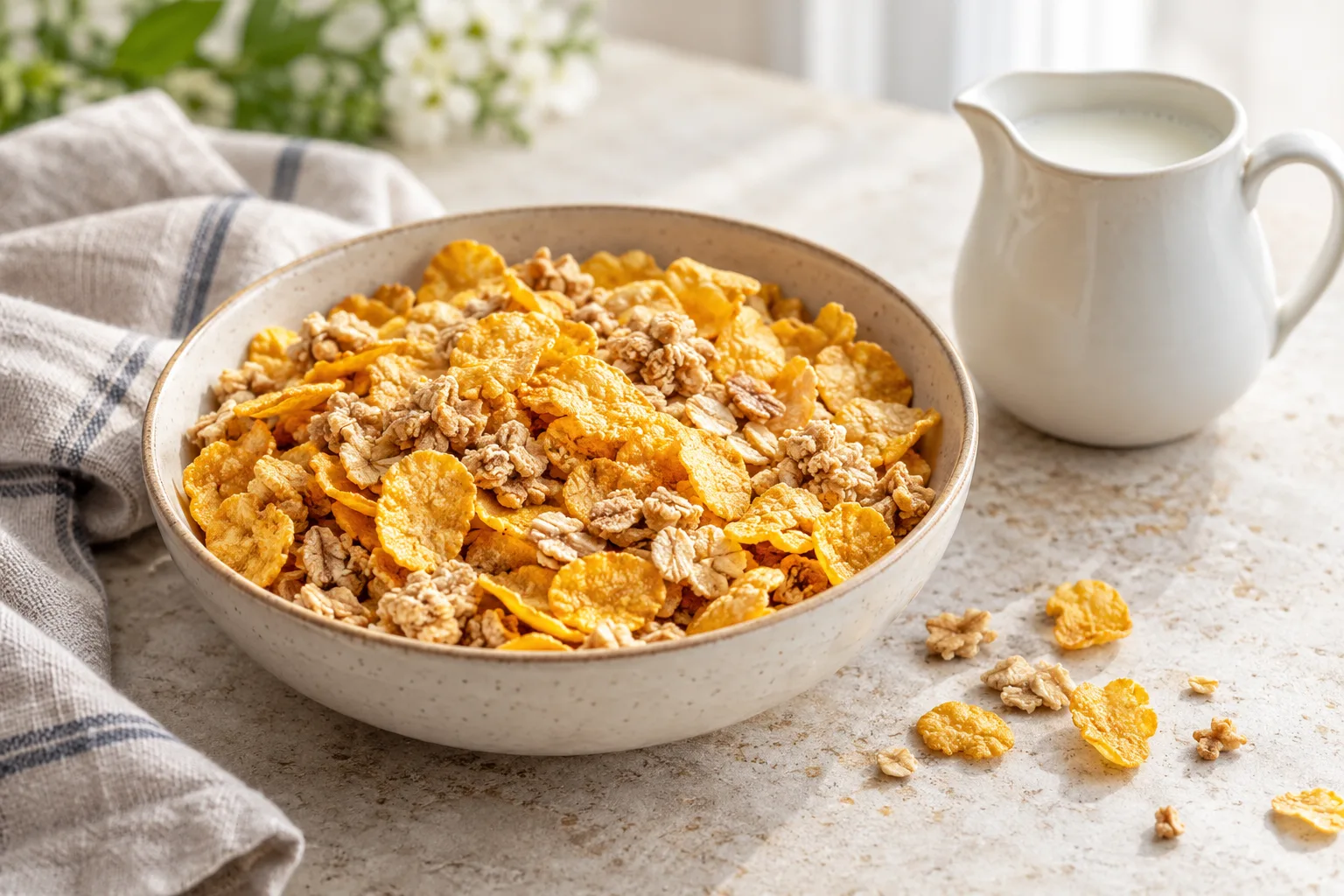
Sometimes Honey Bunches of Oats can be a convenient breakfast base, but the reviewed Honey Roasted cereal has modest fiber and a meaningful amount of added sugar. The US label lists 160 calories, 2 g fiber, 3 g protein and 8 g added sugar per 41 g cup. A two-cup bowl doubles those figures before milk.
| Nutrient | US Honey Roasted cereal: 1 cup, 41 g, without milk |
|---|---|
| Calories | 160 kcal |
| Protein | 3 g |
| Fiber | 2 g |
| Added sugar | 8 g |
| Sodium | 190 mg |
| Iron | 16.2 mg |
Official US product panel; milk and fruit are separate additions.
Honey Bunches of Oats can be a convenient breakfast base, but the reviewed Honey Roasted cereal has modest fiber and a meaningful amount of added sugar. The US label lists 160 calories, 2 g fiber, 3 g protein and 8 g added sugar per 41 g cup. A two-cup bowl doubles those figures before milk.
Build the bowl from its cereal weight, milk and toppings. Fortification can contribute useful nutrients while fiber and added sugar still deserve their own comparison. Original Cheerios provides a concrete alternative below.
Which Honey Bunches of Oats are we comparing?
This guide uses the US Honey Bunches of Oats Honey Roasted product page. Almond, vanilla and other versions can have different serving amounts, ingredients and nutrients. Canadian and food-service products should not be assumed to match this panel.
| Label item | One cup, 41 g | Two cups, 82 g, calculated |
|---|---|---|
| Calories | 160 | 320 |
| Protein | 3 g | 6 g |
| Fiber | 2 g | 4 g |
| Added sugar | 8 g | 16 g |
| Total sugar | 9 g | 18 g |
| Sodium | 190 mg | 380 mg |
The two-cup column multiplies rounded label values. It is a portion example, not a recommendation to eat that amount. If your bowl is larger or smaller, use its weight divided by 41 g to scale the label.
Milk is not included in either column. Some cereal packages show an additional column with a specified milk amount; if you use that column, do not add the same milk again. The FDA’s label guide explains how serving and preparation information shape the panel.
A familiar bowl can hold more than the stated cup
A cup of flaked cereal is not a universal gram amount across brands. Flakes, clusters and smaller pieces pack differently, and the mixture may settle in the box. The 41 g weight is the better basis for this product than borrowing another cereal’s “one cup” number.
Weigh your ordinary pour once. If it is 61.5 g, it is one and a half label servings: approximately 240 calories, 12 g added sugar, 3 g fiber and 285 mg sodium before milk. A bowl that looks only slightly larger than the label portion can therefore make a noticeable difference.
This does not mean you must eat less than your appetite requires. It means the portion used in the estimate should resemble the portion you eat. If you want a larger breakfast, you can deliberately include more cereal, another food or both rather than keeping a small-serving label while eating a larger amount.
When comparing two cereals, match the amounts you would actually eat. A denser cereal with a smaller printed cup serving may not be lower in energy at equal weight. Conversely, a food you enjoy in a smaller amount may still work well in your breakfast even if its per-100-g figures look higher.
A useful shelf comparison: Original Cheerios
The Original Cheerios US panel lists 140 calories, 5 g protein, 4 g fiber, 1 g added sugar and 190 mg sodium per 39 g, 1.5-cup serving. Honey Roasted’s stated cup weighs 41 g. Comparing just “one cup” would therefore mix volume and food amount.
The table scales both cereals to 40 g without milk:
| Calculated 40 g cereal | Honey Roasted | Original Cheerios |
|---|---|---|
| Calories | 156 | 144 |
| Protein | 2.9 g | 5.1 g |
| Fiber | 2.0 g | 4.1 g |
| Added sugar | 7.8 g | 1.0 g |
| Sodium | 185 mg | 195 mg |
For more fiber and less added sugar at a matched weight, the inspected Cheerios panel is stronger. For sodium, it is slightly higher. Taste, texture and price remain your choices; this is a label comparison rather than a tasting result.
Honey Roasted’s original 41 g serving contains 8 g added sugar, or 16% of the FDA’s 50 g Daily Value. Two servings contain 16 g, or 32%. The FDA’s added-sugars guide explains that added sugar is already part of total sugar.
Honey in a cereal name does not remove that addition. Planrity’s cane-sugar guide addresses the same naming issue. If fiber and sugar are your buying priorities, compare those lines directly rather than choosing by the number of grain or sweetener words on the box.
Fortification is useful information, not a complete verdict
The manufacturer lists 16.2 mg iron, or 90% of the Daily Value, in the reviewed serving. The cereal is fortified, so its vitamin and mineral panel can be quite different from the unfortified grain ingredients considered alone.
That figure is worth noticing if iron is one of the nutrients you compare. It does not diagnose iron deficiency, establish how much you personally absorb or tell you to add an iron supplement. Medical symptoms and supplement decisions need individual advice rather than a cereal ranking.
Fortification also does not change the printed fiber or added-sugar amounts. Read the mineral panel alongside the rest of the label. A product can provide added micronutrients and still have a tradeoff you want to consider, just as a low-sugar food may provide little of another nutrient.
For a useful shelf comparison, place two products side by side and write down serving grams, fiber, added sugar, protein and any micronutrient that matters to you. Keeping those columns separate prevents one impressive percentage from deciding the whole purchase.
What milk and fruit add to the bowl
Using USDA plain 2% milk, FDC 171267, a 122 g half-cup reference amount adds about 61 calories, 4 g protein, 146 mg calcium and 57 mg sodium. The milk amount is specified by weight so it can be reproduced; a large glass poured into the bowl would be a different addition. Combined with 41 g cereal, the bowl is approximately 221 calories, 7 g protein and 247 mg sodium.
The plain milk adds naturally present sugar, but the example’s 8 g added sugar still comes from the cereal. A flavored milk or sweetened plant beverage may add sugar of its own. Read its label rather than assigning plain-milk values to it.
A medium banana adds approximately 105 calories and 3.1 g fiber according to USDA FDC 173944. You might choose part of a banana or another fruit depending on appetite. Fruit adds food and nutrients; it does not subtract sugar already present in the cereal.
If you want to compare quick breakfast alternatives, Planrity’s waffle guide separates the base from toppings. The Nature Valley bar guide is useful when portability matters more than having a bowl at home. Compare complete breakfasts rather than a cereal portion with an alternative meal’s full toppings.
Make breakfast practical for your household
The reviewed Honey Roasted cereal contains wheat. Other flavors can introduce different allergens, and milk or toppings add their own. The FDA’s allergy-label guidance supports checking the current package rather than relying on a familiar brand name.
For the next bowl, choose a cereal amount you can recognize, a suitable milk or accompaniment, and any fruit you want. If you regularly feel the meal is missing something, decide whether the gap is portion size, protein, fiber or simply enjoyment. Those lead to different changes.
Honey Bunches of Oats can work as a convenient cereal you like. Its strongest case is a realistic portion within a breakfast you have deliberately assembled, with the fortification acknowledged and the sugar and fiber amounts kept visible.
Frequently asked questions
Is a large bowl still one serving of Honey Bunches of Oats?
Only if it contains the label’s 41 g for this specific Honey Roasted product. Bowl size does not define the serving. An 82 g portion is two servings, with approximately 320 calories and 16 g added sugar before milk. Weighing your usual pour once gives a more useful reference than assuming every bowl holds exactly one cup of cereal.
Does the honey make its sugar healthier?
The reviewed panel lists 8 g added sugar per serving, regardless of the product’s honey branding. Use that amount when comparing cereals. Added sugar is included within total sugar, so do not add the two lines together. A lower-sugar choice and a higher-fiber choice are separate comparisons; the sweetener’s familiar name does not settle either one.
Is Honey Bunches of Oats a good protein breakfast?
The cereal alone lists 3 g protein per 41 g serving. Milk or another suitable accompaniment can change the meal’s protein substantially. The example with 122 g plain 2% milk reaches about 7 g protein. Plant beverages vary, so check the actual carton. Whether the finished meal suits you also depends on appetite, portion and the rest of your eating pattern.
Sources
- Post Consumer Brands: Honey Bunches of Oats Honey Roasted: US nutrition, Post Consumer Brands
- FDA: How to Understand and Use the Nutrition Facts Label, FDA
- FDA: Added Sugars on the Nutrition Facts Label, FDA
- FDA: Have Food Allergies? Read the Label, FDA
- USDA FoodData Central: Milk, reduced fat, fluid, 2% milkfat, with added vitamin A and vitamin D (FDC 171267), USDA FoodData Central
- USDA FoodData Central: Bananas, raw (FDC 173944), USDA FoodData Central
- General Mills: Original Cheerios US panel, General Mills