Breads and grains
Is Pita Healthy? Compare Whole Wheat, White and Wraps
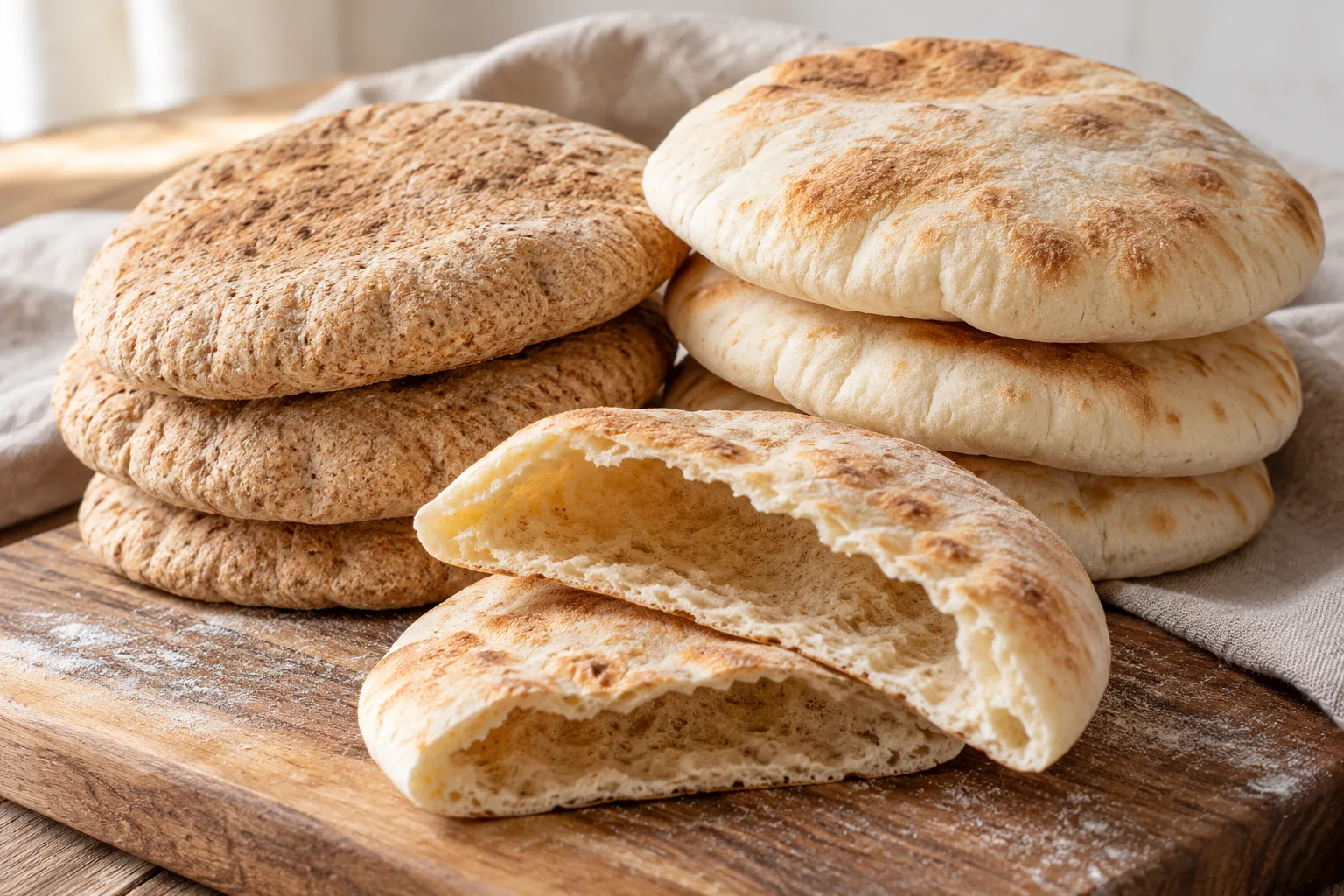
Whole-wheat pita offers more fiber than the white reference. Compare pita and a flour wrap at equal weights, then check the size and filling of your actual bread.
The short answer
Yes Yes, pita can be a useful part of a meal. At an equal 60 g weight, USDA's whole-wheat pita reference supplies about 157 calories and 3.7 g fiber, compared with 165 calories and 1.3 g fiber for white enriched pita. Whole wheat offers more fiber in this comparison; the amount of bread, filling and sauce still determines the finished meal.
| Nutrient | USDA whole-wheat pita: weighed 60 g portion |
|---|---|
| Calories | 157 kcal |
| Protein | 5.9 g |
| Fiber | 3.7 g |
| Total carbohydrate | 33.5 g |
| Sodium | 253 mg |
USDA SR Legacy FDC 174916 × 0.60; its separate large-bread portion is 64 g, not 60 g.
Yes, pita can be a useful part of a meal. At an equal 60 g weight, USDA’s whole-wheat pita reference supplies about 157 calories and 3.7 g fiber, compared with 165 calories and 1.3 g fiber for white enriched pita. Whole wheat offers more fiber in this comparison; the amount of bread, filling and sauce still determines the finished meal.
The calorie difference is small. If you enjoy white pita, there is little value in treating it as a forbidden food. If you want more fiber from the bread itself, whole wheat is a practical choice. Start with the actual bread weight and ingredients rather than assuming every pocket or “large” pita is the same size.
White and whole-wheat pita at the same weight
The comparison holds all three breads at 60 g, before fillings, oil or spreads. Values are calculated from USDA SR Legacy data. The flour tortilla is included as a common wrap-style alternative.
| Plain bread, equal 60 g | Calories | Protein | Carbohydrate | Fiber | Sodium |
|---|---|---|---|---|---|
| White enriched pita | 165 | 5.5 g | 33.4 g | 1.3 g | 322 mg |
| Whole-wheat pita | 157 | 5.9 g | 33.5 g | 3.7 g | 253 mg |
| Shelf-stable flour tortilla | 178 | 4.8 g | 29.6 g | 1.4 g | 445 mg |
Sources: USDA FoodData Central records for white enriched pita and whole-wheat pita. Values are calculated from the per-100-g entries, then rounded. Your bakery or packaged bread may have a different recipe.
The strongest distinction here is fiber, rather than a dramatic change in carbohydrate or calories. The whole-wheat example has about 2.3 g more fiber at the same weight, using unrounded values. Its sodium is also lower in this particular comparison, but that does not establish that every whole-wheat pita has less sodium than every white one.
Why “one large pita” can be misleading
USDA’s white-pita record assigns 60 g to a large, 6.5-inch bread. The whole-wheat record assigns 64 g to a large bread of the same stated diameter. That is why an equal-weight comparison is useful: diameter and a size name do not establish the same quantity of food.
A 64 g whole-wheat pita from the reference provides about 168 calories, 3.9 g fiber and 269 mg sodium. That is slightly more energy than the 60 g white-pita example, even though whole wheat has fewer calories per 100 g. Different serving weights can reverse a small calorie difference.
Both records also list a 28 g small pita, which illustrates how wide the portion range can be. On a package, use the listed grams and number of breads per serving. If the label refers to half a bread, eating the whole bread means doubling that serving’s figures.
The FDA Nutrition Facts guide explains that serving size reflects what people typically consume; it is not a recommendation for how much everyone should eat. Choose a portion for your meal, then use the label to understand it.
Whole wheat is a fiber choice, not a calorie shortcut
Whole grain retains the bran, germ and endosperm, whether the grain is intact or milled. The Food Standards Australia New Zealand wholegrain explanation describes that distinction. Whole-wheat flour can therefore be used in a smooth bread without visible kernels.
For a whole-wheat pita, look for whole-wheat flour in the ingredients and compare the fiber line. Brown color or seeds on the surface do not identify the flour throughout the bread.
The reference table’s advantage is mainly fiber: 3.7 versus 1.3 g at equal 60-g weights, while calories differ by only about 8. If you like white pita, you can still build a meal around it. If you want more fiber from the bread itself, whole wheat provides the clearer advantage in this comparison.
Pita versus a flour wrap: compare grams first
A wrap is not necessarily lighter than a pita. At an equal 60 g in the table above, the USDA shelf-stable flour-tortilla reference has more calories and sodium than either pita. This is one identified generic tortilla, not a result for every wrap formula.
The tortilla has less carbohydrate than the pitas at this weight, while supplying more sodium and fewer grams of fiber than whole-wheat pita. A lower value on one nutrient line does not identify the best bread for every priority.
USDA also assigns 49 g to one tortilla in this record. At that size it supplies about 146 calories and 364 mg sodium. That smaller tortilla has fewer calories than either 60-g pita, showing why actual bread size matters alongside recipe composition.
For a prescribed carbohydrate plan, use the package’s total carbohydrate and the portion you intend to eat. Whole wheat increases fiber in this comparison, but does not make the pita low in carbohydrate.
Keep the filling constant to compare a lunch
Consider 60 g of bread with 75 g plain roasted chicken breast, 50 g tomato and 20 g romaine. The ingredients are weighed ready to eat, with no added spread, dressing or oil. The totals below are calculated examples, not standard restaurant sandwiches or tested recipes.
| Same filling with 60 g bread | Calories | Protein | Fiber | Sodium |
|---|---|---|---|---|
| White enriched pita | 301 | 29.4 g | 2.3 g | 381 mg |
| Whole-wheat pita | 293 | 29.8 g | 4.7 g | 312 mg |
| Shelf-stable flour tortilla | 314 | 28.8 g | 2.5 g | 505 mg |
Filling references are USDA plain roasted chicken breast, raw tomato and raw romaine. Each per-100-g value is scaled by the ingredient weight, then added to the bread contribution before rounding.
Whole-wheat pita adds more fiber here while keeping the meal’s calories close to the white-pita version. Most protein comes from the chicken. A cheese, dressing or different filling would change that comparison and should be counted at its own amount.
If you cut one pita into two halves, fill both halves as parts of that one bread. Using two complete pitas instead doubles the bread component before any filling is added. The shape of a pocket can make that distinction less obvious when several halves are on the table.
For other fillings, our gyro meat guide and falafel guide discuss their ingredients, preparation and portions. Use the actual filling rather than borrowing the plain chicken figures.
Pita with a dip or toasted into chips
When sharing a bread basket, put the amount you want on your plate if knowing the portion matters. Count the dip separately; a small dip bowl can serve several bread portions, and a refilled basket changes the amount eaten.
For homemade toasted pita, record the bread weight and any oil or seasoning added. A purchased pita-chip product needs its own label. The plain-bread table describes neither an oil-coated batch nor every seasoned snack sold under the pita name.
Our pico de gallo guide considers one fresh topping with a weighed example. Choose toppings for the flavor and texture you want, then include their amount in the meal estimate.
Sodium: compare breads rather than color
The equal 60 g portions here supply about 322 mg sodium for white pita and 253 mg for whole wheat. Those are reference values, not guarantees for a bakery. The flour type alone does not tell you how much salt a manufacturer used; compare the sodium line even when both packages say whole wheat.
The FDA sodium guide uses a 2,300 mg Daily Value. At that reference, these bread portions provide about 14% and 11%, respectively. A filling, dip, cheese or sauce adds to the total.
If you are comparing packages, line up equivalent weights or calculate the amount in the bread you plan to eat. A smaller serving can make one label appear lower without proving that its recipe contains less sodium per gram. This is especially relevant when one package lists a mini pita and another lists a large pocket.
Gluten and wheat allergy need separate attention
Ordinary wheat pita contains gluten, whether the flour is white or whole wheat. The FDA gluten-labeling guide explains that gluten occurs in wheat, rye and barley. Whole wheat does not meet a gluten-free requirement just because it offers more fiber.
Wheat is also one of the major allergens identified in the FDA food-allergy guide. Check the actual bread and fillings, and ask about shared preparation when an allergy or medically required avoidance applies. A gluten-free claim and a wheat-allergy assessment are not interchangeable questions.
For most shoppers comparing ordinary breads, the practical choice is straightforward: choose whole wheat when you want more fiber, check the size, and build the filling you want. White pita remains an option; its place in the meal depends on the whole plate rather than its color alone.
Prepared with AI assistance. This guide has not been medically reviewed and provides general information, not personal medical advice.
Frequently asked questions
Is pita healthier than a flour wrap?
At equal 60-g weights, the whole-wheat pita reference has more fiber and less sodium than the identified flour-tortilla reference: 3.7 versus 1.4 g fiber, and 253 versus 445 mg sodium. Your actual bread's weight and recipe can change the comparison.
Is a whole-wheat pita lower in calories than white pita?
At equal 60-g weights, it has about 157 calories versus 165. USDA's large whole-wheat pita weighs 64 g and supplies about 168 calories, however, so a size difference can outweigh that small composition difference.
Is whole-wheat pita gluten-free?
No. Ordinary whole wheat contains gluten. If gluten must be avoided or you have a wheat allergy, choose a product meeting that requirement and check the fillings and handling too.
Sources
- FDA: How to Understand and Use the Nutrition Facts Label, FDA
- FDA: Sodium in Your Diet, FDA
- FDA: Have Food Allergies? Read the Label, FDA
- FDA: Gluten and Food Labeling, FDA
- Food Standards Australia New Zealand: Wholegrain food, Food Standards Australia New Zealand
- USDA SR Legacy: Bread, pita, white, enriched (FDC 174915), USDA SR Legacy
- USDA SR Legacy: Bread, pita, whole-wheat (FDC 174916), USDA SR Legacy
- USDA SR Legacy: Tortillas, ready-to-bake or -fry, flour, shelf stable (FDC 167535), USDA SR Legacy
- USDA SR Legacy: Lettuce, cos or romaine, raw (FDC 169247), USDA SR Legacy
- USDA SR Legacy: Tomatoes, red, ripe, raw, year round average (FDC 170457), USDA SR Legacy
- USDA SR Legacy: Chicken, broilers or fryers, breast, meat only, cooked, roasted (FDC 171477), USDA SR Legacy